

Wozniak’s Maverick AI Stance Rattles Tech Orthodoxy: ‘Actual Intelligence’ Endures
POLICY WIRE — Austin, Texas — For all the frenzied talk about artificial intelligence—about its relentless march, its impending dominance, the very existential questions it throws at us—it seems some...

POLICY WIRE — Austin, Texas — For all the frenzied talk about artificial intelligence—about its relentless march, its impending dominance, the very existential questions it throws at us—it seems some of Silicon Valley’s foundational figures are tired of the breathless capitulation. One of them, a man whose engineering prowess birthed a revolution, stood before a crowd recently and cut through the digital clamor with refreshing bluntness. He didn’t preach caution, not exactly. Instead, he simply, almost dismissively, reminded everyone that they’ve got the goods already.
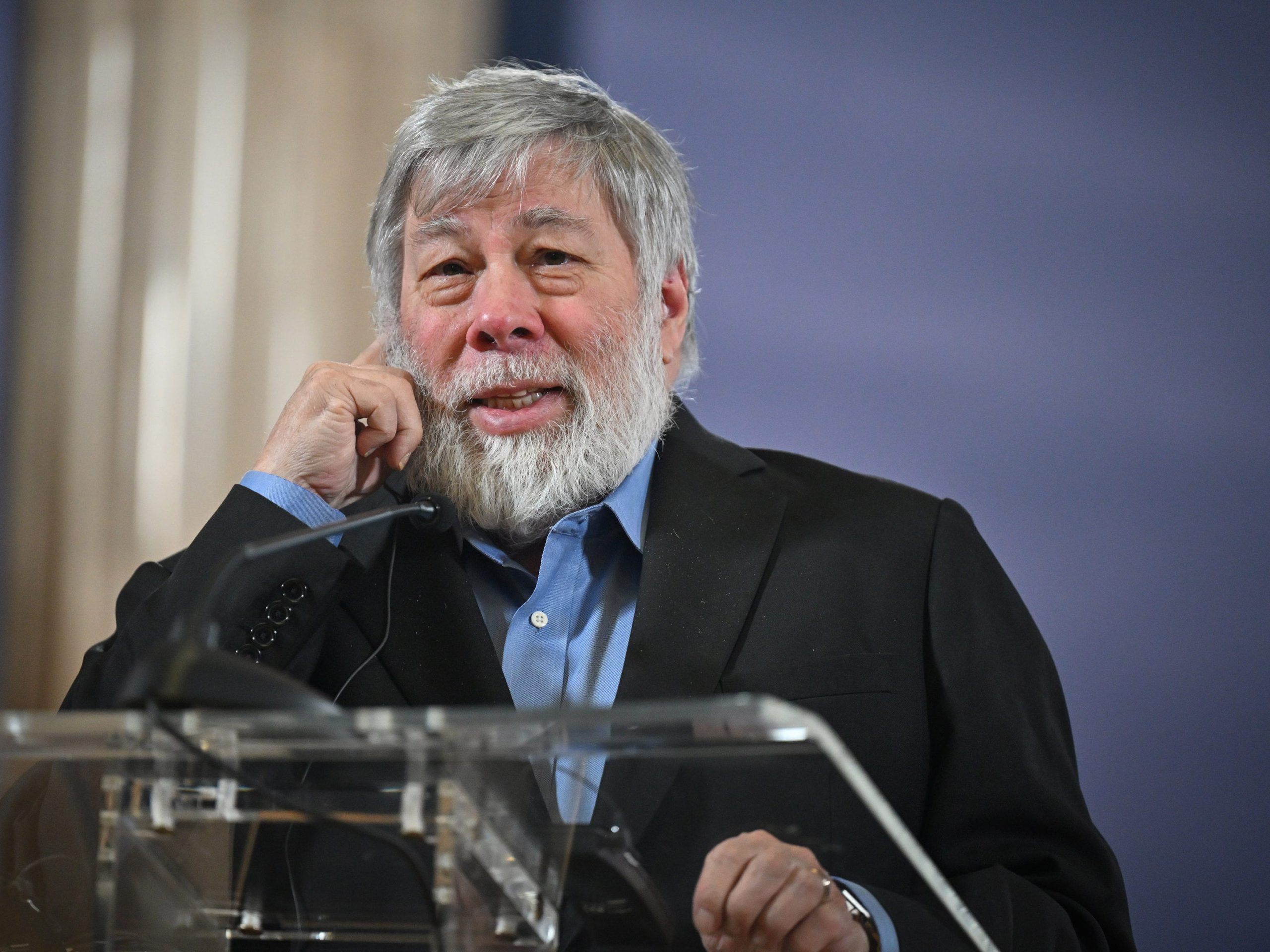
It was Apple co-founder Steve Wozniak, and he wasn’t greeted with the usual cult-of-personality veneration, nor did he offer a typical tech evangelist sermon. Speaking to an audience of bright, expectant faces at a university gathering, Wozniak didn’t warn against sentient robots or job-devouring algorithms. Nope. He just calmly told them they “all have AI — actual intelligence,” a phrase delivered with such straightforward clarity it seemed to deflate weeks of anxious headlines. He got cheers. Big ones. It was a moment of profound, almost understated, irony given the ceaseless churn of AI anxiety peddled across news feeds and boardrooms globally.
Because that’s the real kicker here, isn’t it? We’re so busy building machines that mimic thought, we sometimes forget the original, organic model staring back at us in the mirror. “We’re developing these powerful tools, absolutely. And we must—it’s an economic imperative,” remarked Dr. Aisha Khan, an economic policy advisor focusing on digital economies in Pakistan, speaking to Policy Wire from Islamabad. “But the hype sometimes forgets where true innovation stems from. It’s human ingenuity. Always has been. Countries like ours, with a huge, young workforce—we must champion that intrinsic, actual intelligence rather than just passively consume foreign-made AI.” She’s got a point. Many developing nations, hungry for tech advancement, grapple with how to embrace AI without completely sidelining their burgeoning pools of human talent.
This isn’t about Luddism; far from it. But Wozniak’s remark felt like a splash of cold water on the feverish forehead of the tech world, a timely recalibration for those convinced that every complex human task is ripe for algorithmic outsourcing. And it speaks volumes about the shifting narrative, doesn’t it? From awe-struck wonder to a healthy skepticism, especially when faced with some of AI’s more… shall we say, imaginative outputs. According to a recent survey by Stanford University’s AI Index, global private investment in AI reached a staggering $91.9 billion in 2023. That’s a lot of dough riding on the synthetic, when the natural intelligence is, well, free. Free and adaptable.
Wozniak’s message rings especially true in places like the South Asian subcontinent, where the digital divide still yawns but aspirations soar. Consider Pakistan, for instance, where initiatives focus on fostering digital literacy among its vast youth population. They’re not just training data labelers; they’re trying to build a workforce of thinkers, problem-solvers. What Wozniak implied, loud and clear, is that genuine intelligence—the kind that creates, questions, and occasionally tells a large language model it’s chatting nonsense—remains paramount.
“We can’t just stand by while AI becomes this black box dictating our future,” stated U.S. Senator Margaret Dubois, chair of the Senate’s Emerging Technologies Subcommittee, during a recent briefing on Capitol Hill. (She always keeps things pretty direct, even when discussing the future of civilization.) “The challenge isn’t stopping AI; it’s making sure that human wisdom—our ethics, our empathy, our creativity—remains at the core of its development and deployment. We have to ensure our educational systems, from grade school to university, emphasize critical thought, not just data recall. Because frankly, robots are already better at data recall than any of us.”
Her words, coupled with Wozniak’s almost folksy wisdom, form a quiet, potent counter-narrative. It’s a reminder that while AI is undeniably a powerful tool—an accelerator, a force multiplier—it’s not a replacement for the messy, inefficient, brilliant process of human thought. We’ve always been good at figuring things out; that’s why we’re here. And that capacity, that actual intelligence, isn’t something we can download.
What This Means
This pivot, subtle though it may be, carries significant implications. Economically, Wozniak’s emphasis suggests a necessary shift away from a purely automation-driven future towards one where human-AI collaboration is more balanced. For emerging economies, particularly in the Muslim world — and South Asia, this isn’t just rhetoric; it’s a playbook. It means investing heavily in education that cultivates critical thinking and problem-solving, rather than simply skills training for narrow AI roles. It implies a conscious effort to resist becoming merely consumers of global AI tech, instead focusing on producing innovators. Policy-wise, this means governments will—or certainly should—prioritize digital literacy initiatives that go beyond basic computer use, pushing towards advanced cognitive skills. Because if we don’t, we risk fostering a generation overly reliant on machines, ironically diminishing the very ‘actual intelligence’ Wozniak champions. That’s not just a technological risk; it’s an economic, cultural, — and societal one. Countries looking for sustainable growth, don’t just chase the algorithm. Invest in the human. It’s an older model, sure. But it works.