

Wildfire Home Protection: Scientists Burn Houses to Develop Climate Resilience Strategies
POLICY WIRE — Richburg, South Carolina — A recent controlled experiment showcased the rapid destructive power of wildfire, as wind-driven flames consumed a test home in under three minutes, breaching...

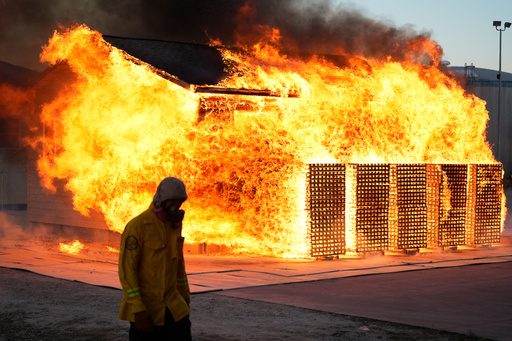
POLICY WIRE — Richburg, South Carolina — A recent controlled experiment showcased the rapid destructive power of wildfire, as wind-driven flames consumed a test home in under three minutes, breaching its defenses and igniting the interior.
Just weeks later, a second structure erected in the identical location met a similar fate, but with a crucial difference. This subsequent dwelling, constructed with enhanced, fire-resistant materials, demonstrated significantly slower combustion, proving the effectiveness of improved building standards in mitigating fire spread.
Pioneering Fire Resilience Research
This critical research is being conducted by experts at a secluded facility in South Carolina, where thirteen houses have been intentionally set ablaze. The fundamental principle guiding their efforts is that learning about fire requires direct observation of its destructive force.
Each meticulously crafted test home is outfitted with internal sensors and cameras, sacrificed in the name of scientific advancement. Surrounding the burn site, nearly $1 million worth of sophisticated cameras and instrumentation are housed in a fireproof building and strategically positioned for comprehensive data collection.
“We crash test houses,” stated Roy Wright, president of the Insurance Institute for Business & Home Safety (IBHS). This non-profit organization, established by insurers, is dedicated to enhancing the resilience of residential and commercial structures.
Understanding the Escalating Wildfire Threat
The IBHS operates its expansive 100-acre (40-hectare) facility in Richburg, originally focusing on hurricanes and severe weather events. However, with the marked increase in wildfire risk in recent years, their massive six-story wall, featuring 105 powerful fans, is now frequently employed to simulate high winds that spread flames during wildfire tests.
From 2016 to 2025, the average annual area burned by wildfires in the United States surpassed 11,000 square miles (28,500 square kilometers), an expanse roughly the size of Massachusetts. This figure represents a 2.6-fold increase compared to the average burn area recorded in the 1980s, according to data from the National Interagency Fire Center.
Similarly, Canada has experienced a dramatic rise, with the average land burned over the last decade being 2.8 times greater than in the 1980s, as reported by the Canadian Interagency Forest Fire Centre. The economic toll of such events highlights the increasing financial pressures from global challenges. Read More: German Industry Warns of Soaring Costs Amid Escalating Iran Conflict Concerns
Climate Change and Growing Risks
Since 2020, wildfires in the U.S. have inflicted an average of $17.7 billion in damages annually, according to figures compiled by the National Oceanic and Atmospheric Administration and Climate Central. Climate change is exacerbating and prolonging fire seasons across the nation, while expanding populations are pushing residential areas into increasingly vulnerable zones.
Recent years have seen immense and devastating wildfires impact regions such as California, Maui in Hawaii, and the mountainous areas of both North and South Carolina. Widespread and severe drought conditions persist across much of the U.S., particularly in the West and Southeast, reaching record levels for this period.
Combined with unprecedented heat and exceptionally low moisture readings in the West during the initial months of 2026, the forthcoming fire season is projected to be exceptionally severe. This dire outlook could only be mitigated by significant late spring or early summer rainfall, cautions Park Williams, a climate and fire scientist at UCLA.
Advancing Home Protection Strategies
The groundbreaking research conducted by the institute has already informed significant policy changes, notably bolstering California’s fire code. New residential constructions now mandate ignition-resistant wall materials, tempered or double-paned windows, and mesh coverings for vents to prevent ember intrusion.
Equally vital is the management of the immediate exterior environment. Establishing a clear 5-foot (1.5-meter) buffer zone around homes, free of easily combustible materials like pine straw, hot tubs, wooden fences, or overhanging tree branches, forms a critical first line of defense. The fire tests conclusively demonstrate the importance of this defensible space.
During experiments, researchers ignite wooden blocks designed to resemble Jenga towers within this buffer zone. Simulated winds, which in one recent test fluctuated intensely between 30 and 55 mph (50 to 90 kph), consistently propelled flames towards the test structures.
Once windows or walls are compromised, interior combustible items such as couches, furniture, clothing, and plastics rapidly ignite. This swift internal combustion generates large quantities of dangerous burning embers, which are then carried aloft by strong winds, potentially starting new fires blocks away.
However, even the most stringent fire standards have limitations. Jacob Bendix, a fire researcher at Syracuse University, notes that under extremely severe fire conditions, particularly those involving very high winds, their protective value can diminish.
The Rise of Commercial Fire Prevention Solutions
The market for fire prevention tools and techniques is experiencing rapid growth. Following the 2018 Woolsey fire near his Ventura County, California, residence, Nicholai Allen observed firefighters using fire retardants and pondered how homeowners could adopt similar protective measures.
Allen subsequently trained as a wildland firefighter, learning that the most crucial aspect of home protection is preventing embers from entering attics and garages. He now manufactures and sells Safe Soss products, which include carbon filters or guards for attic and vent openings, heat-resistant fiberglass tape designed to stop embers, and a sprayable fire retardant applicable with a standard garden hose. These solutions recently became available at a major hardware retailer.
Allen draws an analogy to preparing for winter weather. He explains, “It’s kind of like if you live in the snow, you have a snow shovel, you have scrapers, and you know that you have to take certain preventative steps in order to live in an environment that, hey, sometimes snows.”
Controlled Testing for Enhanced Safety
The fire tests conducted by the Insurance Institute for Business & Home Safety are meticulously controlled. The experimental houses are constructed to closely resemble typical residential buildings, albeit without active electricity or plumbing systems. An exacting standard for detail and safety is maintained throughout the process.
The institute prefers conducting its spring fire testing at the site, strategically located midway between Charlotte, North Carolina, and Columbia, South Carolina. While summer temperatures in the South can parallel those in fire-prone Western regions, the high humidity typically experienced in July provides an inaccurate representation of mountain canyon conditions.
Recent tests were delayed for over six hours due to strong winds, causing anxiety among workers concerned about impending outdoor burning bans following an unusually dry and warm spring. Before ignition, tarps and heating devices are used to elevate the houses’ temperatures to summer levels on a large concrete pad adjacent to the massive hangar where the fan wall is located and hurricane tests are performed.
Elsewhere on the campus, researchers are also investigating the impact of hail on homes. Another section of the facility features dozens of roof sections, exposed to natural elements like freezing, baking, and soaking for over a decade, providing long-term data for resilience studies.