


Boston’s Unexpected Ace: How a Young Gun Snatched Glory from the Jaws of Succession
POLICY WIRE — Boston, USA — Remember the quiet dread? That particular clench in the gut when a team’s linchpin—its undisputed ace, in this case—gets sidelined, and the carefully constructed edifice...

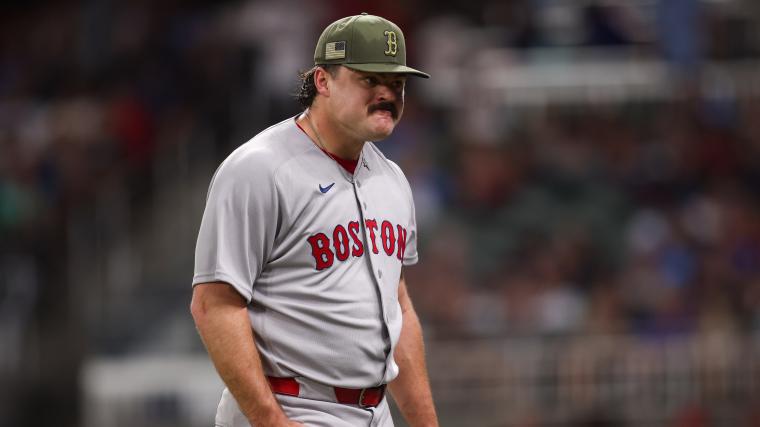
POLICY WIRE — Boston, USA — Remember the quiet dread? That particular clench in the gut when a team’s linchpin—its undisputed ace, in this case—gets sidelined, and the carefully constructed edifice of a pitching rotation suddenly looks, well, a little less grand. For the Boston Red Sox, the extended absence of star hurler Garrett Crochet wasn’t just a bump in the road; it was meant to be a crater. Nobody thought much good could come of it. But sometimes, when the spotlight swivels violently, it illuminates something altogether different, something wholly unanticipated. Boston’s Payton Tolle is that blinding flash.
It wasn’t always this gilded. Less than a year ago, the notion of Tolle as the saviour would’ve drawn a few chuckles, perhaps even a derisive snort. His MLB debut on August 29th, 2025, a taut duel against Pittsburgh’s rising star Paul Skenes, teased. Eight strikeouts, just two earned runs over 5.1 innings. But then, the wheels promptly — gloriously, spectacularly — fell off. A brutal 6.06 ERA over 16 innings. A concerning 1.592 WHIP. He was, to put it mildly, all fizz and no pop beyond the initial few frames, his velocity deserting him faster than a fair-weather fan in October.
Many—pundits, rival scouts, even some within the Fenway faithful—were quick to scribble him off. Another tantalizing arm, gone bust. He was pegged to start this season in Triple-A, a sort of purgatory for unfulfilled potential. But then, destiny, or perhaps just another inconvenient injury to a veteran (this time Sonny Gray), intervened. And Tolle got his second chance, a ticket back to the big leagues. This time, he came back a different man, or at least a pitcher with a startlingly recalibrated arsenal.
He’s been borderline untouchable. But it’s more than just a hot streak; it’s a systematic dismantling of expectations. Often called ‘The Piglet’ in homage to Crochet’s ‘The Pig,’ he was largely considered Crochet’s understudy, his shadow. Now? He’s eclipsing it. With a sparkling 2.61 ERA and an elite 0.895 WHIP over 41 innings this season, Tolle’s transformed the Red Sox rotation from a question mark into a exclamation point. And for those who prefer the cold, hard science, his xERA — Expected Earned Run Average, which strips away luck and external factors — stands at an eye-watering 2.20, currently second-best across all of Major League Baseball, according to league analytics. That’s not a fluke; that’s sustained brilliance.
Red Sox Manager Alex Cora, usually measured in his assessments, didn’t hold back. “Payton’s just attacked the zone with conviction. We saw glimpses last year, sure, but his mental fortitude now, that’s where the real growth is. He isn’t just pitching; he’s performing. It’s exactly what this team needed.”
The sudden surge hasn’t escaped the front office, either. Boston’s General Manager, Craig Breslow, offered a glimpse into their long-term vision: “Our player development philosophy is about more than just raw talent; it’s about resilience, about adaptation. Tolle’s ascent isn’t just good baseball; it’s validation of that entire process, of finding those individuals who can redefine their own ceiling. You can’t put a price on that kind of unexpected impact.”
What This Means
Tolle’s improbable rise isn’t merely a compelling sports narrative; it’s a case study in market valuation and risk management within a multi-billion dollar enterprise. When established assets — like a Crochet-level ace — falter, the unexpected blossoming of a once-volatile prospect fundamentally reshapes a team’s financial leverage and competitive timeline. Suddenly, fewer urgent resources are needed to patch a gaping hole, freeing capital for other strategic investments, perhaps a long-coveted hitter or shoring up a bullpen. But it also presents a tantalizing opportunity in player trade value; Tolle’s perceived market worth has soared faster than his fastball velocity in the fifth inning.
For franchises globally, particularly those navigating tighter budgets or seeking stability in volatile sporting economies, the Tolle phenomenon offers a potent lesson: don’t write off raw, unrefined talent too soon. Because the capacity for transformation, for an athlete to overcome perceived flaws and redefine their game, often exists beyond the initial scouting report. It speaks to the global hunger for emerging stars, a trend seen everywhere from burgeoning cricket leagues in Pakistan to esports phenoms across Southeast Asia. The narrative of an underestimated talent defying expectations—that resonates far beyond the American diamond. Just like any astute investor knows, sometimes the greatest returns come from those long-shot prospects nobody else saw coming, or was willing to bet on.
Tolle’s got his hat firmly in the ring for the Cy Young award, competing with a roster of bona fide superstars. If he keeps this pace, continues to rack up those pivotal wins, and shrugs off the ‘one-hit wonder’ tag, we might just be witnessing the birth of a new Fenway legend. He isn’t Crochet’s successor anymore; he’s simply Payton Tolle, and he’s carving his own very bright, very unexpected path.