


After the Ghost Hunt: Gaza Retaliation Echoes Across Shifting Mideast Alliances
POLICY WIRE — Tel Aviv, Israel — In the relentless, grinding ledger of conflict that defines the modern Middle East, a recent announcement from the Israel Defense Forces scarcely registered as a...

POLICY WIRE — Tel Aviv, Israel — In the relentless, grinding ledger of conflict that defines the modern Middle East, a recent announcement from the Israel Defense Forces scarcely registered as a tremor. Not for everyone, that’s. Another name crossed off a wanted list; another operation declared a success. But for a few families, those haunted by the ghastly events of October 7, and indeed for diplomats across the globe, these acts are never just statistics. They’re punctuation marks in a bloody, ongoing narrative.
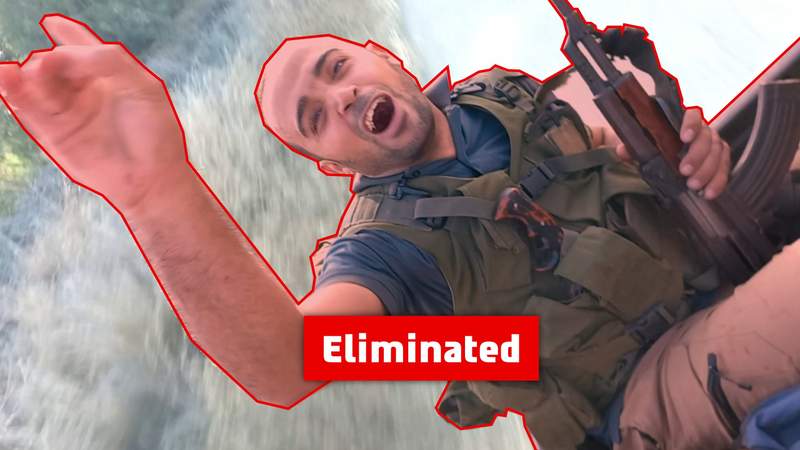
The IDF announced late Monday that they’d taken out Redouane Mohammed Dahdouh in a precision strike in Gaza. Dahdouh, they allege, wasn’t just any operative. He was, according to Israeli intelligence, a key player in the brutal abduction of several individuals—among them Hersh Goldberg-Polin, Eliya Cohen, Alon Ohel, and Or Levy—during the cross-border rampage that shocked the world. It’s an undeniable marker of grim efficiency, this relentless pursuit of those deemed responsible. But it’s also, let’s be honest, another splash of fuel on an already raging inferno.
“We will hunt down every single terrorist responsible for the atrocities of October 7, wherever they hide, whenever it takes,” declared Israeli Prime Minister Benjamin Netanyahu, in a statement to the press that didn’t quite need a full formal address to get its point across. His resolve, an iron beam through the political tumult of his premiership, leaves no room for ambiguity. This isn’t just about vengeance; it’s about a message, loudly broadcast, to any who might harbor similar ambitions.
And Hamas, for their part, responded with their usual defiant bluster. There’s no de-escalation in their playbook, not now, maybe not ever. Because when one side claims a victory, the other just sees another casualty, another reason to persist. It’s a vicious circle. Meanwhile, the international community watches on, seemingly powerless. Diplomatic efforts, like those explored in discussions about Mossad’s strategies, frequently hit an intractable wall. The region, it seems, isn’t short on grand gambits, but actual peace? That’s a whole different story.
The elimination of high-value targets, while offering a semblance of justice for families—they’ve endured unspeakable grief, watching a generational chasm of hope evaporate—rarely translates to broader calm. Israeli defense officials are quick to frame these operations as imperative for national security, for deterring future attacks. And yes, in a certain, tactical sense, they might be right. Remove a commander, disrupt a network. That’s the thinking.
“These targeted operations weaken Hamas’s capabilities and send a clear message that terrorism will have a price,” an IDF spokesperson, who requested anonymity to speak frankly about intelligence matters, stated firmly. “Our commitment to securing our borders — and retrieving our citizens remains absolute. We’re not letting up.”
But the ‘price’ here is often paid by many, not just the identified target. It complicates—tremendously—any slim chance of progress in ceasefire talks or prisoner exchanges. Think about the chess match: every piece taken means a recalculation, not necessarily an endgame. The longer this goes, the more fragmented, the more desperate, the factions become. It’s a bleak situation.
What This Means
This particular strike, rather than ushering in any moment of relief, actually tightens the spring of regional tension. Politically, it reaffirms Netanyahu’s hardline stance, potentially bolstering his position domestically, particularly among his right-wing base. For the hostage families, it might offer a sliver of emotional resolution regarding an assailant, but it simultaneously—and painfully—distances the possibility of seeing their loved ones returned alive. Because, let’s face it, dead perpetrators don’t negotiate for living hostages. The strategy here seems less about opening new doors — and more about closing old ones.
Economically, the instability triggered by these exchanges continues to weigh heavily on regional markets, scaring off foreign investment and hindering recovery efforts across the Levant. For nations in the broader Muslim world, especially countries like Pakistan, the constant stream of such reports fuels widespread public anger and calls for stronger governmental intervention. According to a 2023 Pew Research Center study, fully 85% of people in Muslim-majority countries believe that Israel’s military actions are ‘unjustified,’ illustrating a deep, pervasive dissatisfaction that governments in places like Islamabad can’t simply ignore without facing domestic pressures. That sort of sentiment can translate into diplomatic pressure on Western allies, potentially reshaping alliances in unexpected ways. It forces governments to balance their own international interests with the strong, often emotional, demands of their populace. It’s a tricky dance. And nobody’s stepping lightly.
The pursuit of justice, or what some would term vengeance, always carries externalities. In this scenario, they’re not merely ripples; they’re tidal waves threatening to swallow what little stability remains. It’s not about if the region will react; it’s about when, — and how. We’ve seen this movie before. And it doesn’t usually end with credits rolling on peace.