


Jerusalem’s March to Power: Pride Redraws Lines in Sacred City
POLICY WIRE — Jerusalem, Israel — The seat of Israeli legislative power, typically associated with hushed negotiations and impassioned, if predictable, parliamentary skirmishes, is bracing for a...

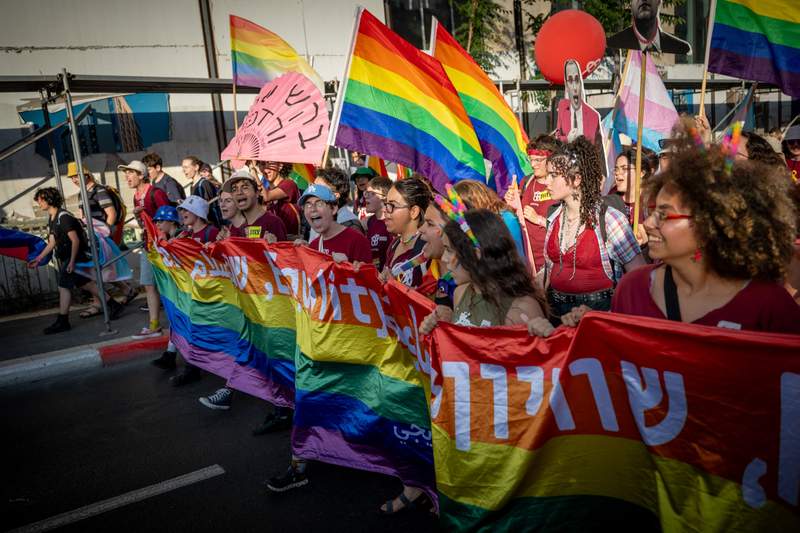
POLICY WIRE — Jerusalem, Israel — The seat of Israeli legislative power, typically associated with hushed negotiations and impassioned, if predictable, parliamentary skirmishes, is bracing for a decidedly different kind of engagement. This year, Jerusalem’s annual Pride March isn’t just snaking through the ancient city’s arterial streets; it’s heading straight for the Knesset, its path rerouted and its slogan — “Demanding Change” — pointed like a sharpened dart.
It’s a gambit, no doubt. The Jerusalem Pride and Tolerance March has always been a lightning rod, drawing devout ultra-Orthodox counter-protestors and testing the nerves of the city’s robust security apparatus. But taking the procession directly to the legislative building isn’t just about visibility; it’s a direct challenge to a government increasingly steered by conservative and religious factions. Some say it’s overdue.
Because, frankly, this isn’t Tel Aviv, where Pride is a glitter-soaked, beachside carnival. Jerusalem’s version is—and always has been—a protest, a statement, a defiance. For decades, it’s unfolded under heavy police protection, a grim necessity after incidents ranging from verbal abuse to stabbings. The new route, culminating at the Knesset grounds, isn’t about celebration; it’s about confrontational politics. It’s about saying, loud — and clear, “We’re not just here; we’re demanding our seat at the table you’ve built.”
“Jerusalem has always been a mosaic, and that includes its diverse communities, religious or otherwise,” remarked Yair Lapid, a prominent opposition figure. “Blocking access, or denying fundamental rights, diminishes us all. This march isn’t a threat; it’s a reminder of what a truly democratic Israel should look like.” And that sentiment, however often repeated by liberals, doesn’t always land with equal force in this city.
But that’s not how everyone sees it. For many of the city’s deeply religious residents, particularly within the powerful Haredi community, the march is nothing less than a sacrilege, an affront to Jerusalem’s holy character. “This perverse display near our holy institutions—it’s a deliberate provocation,” asserted Rabbi Meir Porush, a Member of Knesset from the ultra-Orthodox United Torah Judaism party. “We will pray for their souls, but we will never accept the normalization of such lifestyles in our holy city. Their route to the Knesset is an insult, not an appeal.” It’s that unyielding friction that often defines the very pulse of this place, isn’t it?
This political repositioning of the march also echoes beyond Israel’s borders, often playing into a complex regional narrative. In a part of the world where LGBTQ+ rights are, for the most part, non-existent or violently suppressed—from Riyadh to Tehran, from Islamabad to Baghdad—Israel often seeks to distinguish itself as a relatively liberal oasis. And while a march towards the Knesset makes that point to some degree, it also inadvertently highlights the strong religious opposition *within* Israel that, on this specific issue, finds itself in ideologically uneasy alignment with elements of the broader conservative Muslim world. It’s a thorny juxtaposition that Jerusalem’s shadow command surely watches with an equal measure of strategic interest and resigned frustration.
A recent poll conducted by the Israel Democracy Institute in 2023 indicated that while 76% of Jewish Israelis identify as secular, traditional, or dati (modern orthodox), only 45% of Jewish Israelis believe that LGBTQ+ couples should have the same rights as heterosexual couples when it comes to marriage or civil partnerships. This statistical gap showcases a nation still wrestling with its self-identity, even as it positions itself on the global stage.
What This Means
Moving the Jerusalem Pride March to the Knesset’s doorstep transforms it from a generalized statement of existence into a pointed act of legislative advocacy. Politically, it amplifies pressure on a right-leaning government already grappling with internal fissures and external pressures. For the ruling coalition, a heavy-handed response risks international condemnation and galvanizes the opposition; a permissive stance risks alienating their ultra-Orthodox and religious nationalist base. It’s a lose-lose proposition for those trying to maintain a fragile equilibrium.
Economically, while a local event, it projects an image—one of a vibrant, albeit contested, democracy. For the startup nation, perceived liberalism on social issues can be a draw for foreign talent and investment, contrasting sharply with its neighbors. But domestically, these deeply divisive cultural battles can consume political bandwidth and resources, diverting attention from other pressing economic reforms or security concerns. Ultimately, this new route isn’t just a physical change; it’s a rhetorical escalation, demanding that lawmakers confront—literally—the very citizens whose rights they either protect or, in some cases, seek to curtail. They won’t be able to ignore this one easily, will they?