


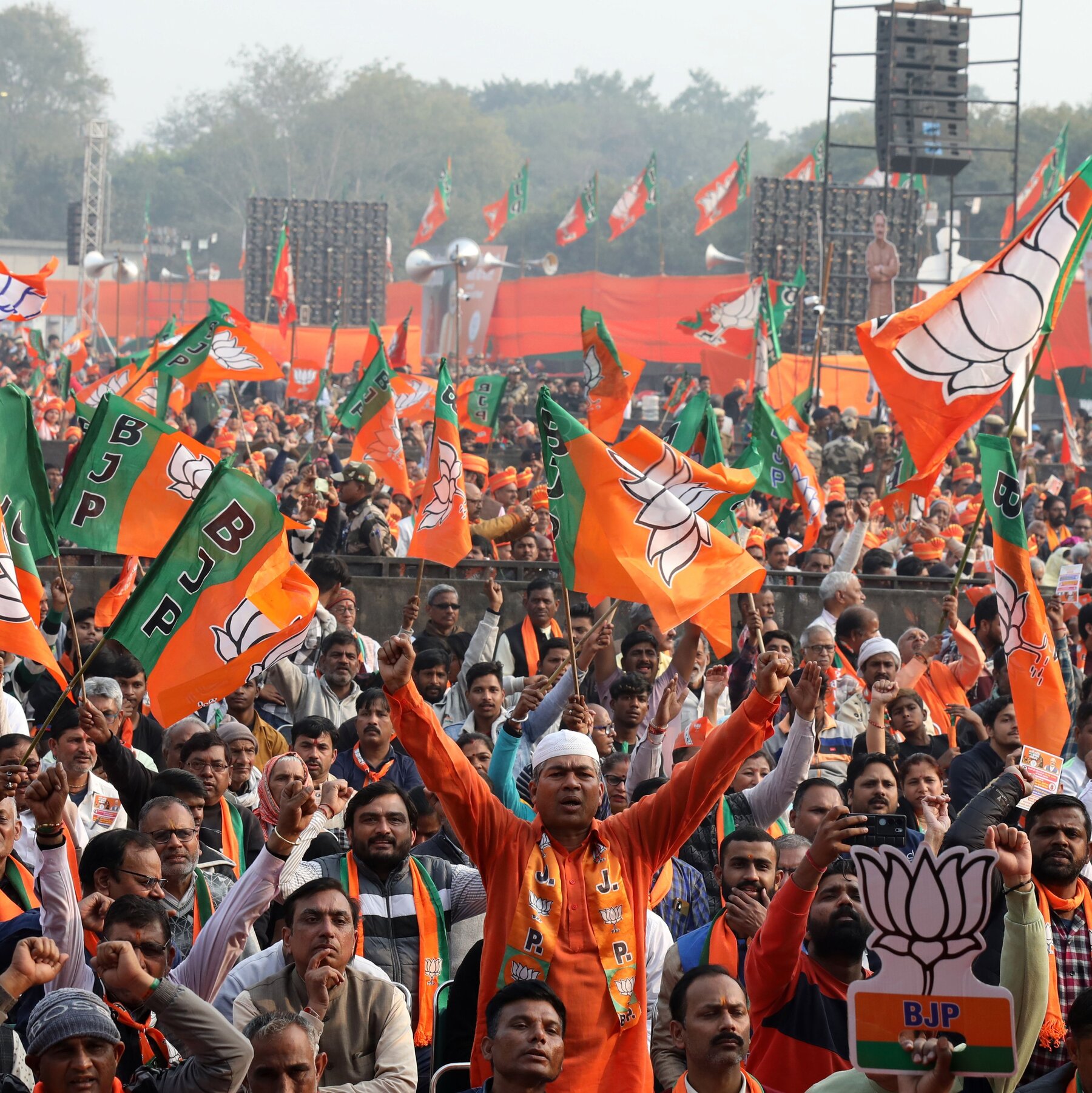

In any healthy democracy, governments are expected to act as custodians of stability, security, and constitutional order. Yet in India’s contemporary political landscape, particularly under the Bharatiya Janata Party (BJP), the link between electoral cycles and national crises has become disturbingly apparent. The evidence is overwhelming: a pattern where terrorist attacks, military escalations, and major violent incidents seem to surge when the BJP is in power, often coinciding with the run-up to elections.
Consider the timeline. The kidnapping incident of 1999 under the BJP government was swiftly followed by the Kargil War the same year. The terrorist attack on the Indian Parliament in 2001, another devastating blow, occurred during BJP rule. The Akshardham Temple attack in 2002, the targeted violence against Amarnath pilgrims in 2002 and again in 2017, and the Godhra train burning incident that triggered a wave of communal violence in 2002, each of these horrific events unfolded under BJP administrations.
In the more recent decade, the pattern has sharpened. The 2016 Pathankot and Uri attacks, the 2019 Kulgam incident, and most recently, the Pahalgam attack of 2025, all occurred during BJP rule. Statistically and politically, the correlation cannot be ignored. Each time a major election approaches, particularly in politically significant states like Bihar or Uttar Pradesh, the nation seems to be jolted by a “security event” such as an attack, an escalation, or a major communal flare-up.
This is not merely coincidental. Rather, it reflects a deeper malaise: the instrumentalization of national security for political gain. After every such attack, instead of introspection, accountability, or course correction, a hyper-nationalist frenzy is whipped up. Poets affiliated with the ruling party chant slogans of revenge. Ministers call for “severed heads” from Pakistan. The media descends into a fever of war-mongering. Yet amid all the fiery rhetoric, a simple and damning fact is ignored: why did these attacks happen under the BJP’s watch in the first place?
Accountability, the cornerstone of democratic governance, disappears. No Home Minister resigns after a failure of intelligence. No senior BJP leader accepts moral responsibility. Instead, blame is externalized, usually directed at Pakistan, creating a ready-made narrative to distract from the state’s internal failures. Meanwhile, the real costs are borne by India’s soldiers, largely the sons of poor farmers, who are pushed to the front lines in the name of nationalist spectacle.
If terrorist attacks occur, the logical course should be a precise, intelligence-led operation to neutralize the perpetrators. Instead, the BJP’s instinct has often been to escalate into larger military confrontations. This reckless brinkmanship places not only soldiers but the entire region at risk of spiraling conflict. It transforms genuine tragedies into tools for electoral mobilization, cloaking political insecurity with the mantle of patriotism.
The timing of these incidents cannot be dismissed as mere chance. Bihar elections are looming, and predictably, following the Pahalgam attack, drums of war are being beaten again. Rallies are held where leaders, including the Prime Minister, deliver fiery speeches. They do not address the failure that allowed the attack. Instead, they invoke the specter of an external enemy to consolidate their domestic standing.
It raises urgent questions: why are the same failures repeated time and again? Why is there no institutional or political accountability? Why does the media, tasked with being the fourth pillar of democracy, refuse to ask these questions? Why is every national tragedy spun into an opportunity for electoral gains?
The systemic shielding of failure is dangerous. When security lapses go unpunished and wars are threatened for political optics, governance deteriorates into spectacle. Under the BJP, this political culture has hardened. Incompetence is masked by chest-thumping nationalism. Questions are branded as “anti-national,” and dissent is crushed under the rhetoric of “unity.”
The real tragedy lies in the human cost. Families who send their sons to defend the country deserve better than leaders who gamble their lives for political survival. Citizens deserve a media that asks the hard questions, not one that acts as a government megaphone. And a democracy deserves leaders who take responsibility, not those who seek to distract and divide when their own failures are exposed.
The BJP’s reliance on crisis politics reveals a deep insecurity. Rather than winning elections based on development, governance, or vision, it often falls back on fear. Fear of war, fear of the “other,” fear of internal enemies. This climate of manufactured crisis creates fertile ground for authoritarianism, where debate shrinks, dissent is demonized, and real governance failures are whitewashed.
The question facing India today is stark: how long can a democracy survive when fear replaces accountability, when emotional manipulation substitutes governance, and when war becomes a campaign strategy?
In the final analysis, terrorism must be fought, but it must be fought intelligently, not politically. Justice must be served, not used as a backdrop for electoral theatrics. Governments must be judged not on how loudly they beat the war drums but on how effectively they prevent tragedy from occurring in the first place.
The cost of ignoring this is steep. For every opportunistic rally held after an attack, there is a grieving family whose sacrifice is exploited rather than honored. For every poem recited about revenge, there is a soldier’s mother who prays that her son does not become another nameless casualty of a needless conflict.
The real patriotism today lies not in calling for severed heads or thumping one’s chest in a stadium. It lies in asking uncomfortable questions. It lies in demanding that leaders protect, not gamble, the lives of the people they swore to serve. And it lies in refusing to let democratic accountability be drowned out by the roar of manufactured war.
As Rabindranath Tagore once said: “Patriotism cannot be our final spiritual shelter. My refuge is humanity.”
In these fraught times, India must remember that true strength lies not in manufactured outrage but in honest governance, and in the courage to hold power to account.
Author