

Hindutva Extremism and the Rising Persecution of Minorities in India
India, known for its incredible diversity and rich cultural history, is increasingly grappling with a troubling rise in Hindutva extremism. Hindutva, an ideology that promotes the belief that India...

India, known for its incredible diversity and rich cultural history, is increasingly grappling with a troubling rise in Hindutva extremism. Hindutva, an ideology that promotes the belief that India should be a Hindu-only nation, has become more prominent in recent years. As this ideology gains influence, religious minorities, especially Muslims and Christians, are finding themselves more and more targeted. The result is a disturbing trend of violence, discrimination, and forced conversions, which are often overlooked or even supported by those in power.
One of the most alarming signs of Hindutva extremism is the ‘Ghar Wapsi’ campaign, which translates to “Homecoming.” This movement aims to convert non-Hindus, particularly Muslims and Christians, into Hinduism. Despite its seemingly innocent name, the reality behind the campaign is far more sinister. While it is presented as a voluntary return to the Hindu fold, in practice, it often involves coercion and manipulation.
Many of these conversions are carried out through deceit and force. For example, in 2014, around 250 Muslims in Agra were invited to an event where they were promised government benefits. However, upon attending, they were informed that they had been converted to Hinduism. In some cases, people are even threatened with violence if they refuse to comply. The Vishwa Hindu Parishad (VHP), a major Hindu nationalist group, claimed to have “reconverted” 25,000 Muslims and Christians to Hinduism in 2018. These conversions are frequently done without the informed consent of the individuals involved, raising serious ethical and legal concerns.
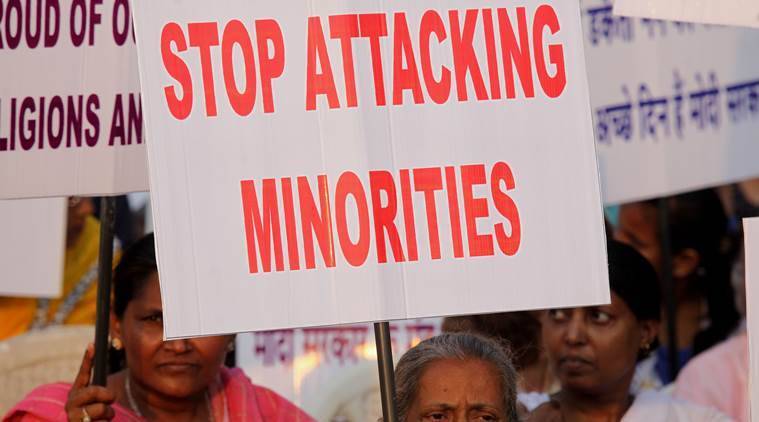
Alongside the forced conversions, there has been a disturbing increase in violence against religious minorities. Churches across India have been attacked, priests and worshippers beaten, and some people have even lost their lives. These attacks are typically carried out by Hindutva-linked groups, but the government’s response is often weak or nonexistent. The lack of accountability for the perpetrators is a major issue, and it sends a clear message: the law may not protect you if you are not Hindu.
These attacks are not isolated events. In some parts of India, religious minorities face regular violence. Christian churches and schools are often set on fire, while religious leaders are specifically targeted. Reports have emerged of Christians being forced to leave their homes after facing threats from radical Hindu groups. This violent climate creates a situation where religious minorities are living in fear, and the country’s secular foundation is being seriously tested.
What makes this situation even more alarming is the Indian government’s handling of these issues. The current administration, led by Prime Minister Narendra Modi and the Bharatiya Janata Party (BJP), has been accused of not only tolerating but in some cases even supporting Hindutva extremists. The government’s failure to take action against the perpetrators of violence is one of the key reasons why Hindutva extremism has been able to thrive unchecked.
A key example of this is the Citizenship Amendment Act (CAA), passed in December 2019. This law grants Indian citizenship to non-Muslim refugees from Afghanistan, Bangladesh, and Pakistan, but excludes Muslims from this pathway. Critics argue that this law discriminates against Muslims, deepening religious divisions and tensions in the country. Protests erupted across India in response to the law, but the government remained firm, brushing off the widespread criticism. This lack of response only emboldens extremist groups and perpetuates the climate of fear among religious minorities.
The government has been accused of using religious rhetoric to rally support from the Hindu community, which strengthens the narrative of a Hindu-only India. This tactic has further isolated Muslims and Christians, many of whom now feel like second-class citizens in their own country.
Nowhere has the rise of Hindutva extremism been more evident than in Kashmir. Kashmir, which has a Muslim-majority population, has been under intense pressure since the Indian government revoked Article 370 in August 2019, which gave Kashmir special autonomy. This decision sparked a wave of protests and unrest, with many Kashmiris fearing that they were losing their identity and culture.
Since the revocation of Article 370, the Indian government has been encouraging non-Kashmiri Hindus to settle in Kashmir, marginalizing the local Muslim population, which has led to widespread fears of ethnic cleansing. Reports of increased violence against Kashmiri Muslims, forced evictions, and a growing military presence highlight the growing tensions in the region, with many viewing these actions as attempts to dilute Kashmir’s Muslim identity.
The rising intolerance in India has drawn significant international concern, with organizations such as Amnesty International and Human Rights Watch, along with the U.S. Commission on International Religious Freedom, condemning the mistreatment of religious minorities. Despite this global criticism, the Indian government has dismissed these concerns as foreign interference, making it difficult to hold the government accountable for the ongoing persecution of minorities.
India’s strength lies in its diversity and secular values, which have long been the foundation of its democracy. However, the rise of Hindutva extremism poses a serious threat to this unity, as violence, forced conversions, and discrimination against minorities undermine the country’s core principles. To safeguard its future, the Indian government must take decisive action to protect the rights of all citizens, uphold secularism, and promote tolerance. Only by embracing its diversity and ensuring equal treatment for every individual, regardless of faith, can India preserve its reputation as a democratic beacon on the global stage.
Author