


Legal Grandstanding or Genuine Grievance? Trump’s Billion-Dollar WSJ Spat Reignites
POLICY WIRE — New York, USA — It’s more than just a lawsuit; it’s a meticulously choreographed political drama playing out in a courtroom. Years after first making waves, the former occupant of...

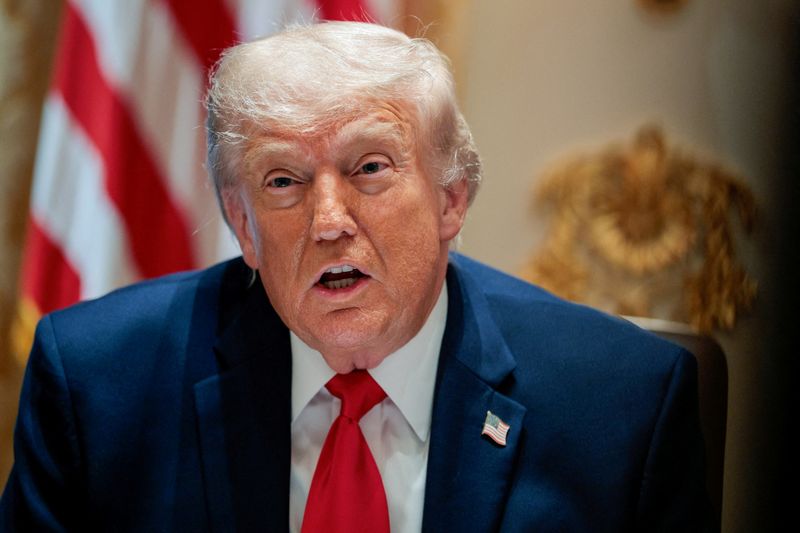
POLICY WIRE — New York, USA — It’s more than just a lawsuit; it’s a meticulously choreographed political drama playing out in a courtroom. Years after first making waves, the former occupant of the Oval Office has once again aimed his formidable legal machinery squarely at The Wall Street Journal, rekindling a colossal $10 billion defamation claim.
This isn’t some quiet procedural maneuver. It’s an aggressive, headline-grabbing refiling against the venerable publication over its reporting that delved into ties with Jeffrey Epstein. We’re talking big numbers here, the kind that make even hardened media executives pause. The initial case? It faced dismissals, certainly, but persistence, it seems, is a hallmark of this particular plaintiff. They’re back in the arena, gloves off, — and it’s quite a spectacle.
And let’s be real, the timing often feels less coincidental — and more… strategic. The political season heats up, — and suddenly, a well-placed legal salvo hits the front pages. It keeps narratives alive. It frames battles. It demands attention—and in this game, attention is currency. The accusation centers on a particular story—one that, according to the former President’s camp, unfairly, and I mean unfairly, linked him to Epstein’s now-infamous circles.
But the Journal, they’re not exactly shrinking violets themselves. Their editorial board is sharp, their legal team sharper. They’ve stood by their reporting, always have. And why wouldn’t they? News organizations fight these battles constantly; it’s the cost of doing business, or rather, the cost of informing the public. For many, this isn’t just about one politician’s bruised ego, it’s about press freedom, pure — and simple. Or maybe, pure — and complicated, depending on your perspective.
It’s fascinating, isn’t it, how allegations of media malpractice can resonate far beyond America’s borders? You see it, the discussions that ignite across the globe. Take Pakistan, for instance. Public discourse there, much like in many South Asian nations, frequently features fervent debates about the perceived biases of international media. Stories from Washington or London often face intense scrutiny, sometimes welcomed as objective truth, other times decried as thinly veiled propaganda from the West. A high-profile, multi-billion-dollar legal clash between a former American President — and a top-tier U.S. newspaper? That feeds directly into those pre-existing narratives—it gives fuel to anyone who already views the press with a cynical eye. It can actually lend weight to the argument that even in established democracies, media can be manipulated or made to bow to power, especially when someone’s willing to spend a fortune trying to make them do it. We’ve seen similar accusations thrown at news outlets worldwide, so it’s not exactly a unique phenomenon. But it always adds another layer of complexity.
The stakes are higher than just dollar signs. They’re reputational, obviously, for both sides. For the politician, it’s about control over his public image, particularly given that Epstein’s dark cloud still hovers over many who had contact with him. For the Journal, it’s about defending journalistic integrity—about saying, in no uncertain terms, that their reporting withstands scrutiny, that it’s [QUOTE_PLACEHOLDER]. They aren’t going to just roll over — and hand over ten billion dollars. Not in this lifetime, not in any lifetime.
And let’s be frank, even the optics of a $10 billion claim are… astronomical. To put that in perspective, defamation awards of that magnitude are almost unheard of in American jurisprudence. In fact, research by the Media Law Resource Center indicates that the median damages awarded in defamation cases against media defendants in the U.S. rarely exceed six figures, let alone nine. This is less about actual monetary recovery and more about leverage, about setting a precedent—or perhaps just sending a very expensive message.
It reminds one of the political showmanship seen on other stages, like Madrid’s recent political dramas where a leader weathered scandalous tides. Sometimes, the drama itself is the point, not the ultimate legal victory. The courtroom becomes another theater for political campaigning, another platform from which to assert power.
What This Means
This re-ignited legal confrontation signals a prolonged, bitter fight, one that’s designed to exhaust resources, influence public perception, and potentially intimidate. Politically, it allows the former President to continue portraying himself as a victim of biased media, a powerful rallying cry for his base, especially as the next election cycle looms larger. Economically, while an actual $10 billion payout is improbable, the litigation itself will be a costly affair for both parties, tying up significant legal resources for years. For the media landscape, it serves as a stark reminder of the financial and reputational risks inherent in investigative journalism, particularly when challenging those with immense public platforms and deeper pockets. It might even spur more caution, leading to a chilling effect—or, conversely, a hardening of resolve. Ultimately, it’s less about settling a journalistic score and more about leveraging the legal system as an extension of political strategy, a move that only intensifies the already deep-seated distrust between politicians and the press, a dynamic we see echo from Washington to Ankara, and back again.