


Preemptive Portraits: Treasury’s Controversial Design for a $250 Trump Bill Raises Eyebrows
POLICY WIRE — Washington, D.C. — They say fortune favors the prepared mind, but apparently, so too does a presidential likeness. Uncle Sam’s money-printers have apparently gone ahead and...

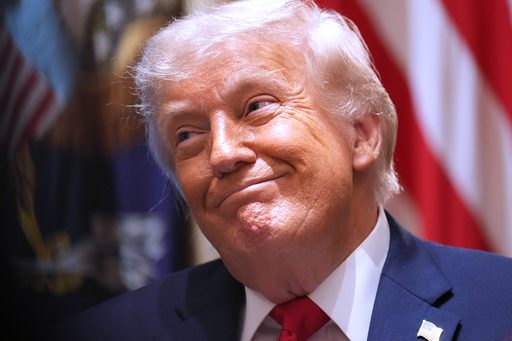
POLICY WIRE — Washington, D.C. — They say fortune favors the prepared mind, but apparently, so too does a presidential likeness. Uncle Sam’s money-printers have apparently gone ahead and designed a fresh $250 bill, complete with an existing leader’s face on it. This, mind you, before Congress has even whispered a firm ‘yes.’ We’re talking about President Donald Trump, whose image might just grace a denomination many citizens likely wouldn’t even know what to do with.
Treasury Secretary Scott Bessent, a man who knows a thing or two about anticipating presidential whims—or perhaps simply being thorough—confirmed last Thursday that his department has already finalized the artwork. You know, just in case. Bessent told White House reporters that authoring such new currency falls squarely to Congress, but offered up a frankly circular explanation for their proactive stance: “we’ve created the bill” because “we have to be prepared.” One almost applauds the dedication to hypothetical legislative outcomes.
It’s a peculiar move, setting aside the simple fact that current U.S. law is pretty darn clear about not featuring living individuals on currency. That particular rule has been, well, a thing since practically forever, a subtle nod to democratic principles, lest we accidentally confuse ourselves with certain nations where such personal glorification on legal tender is a common sight. In much of the Muslim world, for instance, particularly in nations like Pakistan, you don’t typically see the face of a sitting head of state gracing the currency. While figures like Muhammad Ali Jinnah, the founder of Pakistan, are universally recognized on rupees, it’s a distinct honor usually reserved for those whose earthly political ambitions have concluded, leaving behind an unimpeachable historical legacy. But hey, exceptions can always be made, right?
The Treasury’s quiet preparations come as legislation introduced by Representative Joe Wilson, R-S.C., still meanders through congressional corridors. Wilson’s bill aims to create a special carve-out, allowing both current — and former presidents to adorn U.S. tender, all in time for the nation’s 250th anniversary. Bessent didn’t just hint; he declared the intended recipient of this rare numismatic honor. It’s for “Donald J. Trump,” he said, deploying the full, formal nomenclature that even the president himself sometimes prefers.
But the story, as these things often do, gets a little thicker. The Treasury Department, via a spokeswoman, confirmed it has undertaken “appropriate planning and due diligence” to prep for a congressional directive. Curiously, that same spokeswoman, unlike Bessent, declined to mention Trump by name in her statement regarding the “$250 commemorative note which will appropriately recognize the 250th Anniversary of our great nation.” Maybe they’re just being modest. Or cautious. Or both.
The agency’s sudden readiness, however, doesn’t exactly emerge from a vacuum. And this is where things get truly Beltway-esque. A report by the Washington Post laid bare some administrative muscle-flexing behind the scenes. U.S. Treasurer Brandon Beach, a presidential appointee, was reportedly pushing the Bureau of Engraving and Printing (BEP) to fast-track this whole new currency business. Because, you know, waiting for Congress is so last season. What’s more, the former BEP chief, Patricia Solimene, found herself reassigned after, shall we say, *resisting* the pressure. She apparently stressed the lengthy legal and procedural hurdles involved in minting new money, a minor detail it seems. Her removal paved the way for Michael Brown, a top Beach aide, to slide into the acting director role on May 18. This suggests, shall we say, some administrative enthusiasm for the idea. Beach himself? Didn’t respond to inquiries.
This isn’t Trump’s first rodeo trying to etch his likeness into federal commemorations. There was that commemorative 250th-anniversary coin already okayed. Plus, his face, or at least its stylized representation, has been found on banners across federal buildings in Washington. Don’t forget his appointees to the Kennedy Center governing board tried to tack his name onto a performing arts facility originally conceived as a memorial to John F. Kennedy, the 35th president. That’s now bogged down in court, thanks to a little thing called federal law.
It’s all about the laws, isn’t it? Bessent did note that without Wilson’s legislative shortcut, current regulations demand two things for currency design: the inclusion of “In God We Trust” and the depiction only of deceased individuals. “It’s all up to Capitol Hill,” Bessent demurred, wrapping up his department’s premature printing press foray. Then, almost as an afterthought, he added: “We will stick to the law.” The implication being, of course, that once the law conveniently changes, all bets are off.
In 1926, the nation’s 150th anniversary saw then-President Calvin Coolidge on a commemorative half-dollar coin, which was official legal tender. However, this was a specific coin, and not a broad general currency series, maintaining a distinction that has largely guided U.S. policy for over a century. Such historic precedents often illuminate how current leaders navigate national identity, sometimes by trying to reshape it in their image.
What This Means
The Treasury’s pre-designing of a $250 bill featuring Donald Trump isn’t just about bureaucracy. It’s a calculated political maneuver—a kind of soft power play on national symbols. The underlying message? That the current administration is ready, willing, and seemingly able to redefine tradition, perhaps even law, to suit its specific narrative. Economically, a $250 denomination is utterly baffling. It would be an odd-ball in circulation, likely seeing limited actual use, similar to a niche product with questionable market demand. Instead, its primary function would be commemorative, serving as a political artifact rather than a tool for commerce, akin to the personalized branding we’ve seen on Trump-branded resorts or even water bottles. The public’s trust in currency, traditionally built on a sense of impartial national heritage, could face subtle erosion if such a personalizing trend continues. Globally, it sends a signal: a prominent nation, long a standard-bearer for democratic decorum, appears to be adopting the very personalization of state symbols common in less stable, more personality-driven regimes. It’s an Americanizing of leader worship, if you will, usually observed in places the U.S. tends to critique for their lack of democratic institutions. It’s not just a bill; it’s a statement, — and one that feels rather loud and, some might say, out of place.