


Grand Slam Tremors: When Titans Topple, A New Era Looms in Paris
POLICY WIRE — Paris, France — The crumbling of long-held sporting hegemonies often provides a potent mirror, reflecting shifts far beyond the playing field. Just ask anyone who watched Novak...

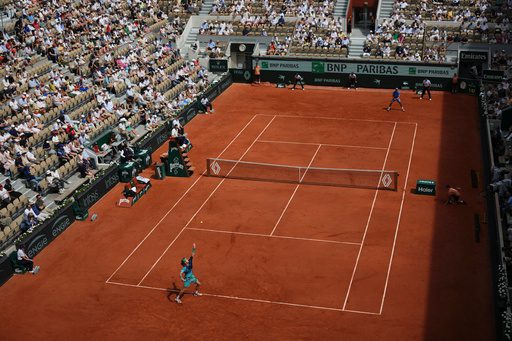
POLICY WIRE — Paris, France — The crumbling of long-held sporting hegemonies often provides a potent mirror, reflecting shifts far beyond the playing field. Just ask anyone who watched Novak Djokovic, the sport’s most decorated titan, visibly fray under the Parisian lights. His five-set defeat to Brazilian teenager Joao Fonseca at Roland Garros wasn’t merely an upset; it was a physical manifestation of a broader truth—power dynamics, however entrenched, inevitably bend.
Nobody expected this. Not really. The narrative, for so long, centered on Djokovic’s relentless march toward immortality. Yet, on Friday, his quest for a record 25th Grand Slam singles title concluded not with triumph, but with a surprising stumble. This wasn’t a solitary seismic event, either. Just a day prior, top seed Jannik Sinner—last year’s runner-up, mind you—also exited the tournament. These departures guarantee what many considered a far-fetched notion just a week ago: a brand-new men’s champion will hoist the Coupe des Mousquetaires.
It’s a peculiar thing, seeing an athlete of Djokovic’s caliber rendered so vulnerable. The original story reported him feeling like he was barely standing on his legs toward the end of the match. One could almost feel the weight of his three-hour battles from earlier rounds pressing down. But Fonseca, nineteen years old — and playing his first match against the living legend, simply refused to wilt. He prevailed 4-6, 4-6, 6-3, 7-5, 7-5, making him the first teenager to beat Djokovic at a Grand Slam tournament.
But the cracks appeared long before this tournament. Djokovic came to Paris carrying more than just his racquet bag; he brought doubts, an all-too-human shoulder injury that had limited his clay-court preparation to a mere single competitive match. That’s hardly the recipe for conquering one of the most physically demanding surfaces in tennis, even for him. After he lost the Australian Open final to Carlos Alcaraz, the narrative of his absolute invincibility, always fragile, began to openly unravel. Even he acknowledged the challenges. [QUOTE_PLACEHOLDER] taking everything in consideration and all the circumstances, I think the level was really good, Djokovic said. A diplomatic nod to his own struggle, perhaps, or a stark realization of Fonseca’s raw power. But his last major title was the 2024 U.S. Open, so it’s not like he’d forgotten how to win.
Fonseca, meanwhile, brimmed with youthful audacity. The original piece quotes him saying [QUOTE_PLACEHOLDER] Ten minutes after the match I could realize a little bit what I did, what I achieved. How difficult it was — and how amazing it was for me. And why not? He wasn’t supposed to win, which probably helped. But then, as he also noted, we still think he’s 20. At the end of the match I think he was more fit than me, that’s crazy.
Elsewhere on the women’s side, things hummed with different sorts of intrigue. Ukraine’s Marta Kostyuk continued her strong run, extending her winning streak on clay to 15 matches and setting up a much-anticipated clash with four-time champion Iga Swiatek. Another Ukrainian, seventh-seeded Elina Svitolina, also advanced, demonstrating a quiet, formidable resilience. And then there was Romania’s 36-year-old Sorana Cirstea, who absolutely walloped her opponent, becoming the oldest player in the Open Era to claim a 6-0, 6-0 win in a Grand Slam tournament—a statistic that underscores enduring capability amidst youthful surges. It isn’t just a young person’s game, you know. But there’s definitely a push.
What This Means
The exit of established giants like Djokovic and Sinner from a major tournament isn’t just sports news; it’s a policy lesson. Think of it as a microcosm for the global political — and economic stage. Long-standing powers, perhaps weakened by unseen struggles or simply the relentless passage of time, are finding themselves challenged by nimble, hungry, and often younger contenders. This isn’t a gentle transition; it’s a disruption. We’re seeing it in trade blocs, in tech, — and certainly in the political arenas of the world. Just as Djokovic was [QUOTE_PLACEHOLDER] some established nations struggle with their own fatigue, their resources stretched thin, while newer players, less burdened by history or expectation, surge forward.
For nations like Pakistan or those across South Asia and the broader Muslim world, this shift carries particular weight. Where once opportunity seemed restricted by established structures—be it economic, social, or even sporting—the rise of unexpected stars from non-traditional power centers is deeply resonant. Fonseca’s triumph, though rooted in Brazil, speaks to the broader idea that talent and sheer willpower, unconstrained by conventional pedigrees, can conquer any perceived hierarchy. And because, increasingly, these emerging voices aren’t asking for permission to compete; they’re simply taking the stage. You can see this hunger in countries modernizing rapidly, challenging old economic paradigms and demanding a more equitable global spotlight, even when traditional gatekeepers resist. It’s not just about tennis rankings; it’s about influence, recognition, and the right to reshape the conversation, much like the changing landscape on a championship court. It’s a dynamic process, — and often, it’s not for the faint of heart.
This dynamic ensures constant recalibration. And, on an individual level, it presents a challenge. [QUOTE_PLACEHOLDER] We’ve all seen today why there’s hype around him, Djokovic remarked of Fonseca, offering an admirable if slightly pained concession to the inevitable march of progress. Whether in sport or in international relations, the titans must adapt, or, well, they don’t last forever. After two decades, Carolina claims its crown, for example, illustrates the endurance required, but even crowns can be lost. What’s certain is that the changing of the guard, however painful for those at the top, injects fresh energy and new narratives. Just look at the court. There’s an unmistakable vibe now, one that hasn’t been there in ages, about the wide-open nature of everything. Maybe the global economy could take a lesson too; embracing new players might be less about losing control and more about a renewed, dynamic vitality. It’s a risk, but it’s where the growth is, isn’t it? Just like these tournaments prove.