


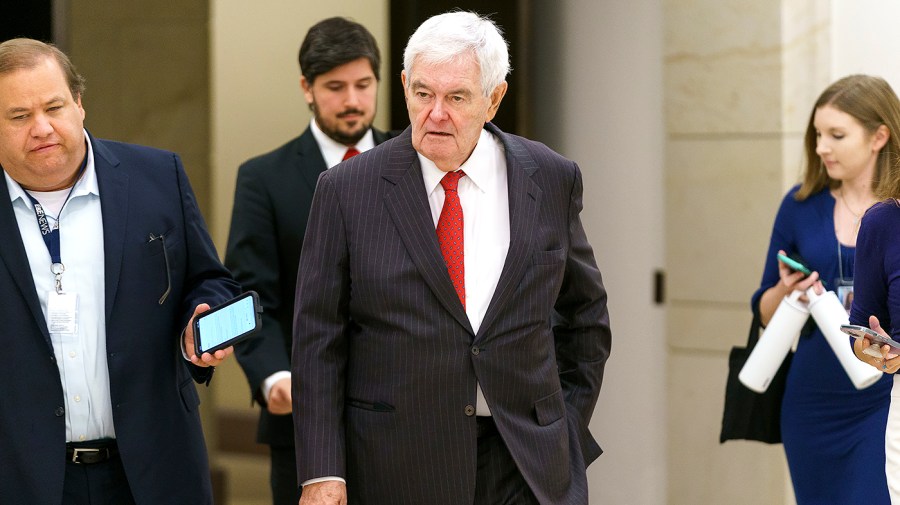
Gingrich Rewrites History: Impeachment, ‘Mistake,’ and the Specter of Revisionism
POLICY WIRE — Washington, D.C. — History, they say, is written by the victors. Sometimes, though, it’s simply re-edited by the very architects who drafted its earliest, most confrontational chapters....

POLICY WIRE — Washington, D.C. — History, they say, is written by the victors. Sometimes, though, it’s simply re-edited by the very architects who drafted its earliest, most confrontational chapters. Former House Speaker Newt Gingrich, a figure synonymous with the aggressive Republican playbook of the 1990s, has decided that after decades of hindsight, one of his signature legislative battles wasn’t quite so glorious. He now concedes the impeachment of President Bill Clinton for perjury — and obstruction of justice was a ‘mistake’. It’s a striking admission—one that begs a certain question: what makes a veteran political warrior suddenly change his narrative?
It wasn’t some sudden, moral epiphany about presidential integrity. No, Gingrich recently indicated the ‘Real problem wasn’t Lewinsky’. This framing—years after the fact—suggests a deeper, more systemic fault line he now perceives, rather than a focus on the personal conduct that dominated the headlines then. The implication hangs heavy in the air: the true ‘problem’ lay elsewhere, perhaps in the political culture, or in the efficacy of the impeachment process itself. But if the ‘real problem’ wasn’t the explicit articles of impeachment, one has to wonder what was, and why it took so long to say so. [QUOTE_PLACEHOLDER]
The original scandal, which rocked Washington and indeed the world, saw a sitting president impeached by the House of Representatives, only to be acquitted by the Senate. It was a constitutional crisis masquerading as a soap opera. The Republican-led House, under Gingrich’s influence, staked its reputation on it. But, it didn’t remove Clinton. In fact, his public approval ratings surged post-impeachment, a counterintuitive outcome that’s probably haunted many a Republican strategist since. It’s almost as if the electorate, for all its indignation, found something relatable in the president’s human frailty, or at least resented what many saw as partisan overreach. And, let’s be honest, political careers aren’t built on being ‘wrong’ in real-time, are they? So the admission of a ‘mistake’ now feels less like an apology and more like an intellectual re-positioning, a sort of political intellectual property recalibration.
His commentary revisits a deeply divisive era. For years, the political establishment has grappled with the weaponization of investigations, particularly in presidential contexts. Think back to the Benghazi hearings, for example. The echo of Gingrich’s own admission suggests a retrospective unease with the precedent set, perhaps. Or, more cynically, it might simply be a strategic play in the ever-shifting sands of Republican identity, an attempt to rationalize past aggression in light of contemporary political woes. Politics isn’t just about winning; it’s about defining the terms of the argument even after the ballots are counted. And defining them decades later, well, that’s a whole other sport.
The impact of such political introspection isn’t just confined to D.C.’s beltway. When high-profile American political figures acknowledge past ‘mistakes’ of this magnitude, it sends ripples across global democracies, including those grappling with their own versions of accountability and political theater. Take Pakistan, for instance, a nation that has seen its own leaders—democratically elected or otherwise—embroiled in accusations, investigations, and, yes, even impeachment attempts. For Pakistanis, or for any democracy wrestling with fragile institutions and strongman politics, seeing an architect of American political warfare reassess his handiwork might prompt a quiet, wry smile. It’s a reminder that even the most established political systems sometimes miscalculate, often at great human and institutional cost.
Consider the broader context of governmental oversight. A recent study by the Pew Research Center in 2023 indicated that public trust in the U.S. government has hovered around 15-20% for the better part of two decades, a steep decline from earlier peaks. Such pronouncements from former leaders, while perhaps intended to offer insight, can paradoxically fuel public cynicism about the consistency and motives of those in power. If yesterday’s righteous crusade is today’s acknowledged ‘mistake’, what does that say about tomorrow’s decisions? It leaves one pondering whether political decisions are truly about justice or merely about tactical maneuvering—a grim prognosis for any system trying to foster citizen confidence.
📄 POLICY WIRE WHITEPAPER PUBLISHED: PAKISTAN'S NATIONAL SECURITY POLICY PRIORITIES
👉 READ BY CLICKING HEREBut Gingrich’s revisionism isn’t unique. Political figures across the globe, particularly in parliamentary democracies where no-confidence votes and political maneuvering are constant threats, routinely refine their public stances on historical events. It’s part of the process, really. This particular retrospective isn’t an isolated incident; it reflects a broader phenomenon of historical narrative management that’s as old as recorded political history itself. And why wouldn’t it be? Memory, like policy, can be quite pliable when given enough time. The lessons here are perhaps less about Clinton and more about the mutable nature of political legacy—and the surprisingly thin line between conviction and convenience.
What This Means
Gingrich’s belated assessment of the Clinton impeachment as a ‘mistake’—and that the ‘Real problem wasn’t Lewinsky’—carries a layered political implication. First, it subtly attempts to reframe the GOP’s aggressive stance from the late 90s, potentially softening the historical image of a party sometimes viewed as overzealous. This kind of rhetorical adjustment can serve current political narratives, offering a nuanced perspective that might appeal to moderate voters weary of endless partisan combat. Or perhaps it’s simply an older, wiser observer—the kind we don’t always get—looking back on a particularly ugly skirmish and wishing things had gone differently, or been handled better.
Economically, prolonged political instability and governmental distraction—such as the kind fostered by an impeachment proceeding—diverts critical resources and focus from pressing economic challenges. While a direct correlation between the Clinton impeachment and immediate economic downturn is difficult to draw, the underlying principle holds: political grandstanding consumes energy that could otherwise be spent on, say, infrastructure, international trade, or tackling inflation. It’s a transaction cost, frankly, that democracies pay for intense internal strife. This diversion of attention, from domestic policy to partisan spectacle, isn’t unique to American politics. Countries like Bangladesh, facing immense developmental challenges, are keenly aware that political infighting, corruption scandals, and parliamentary gridlock can hamstring economic progress. Remember how discussions on climate policy or healthcare reform often take a backseat to sensational headlines? It’s always about priorities. And when the main priority is an old vendetta, everyone pays. Such political noise often drowns out critical discussions about genuine national issues, leaving the citizenry with a sense of frustration and helplessness against an insular, self-serving political class. Ultimately, Gingrich’s ‘mistake’ confession offers less a historical apology and more a contemporary lesson in the careful art of political repositioning, regardless of how belated it might appear.