


Los Angeles’ Angel City Resurfaces: A Penalty Save, a Game-Winner, and the Unwritten Rules of Resilience
POLICY WIRE — Los Angeles, United States — Sometimes, the difference between a season sinking into an abyss and a team clawing its way back to solid ground hinges on a solitary, improbable twitch of...

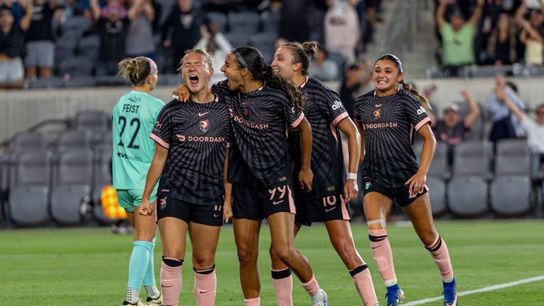
POLICY WIRE — Los Angeles, United States — Sometimes, the difference between a season sinking into an abyss and a team clawing its way back to solid ground hinges on a solitary, improbable twitch of a goalkeeper’s glove. For Angel City FC, Wednesday night wasn’t just about three points; it was about reclaiming a narrative that had gone conspicuously, brutally off script. At BMO Stadium, under the glint of Southern California floodlights, a 2-1 victory over the Kansas City Current didn’t merely end a two-month winless streak—it redefined the stakes for a squad and, arguably, an entire league.
It wasn’t pretty for long. Not truly. Gisele Thompson kicked off the drama early, netting a nine-minute stunner that sent the crowd into a brief, celebratory frenzy. She took the ball wide, slow-dribbled to freeze her defender, then cut in to smash it home with her left. And, sure, that felt good, a jolt of long-absent electricity. But then the Kansas City Current, being the professionals they’re, found their equalizer through Ally Sentnor. Just like that, the familiar dread, that icy touch of the recent past, threatened to descend once more.
The halftime whistle, with the score knotted at one apiece, felt less like a break and more like a collective breath held captive. Two shots on goal for each side, six attempts for LA, five for KC. Not much separated them on paper. But for Angel City, the emotional ledger was tilted, weighted by recent failures. Because after March, this team hadn’t felt the sweet release of victory. They’d just kept grinding, kept hitting walls. Then, ten minutes into the second half, the universe decided to test them, perhaps for the last time. A penalty kick. Emily Sams, defender, errs inside the box. Suddenly, it’s just Angelina Anderson, Angel City’s embattled keeper, staring down Sentnor, defending a 24-foot expanse of netting.
It’s one of sport’s cruellest paradoxes: an entire game can turn on a single, almost theatrical moment between two individuals. And in that frozen frame, Anderson didn’t just step up; she leapt into her own redemption arc. She batted it away. The roar from the BMO stands wasn’t just excitement; it was relief, a release of tension so palpable you could almost see it shimmer over the pitch. Kansas City Current Head Coach Vlatko Andonovski, never one to mince words, later remarked, “You get a penalty kick, you expect to convert. It’s a momentum killer, sure. But we can’t hang our hats on a single moment; we have to look at the larger effort.”
That save? It didn’t just energize Anderson. It shot a jolt through the entire team, midfielder Kennedy Fuller told Policy Wire post-match. “We’d been in a rut, a real, ugly rut. But when Angie stopped that PK, you just felt it. Like a switch flipped. Suddenly, we *had* to go win it. There wasn’t any other option, you know?”
And win it they did. Fuller, subbed in at 69 minutes, delivered the decisive blow just two minutes later. A true super-sub moment. The final whistle brought not just jubilation, but a profound sense of catharsis. Their record now stands at 4-1-4 (four wins, one draw, four losses)—a definite improvement from the slump.
What This Means
This isn’t just about a local Los Angeles football club winning a game; it’s a micro-drama reflecting larger trends in global sports and, frankly, broader socio-economic shifts. Women’s professional soccer, particularly the NWSL, has become a hotbed of investment, drawing fans — and capital. For Angel City, a franchise partially owned by A-list celebrities and business magnates, the pressure isn’t just to play well; it’s to consistently attract eyes and dollars. A prolonged losing streak affects merchandise sales, broadcast deals, and future sponsorships—it’s not just pride at stake.
The universal appeal of such moments—the dramatic comeback, the individual act of defiance against overwhelming odds—transcends borders. It’s a story that resonates, whether you’re in BMO Stadium or following the league’s burgeoning profile from Karachi or Kuala Lumpur, where football’s grip on the collective consciousness continues to expand exponentially. Look no further than the significant investments pouring into sports infrastructure across parts of the Muslim world, keen to capture similar fan fervor and economic spin-offs. Even in Pakistan, where cricket has long reigned supreme, football’s growing popularity signals a future where an NWSL game’s drama might capture headlines as readily as a major cricket tournament does, challenging older narratives of sporting dominance.
Consider the NWSL’s projected revenue: according to industry analysts, the league is set to surpass half a billion dollars in annual revenue by 2028, a staggering 300% increase from its 2023 figures. This growth isn’t just fueled by Hollywood backing; it’s built on these gritty, heart-stopping games that keep fans glued, from California to the bustling markets of Central Asia. The sheer competitive nature on display here is a lesson in strategic resilience, not unlike the maneuvering seen in Central Asia’s geopolitical chess matches. For Angel City, this win isn’t just about three points in the standings; it’s about validating the belief, the investment, and the raw emotion that fuels this rapidly expanding league.
But make no mistake. One win, however dramatic, doesn’t erase the past. It simply offers a reprieve, a tantalizing glimpse of what’s possible. The pressure’s still there. Always is, when you’re trying to build an empire. Though not quite the scale of Turin’s financial dance for Europe’s top goalkeepers, the NWSL’s economic ecosystem demands performance. And tonight, Angel City performed. For now.