


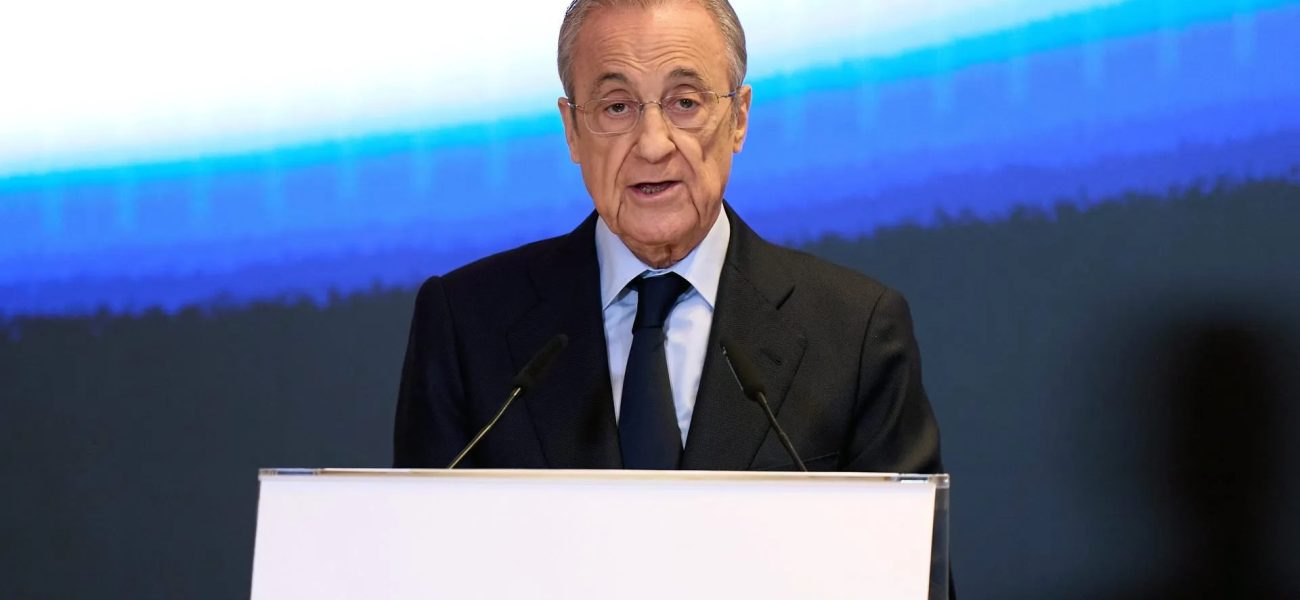
The Santiago Squall: Perez, Referees, and the Unraveling Threads of Spanish Football
POLICY WIRE — Madrid, Spain — It used to be just goal-line decisions, debatable penalties, and the usual dugout histrionics. Now, it’s before an actual Anti-Violence Commission. That’s...

POLICY WIRE — Madrid, Spain — It used to be just goal-line decisions, debatable penalties, and the usual dugout histrionics. Now, it’s before an actual Anti-Violence Commission. That’s how far Spanish football, specifically the perennial feud between Real Madrid and, well, everyone else, has escalated. Florentino Pérez, the man who built empires — and broke super leagues, might finally have overplayed his hand.
For decades, Pérez’s modus operandi has been simple: Real Madrid is always right, always the victim, and always deserving of the very best. This narrative, a core tenet of the club’s identity, often plays out against the backdrop of refereeing decisions. But last week, the club president launched an unprecedented broadside, alleging not just poor calls, but outright systemic corruption and “title theft.” This wasn’t a rant; it was a carefully articulated accusation, echoing sentiments from the ongoing ‘Negreira case’ and amplified across Real Madrid TV.
The Spanish Association of Football Referees (AESAF) finally said, ‘enough is enough.’ They’d already asked for disciplinary action, a step often seen as merely symbolic. Now, they’ve gone nuclear, dragging Pérez and Real Madrid CF – the behemoth media machine of Real Madrid TV – before Spain’s Commission against Violence, Racism, Xenophobia, and Intolerance in Sport. Think about that for a second. Violence. In sports administration. This isn’t just about whistles and flags anymore; it’s about public incitement and the integrity of an entire professional class. And you don’t file such a complaint unless you truly feel cornered.
“They call it an anti-violence commission, but what about the violence done to our history?” Pérez reportedly mused, as is his wont, to a private gathering recently. “To the thousands of titles snatched from us by a rigged system? I won’t stand idly by. Real Madrid demands fairness, and it’s time someone spoke that uncomfortable truth, no matter how inconvenient.” It’s a classic Pérez deflection, a rhetorical judo throw that repositions his critics as the aggressors, all while casting himself as a martyr to an unassailable moral purity.
But the referees see it differently. AESAF President David Pérez Negreira (no relation to the other ‘Negreira’ that haunts Spanish football discussions), didn’t pull any punches in a statement. “This isn’t about isolated incidents; it’s a campaign. When the most powerful voices in Spanish football continually poison the well, it puts a target on every referee’s back,” Negreira said, his tone reflecting genuine exasperation. “Our job is tough enough without a state-funded propaganda machine trying to delegitimize our profession.” Indeed, the continuous stream of criticism broadcast via Real Madrid TV, watched avidly globally, often goes beyond analysis and drifts into outright vilification of officials. Juventus, another European football giant facing its own reckoning, could probably tell a thing or two about the corrosive effect of narratives, though their battles have typically played out in boardrooms and courtrooms, not against an anti-violence panel.
The AESAF communiqué laid it bare: “The Association considers that the repeated use of certain public messages, as well as the continuous dissemination of content that systematically questions or discredits the refereeing collective, contributes to the deterioration of the climate of respect necessary for the proper development of sporting activity and may encourage situations of tension, hostility, or violence toward referees.” It’s not just about winning games; it’s about safety. It’s about being able to walk off the pitch without fear of a targeted media campaign unraveling your life.
Because, make no mistake, the reach is immense. According to Nielsen, Real Madrid TV viewership globally grew by a staggering 15% last year. That’s a lot of eyes, — and a lot of ears soaking up whatever narrative the club’s leadership chooses to spin. In regions like Pakistan and across the Muslim world, where football is less a sport and more a feverish devotion, these accusations can resonate profoundly. Fans, already passionate, might take the words of such a towering figure not as mere sporting grievance, but as a genuine exposé of rot. This isn’t just football; it’s soft power, and its abuse can fuel real-world contempt and mistrust, mirroring similar dynamics in regional politics where institutional credibility is often under siege.
What This Means
This escalating dispute carries serious weight, far beyond the pitch. For one, it represents a direct challenge to institutional integrity. If Pérez can so brazenly – and publicly – impugn the entire refereeing apparatus without significant consequence, what message does that send? It chips away at the already fragile trust in sport’s governing bodies. It also shines a harsh spotlight on the blurring lines between media ownership — and ethical reporting. Real Madrid TV isn’t an independent outlet; it’s a direct extension of the club’s communications strategy, making its highly opinionated — critics would say propagandist — content a direct tool in the club’s power plays. Such weaponization of media by powerful figures is a trend we’ve seen echoed globally, even in state-run outlets, where challenging authority becomes an act of corporate rebellion.
Economically, this could have ripples. Sponsors are keen on image. A sport constantly mired in allegations of corruption and incitement of violence isn’t exactly an appealing partnership. Politically, the involvement of an anti-violence commission elevates a sporting spat to a societal concern, forcing government bodies to adjudicate not just fair play, but public order. And, it’s just plain bad for the game. Football, even with its high drama, needs a semblance of decorum to thrive. When the referees – the very people whose presence ensures competitive balance – feel their safety and integrity are openly threatened by one of the sport’s biggest power brokers, it doesn’t bode well for attracting future talent, be it players, coaches, or the oft-maligned men and women in black.