


Germany’s Quiet Exodus: Empty Gates and Echoing Doubts Amidst Global Frictions
POLICY WIRE — Frankfurt, Germany — The hum of jet engines over Germany’s financial heart, usually a symphony of commerce and connectivity, has lately diminished to a muted thrum. No bustling crowds,...

POLICY WIRE — Frankfurt, Germany — The hum of jet engines over Germany’s financial heart, usually a symphony of commerce and connectivity, has lately diminished to a muted thrum. No bustling crowds, no last-minute dashes for connecting flights. Just fewer planes. And fewer people. This quiet departure, or perhaps, non-arrival, speaks volumes about a nation grappling with domestic dissent and distant conflict.
Airport terminals, typically sprawling cathedrals of frantic activity, now often feature more empty seats than passengers. German air passenger traffic didn’t just slow down recently; it flat-out plunged by 7.5%. That’s according to preliminary figures for the latest reporting period from the Statistisches Bundesamt—a cold, hard fact tucked away in reports, far from the polished press releases. But this isn’t just about frustrated tourists. This dip suggests something far more complex, a convergence of labor unrest at home and the chilling winds from an increasingly volatile geopolitical landscape abroad, particularly from the protracted friction with Iran.
It’s a peculiar confluence, isn’t it? One minute, airline ground staff are walking off the job over wage disputes; the next, a global air traffic controller has to reroute flights to dodge aerial showdowns in the Persian Gulf. You don’t have to be a clairvoyant to connect those dots. “Our citizens expect stability, not endless negotiations that paralyze essential services,” griped German Transport Minister Volker Wissing in a recent parliamentary session, barely concealing his exasperation. “These repeated disruptions are eroding confidence in our ability to function.”
Confidence is a fragile thing, especially when it comes to travel plans that demand intricate logistics. Because who wants to book an expensive ticket, knowing there’s a fifty-fifty chance it’ll be grounded by a wildcat strike? But domestic issues only tell half the tale. The spectre of an escalating conflict with Iran — or the very real consequences of the region’s sustained instability — makes air corridors over the Middle East feel a bit too much like shooting ranges. Airlines aren’t eager to risk expensive assets or, more importantly, human lives, by flying through what they perceive as hot zones. They’re re-routing. They’re cutting capacity.
And these strategic hesitations aren’t just affecting flights bound for Tehran or Tel Aviv. No, the ripple effect reaches far, touching key hubs like Dubai or Istanbul. For countless expatriates from Pakistan, India, or other South Asian nations, those cities serve as indispensable gateways, linking them to European workplaces or families. Fewer flights from Germany into those Middle Eastern mega-hubs mean fewer connections to Karachi, Lahore, or Delhi. It impacts everyone from software engineers flying home for Eid to entrepreneurs scouting new markets. Money isn’t flowing quite the same way either, those informal remittances often carried via travelers, they’re taking a hit. It’s a quiet squeeze on communities many don’t even think about.
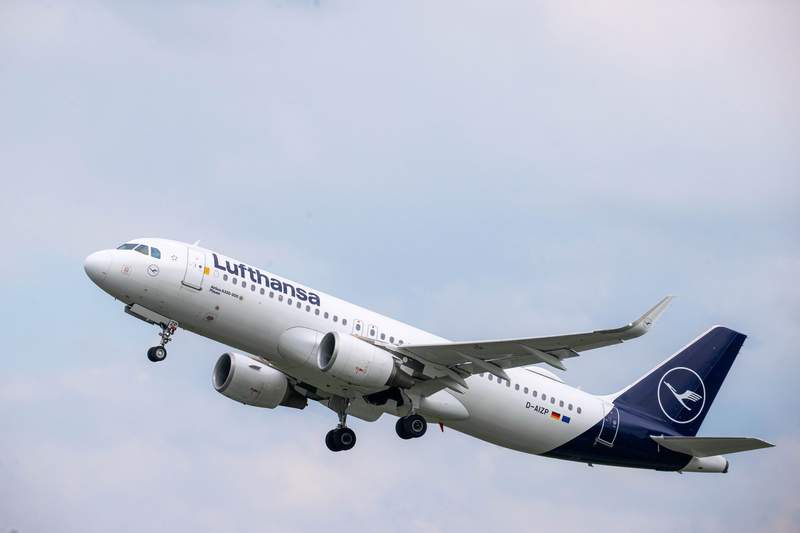
“We’ve had to completely revise our seasonal routes, adding hours to some flights to avoid certain airspaces,” admitted Carsten Spohr, CEO of Lufthansa, sounding every bit the executive counting dimes and mapping detours. “It’s costly, it’s inefficient, — and it chips away at our competitiveness in an already tight market. But what’s the alternative?” He didn’t wait for an answer, presumably because there isn’t an easy one.
What’s unfolding is a messy demonstration of how profoundly local annoyances and distant anxieties can intertwine, leaving a major European economy—a supposed powerhouse—looking a little less robust. That 7.5% drop? It’s not just a number on a chart; it’s thousands of empty seats, millions in lost revenue, and a visible hesitation in the arteries of global movement. Germany’s industrial heart, you see, isn’t beating quite as strongly as it used to, and its lungs — the airports — aren’t drawing in as much air either.
What This Means
This isn’t merely an aviation problem; it’s an early warning system blinking red for the German economy, and by extension, for Europe. Reduced air traffic means fewer business travelers sealing deals, fewer tourists spending euros, and fewer high-value goods being shuttled globally. On the economic front, you’re talking about a drag on the hospitality sector, diminished airport revenues, and — crucially — a perceived increase in the ‘friction cost’ of doing business with or within Germany. It paints a picture of a nation becoming less attractive for global mobility, making it harder to lure talent or secure investment when other markets appear less complicated. Politically, the recurring labor disputes at critical infrastructure points are deeply embarrassing, showcasing a government struggling to manage internal grievances. Add to that the pervasive unease stemming from Middle Eastern hostilities, and Germany’s economic resilience looks decidedly wobbly. The long-term implications are for a more insular, less globally integrated German economy, one where a casual weekend trip becomes a costly, bureaucratic headache, and foreign investors think twice. The global stage shifts, you know, — and sometimes, you miss the quiet signs.