


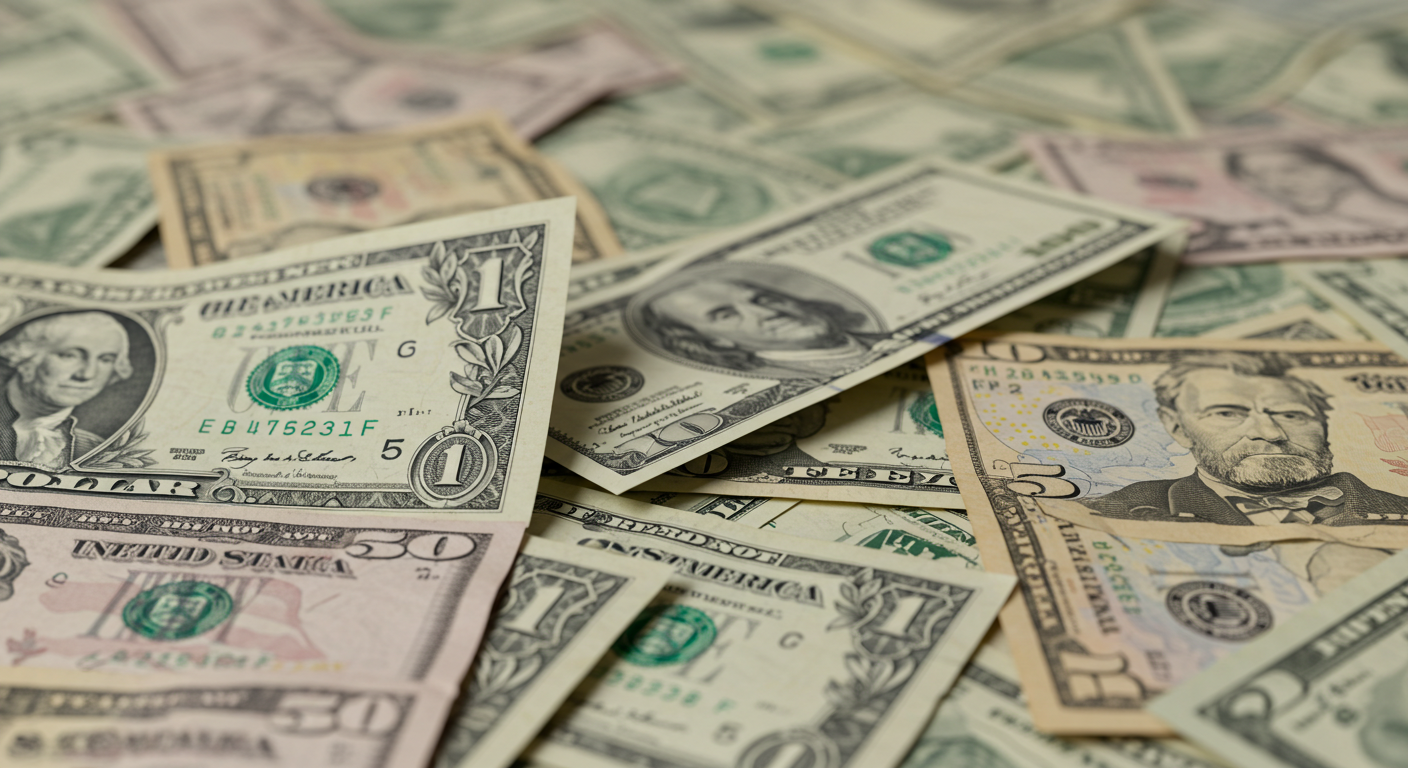
US Dollar: Reclaiming and Reframing the Truth About Pakistan’s Economy
Every year, around budget season, a predictable pattern unfolds. Reports flood in on Pakistan’s economic performance as happening now, they’re presented in one primary language: the US dollar. This...
Every year, around budget season, a predictable pattern unfolds. Reports flood in on Pakistan’s economic performance as happening now, they’re presented in one primary language: the US dollar.
This year is no different. The headlines say our per capita income has increased from $1,680 to $1,824, and GDP has crossed the $411 billion mark. At first glance, this looks like progress. But soon enough, the dominant narrative kicks in—skepticism about sluggish growth, concern over missed potential, and in some quarters, outright pessimism. It’s as if, no matter what the underlying realities may be, the economy is always underperforming.
Here’s the catch: these dollar figures, while not irrelevant, tell only part of the story. In fact, they may be painting a deeply misleading picture—especially for the 250 million Pakistanis who live, work, earn, and spend in rupees, not dollars.
When the rupee depreciates, as it has over the last few years—due to global inflation, external debt pressures, and IMF-related adjustments—our dollar-denominated indicators flatten or fall. That doesn’t necessarily mean the economy is shrinking. It often just means the exchange rate has shifted.
Let’s look at per capita income in rupee terms. It rose from PKR 268,320 in FY21 to PKR 520,840 in FY25—a near doubling. Similarly, GDP more than doubled from PKR 55.5 trillion to PKR 117.1 trillion over the same period. That’s a story of real expansion—more businesses operating, more workers employed, more taxes being collected. Yet, when measured in dollars, this growth seems sluggish. Why? Because the rupee lost value against the dollar.
The analogy is simple: imagine measuring your child’s height with a shrinking ruler each year. Eventually, even if they’re growing, the data will suggest they’ve stopped. That’s what happens when we evaluate economic performance only in USD terms while ignoring currency depreciation.
This is not to say that dollar-based reporting should be discarded. It’s crucial for global comparison, debt analysis, and investor confidence. But when the only lens through which we view ourselves is the dollar—when headlines, policies, and public mood are all shaped by it—we risk serious distortion.
There are three dangers here.
First, policy distortion. When planners see flat dollar growth, they may believe the economy is stagnant, leading to unnecessary austerity or hesitation in pro-growth measures.
Second, public disillusionment. The average citizen hears again and again that the country is not growing. Despite increased business activity or job creation, the dominant message remains negative.
Third, misleading signals to investors. If foreign or diaspora investors see weak dollar growth, they may assume Pakistan’s economy isn’t worth entering—when in reality, the local market and consumption base have expanded significantly in rupee terms.
This is why I believe it’s time to shift to a dual reporting model: one that shows per capita income, GDP, and other key indicators in both rupees and dollars, clearly contextualized with inflation and exchange rate data. This is not unusual. Many emerging economies already do it—recognizing that domestic reality and international perception are two different dimensions that must be aligned, not confused.
More importantly, we need a narrative reset. Progress in rupees is progress. It’s what pays wages, drives business, and determines tax revenues. It’s what decides whether schools expand, roads are built, or families improve their standard of living. Dollar valuations matter, yes—but only as part of the picture, not the whole frame.
Let’s also be clear that inflation is real and must be accounted for. But inflation alone does not explain a 94% increase in per capita income or a doubling of GDP in five years. There is genuine expansion happening in Pakistan’s real economy—new factories, services, startups, exports, remittances, and digital platforms. This energy deserves recognition, not erasure.
The path forward is threefold.
First, government agencies like the Ministry of Finance and State Bank should institutionalize contextualized, dual reporting. Each major figure should be shown in both PKR and USD terms, with explanatory notes. This is a simple but powerful fix.
Second, the media must move beyond simplistic headline writing. We need economic journalism that informs, not inflames—journalism that explains how growth, inflation, and currency interact, and what it means for households and businesses.
Third, think tanks and universities must help build economic literacy. Public understanding of real vs. nominal growth, domestic vs. global metrics, and rupee vs. dollar implications must improve. This is a public good, not a technical indulgence.
We also need to remind ourselves that national progress is not measured by exchange rates alone. The GDP number in dollars may be stagnant, but the lived economy in Pakistan is still growing. Our challenge is to make that growth more equitable and sustainable—not to discount it because of a fluctuating exchange rate.
Pakistan is at a turning point. Stabilization efforts are underway. Structural reforms—though painful—are being made. And despite political uncertainty, the economic engine keeps running, powered by the resilience of our entrepreneurs, workers, and consumers.
We must not let an imported benchmark define our self-worth. If we allow the exchange rate to write our national story, we forfeit agency over our own future. It’s time we told our story in our own terms, starting with the currency that reflects the pulse of our people.
That currency is the Pakistani rupee we must be proud of.
Author