


The Road Not Taken: Why a ‘Home’ Match in Raipur Could Shake IPL Fortunes
POLICY WIRE — Raipur, India — The arid landscape of Chhattisgarh might seem an odd stage for the Indian Premier League’s most anticipated corporate skirmishes, but here we’re. Royal...

POLICY WIRE — Raipur, India — The arid landscape of Chhattisgarh might seem an odd stage for the Indian Premier League’s most anticipated corporate skirmishes, but here we’re. Royal Challengers Bengaluru (RCB) — that glittering, star-studded enterprise with a knack for making things impossibly difficult for themselves — suddenly find their ‘home’ fixtures shunted hundreds of miles away to Raipur. This isn’t just a change of scenery; it’s a profound test of psychological resilience, a forced adaptation for a squad built on the raucous energy of Bengaluru’s home crowds. For Mumbai Indians (MI), it’s less an inconvenience, more a final, desperate roll of the dice in a season they’d frankly rather forget. They’re playing with nothing to lose now. And sometimes, that’s when a team becomes truly dangerous.
It’s an inconvenient truth for RCB, who arrive reeling slightly from a recent stumble against Lucknow. Sure, they’re still perched at a respectable third, but the air above them? It’s thick with vultures. Every single game now carries the weight of a corporate merger or a political ballot – decide its future. Mumbai, by contrast, operates on sheer adrenaline. They haven’t found their rhythm; their campaign has been a bizarre symphony of brilliance — and bewildering collapses. They’ve seen Raipur before, even acclimatized somewhat, which means RCB walks onto a surface that’s both new territory and, paradoxically, familiar hunting grounds for their opponents. A bitter pill to swallow, no doubt.
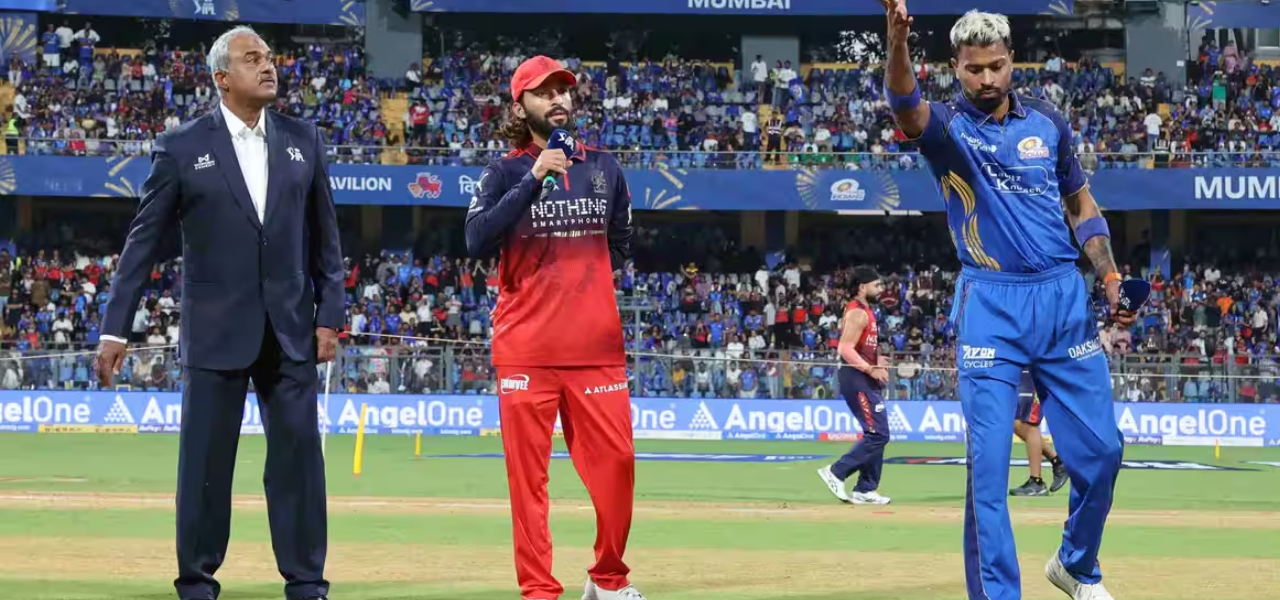
RCB captain Rajat Patidar, likely under immense pressure to rally his somewhat erratic troops, wasn’t pulling punches. "We don’t get to choose the pitch, do we?" he quipped to Policy Wire ahead of the clash, a hint of weary resignation in his voice. "We play where they tell us. Our job is to perform, wherever the boundary ropes are placed." This detachment from the creature comforts of their actual home turf – the notoriously short Chinnaswamy boundaries and predictable wicket – means they’re charting unknown waters. It’s an almost philosophical dilemma for a sports team: are you a product of your environment, or can you transcend it?
But Mumbai? They’re just trying to cling to relevance. Hardik Pandya, the captain navigating what has been a tempestuous tenure, summed up their situation with characteristic bluntness. "Every game’s a final now. We aren’t here for sightseeing." It’s the language of desperation, an honest acknowledgment of their precarious perch. Their top order has faltered without Phil Salt providing early fireworks, while Jacob Bethell’s consistency remains an elusive ghost. Even Josh Hazlewood, a bowling behemoth, has found himself occasionally bruised, an unwelcome sight for any outfit battling for survival. Mumbai’s issues run deeper, of course, a systemic malfunction across their batting, and new-ball bowlers who haven’t quite found their fangs, leaving Jasprit Bumrah – a veritable one-man army – constantly patching up holes later in the innings.
This match isn’t just a sporting contest; it’s a geopolitical microcosm. Cricket, especially the IPL, isn’t confined to India. Its echoes resonate across South Asia and beyond, gripping millions in the Muslim world, where star players are revered, and team loyalties sometimes overshadow national borders. In Karachi, Dhaka, and Dubai, the viewership numbers are staggering, reflecting a shared passion for the sport that transcends complex diplomatic relationships. Like other global sporting spectacles, its economic and cultural tentacles stretch far.
What This Means
The stakes here transcend simple playoff aspirations. For Royal Challengers Bengaluru, an adopted home in Raipur isn’t just a logistical hiccup; it’s a test of their institutional adaptability. A slip-up here jeopardizes more than their standing on the league table; it impacts fan confidence, future sponsorship negotiations, and their long-term market appeal. Remember, sports franchises are businesses first, entertainment vehicles second. An inconsistent RCB translates to uncertain returns for stakeholders, mirroring the volatility seen in nascent economic zones. Mumbai Indians, in their do-or-die struggle, embody the harsh reality of modern capitalism – perpetual performance is the only currency that matters. Failure to compete effectively directly translates to diminished brand equity. But a strong finish, even if they don’t make the cut, buys them goodwill and perhaps a modicum of forgiveness for next season. For both, it’s a delicate dance between sport — and finance. According to league statistics, the historical head-to-head records paint a grim picture for Bengaluru, who’ve managed only 16 wins against Mumbai’s 19 across 35 encounters. They’ve got a hill to climb.
The Raipur pitch, known for favoring the bat initially but assisting bowlers as the game progresses (due to rising humidity and dew making the ball slicker), complicates strategy. Teams typically bowl first, hoping to exploit the late-game conditions. It’s a subtle chess match beneath the thundering sixes. And the forecast? Hot days with a potential for afternoon rain before the 7:30 PM IST kick-off, meaning even the weather, fickle and dramatic, will have its say in this high-octane drama. They’ll need their wits about them, everyone involved, because this isn’t just another game of cricket. It’s a barometer of ambition — and survival, played out on unfamiliar turf under an unforgiving spotlight.