
Papal Pause: Vatican’s Delicate Dance Hints at Deeper Dissent with Washington’s Right
POLICY WIRE — Vatican City, Italy — Diplomatic language, it’s often said, is designed less to inform and more to conceal. But sometimes, what’s left unsaid speaks volumes. A recent,...

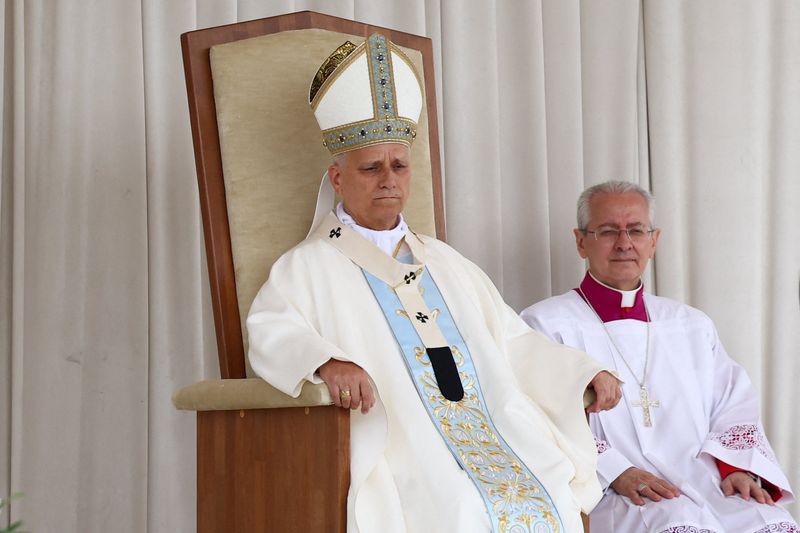
POLICY WIRE — Vatican City, Italy — Diplomatic language, it’s often said, is designed less to inform and more to conceal. But sometimes, what’s left unsaid speaks volumes. A recent, notably terse communique from the Holy See, detailing Senator Marco Rubio’s audience with Pope Francis, has Washington and Rome watchers alike parsing every omission. It wasn’t the meeting itself, per se, that raised eyebrows; it was the conspicuous lack of typical papal protocol—a quiet diplomatic cold shoulder, really—that suggested lingering discomfort with a particular brand of American conservatism.
For a politician of Senator Rubio’s stature—a senior Republican, a figure widely respected in conservative circles, and one-time presidential hopeful—to receive such a streamlined announcement is, well, unusual. Think about it. Papal audiences usually come festooned with details: the warm reception, the exchange of gifts, the topics of conversation, perhaps even a benign mention of a shared commitment to peace. None of that, not really. It just sort of… happened. And that’s the point.
But this isn’t just about Rubio. Oh no, not by a long shot. This subtle Vatican maneuver traces back, quite visibly, to the tempestuous relationship between Pope Francis and former President Donald Trump. There was the infamous back-and-forth on the US-Mexico border wall in 2016, with Francis openly questioning Trump’s Christian credentials—a direct, public rebuke that still reverberates. They’re on opposing ends of a bunch of issues, climate change — and migrant welfare being front and center. This muted reception for Rubio? It feels like an echo of those years, a continued signal that the Holy See views segments of the American right, especially those tied to the ‘America First’ doctrine, with profound suspicion.
Because the Vatican operates on centuries of institutional memory, right? They don’t forget easily. And they don’t do anything without intent. Senator Rubio, while not Trump himself, remains a prominent voice within that movement, advocating policies that sometimes clash with the Pope’s progressive social doctrine. “Our discussions always prioritize shared humanitarian goals,” Pope Francis reportedly remarked following a diplomatic engagement earlier this year, his words oft-interpreted as a broad nod to inclusive policies rather than restrictive ones. You see what I mean? It’s not a direct shot, but it hangs in the air, a whisper against certain policy directions.
Rubio, for his part, often champions religious freedom globally, a point of convergence, but his rhetoric can often strike a very different chord on issues of migration or economic justice. “I believe vigorous advocacy for religious liberty and open markets is critical for global stability,” Senator Rubio is said to have told a group of constituents recently, emphasizing an economic and security-first approach that sometimes runs counter to the Vatican’s holistic social teachings. It’s all about the nuances, the quiet jostling for influence. Even a small statistical detail tells a story: roughly 22% of all US adults identify as Catholic, according to a 2018 Pew Research Center study, making their alignment or disagreement with Papal teachings a considerable force in both domestic politics and foreign policy.
And then there’s the broader implications. The Holy See’s diplomacy isn’t confined to Western democracies. Its reach extends into the Global South, into complex geopolitical hotspots. In places like Pakistan, for instance, where Christians are a small but significant minority, and where issues of religious freedom and sectarian tension are perpetual concerns, the Pope’s statements—and omissions—are watched incredibly closely. His calls for interfaith dialogue, for respect between traditions, stand in stark contrast to political rhetoric that sometimes plays into fear or division. A cool reception for an American politician in Rome can, paradoxically, resonate from Lahore to Jakarta, potentially affecting how the US is perceived by religiously diverse populations.
The Vatican knows this. They play the long game. This isn’t just about one Senator or one presidential cycle; it’s about shaping a global narrative. It’s about drawing lines—subtly, politely, but firmly—between what they see as principled universalism and what they might perceive as short-sighted nationalism, even if wrapped in a pious flag. They aren’t going to rock the boat overtly. That’s not their style. But they’ll make darn sure you know which way the current is flowing.
What This Means
The Vatican’s calculated coolness toward Senator Rubio isn’t just diplomatic hair-splitting; it’s a profound strategic play. For Washington, it signals a persistent fracture between the Holy See and the conservative wing of the Republican Party, especially on issues like immigration, environmental policy, and wealth distribution. It suggests that even without Donald Trump actively in office, the theological-political schism born during his presidency persists, influencing how the Vatican engages with prominent American figures.
Economically, this posture impacts the optics of U.S. foreign policy. The Holy See’s moral authority can either bolster or complicate America’s soft power, particularly in regions where religious influence is paramount. If a U.S. administration or prominent lawmakers are seen as out of step with the Pope’s global social justice agenda, it could quietly undermine efforts to foster alliances or push certain humanitarian initiatives, perhaps even in areas requiring sensitive dialogue on conflict or human rights. Politically, it complicates any Republican attempt to fully embrace the Catholic vote without acknowledging these clear Papal distinctions. It’s a silent, but potent, reassertion of Vatican independence, reminding American politicians that its moral compass isn’t easily swayed by political convenience.