

Marka-e-Haq: When War Becomes Narrative and Victory Becomes Perception
By any measure, Marka-e-Haq has entered Pakistani strategic vocabulary as more than a military episode. It is being framed as a defining moment where conflict, perception, and national resolve merged...
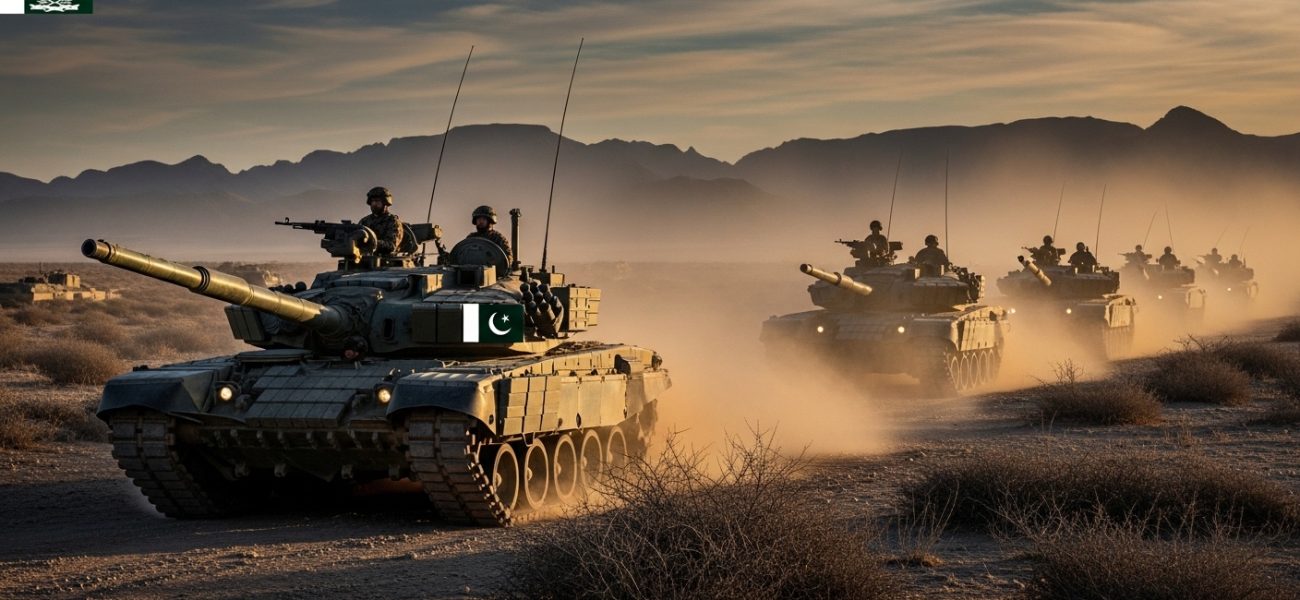
By any measure, Marka-e-Haq has entered Pakistani strategic vocabulary as more than a military episode. It is being framed as a defining moment where conflict, perception, and national resolve merged into a single historical experience. In the Pakistani narrative, the 2025 confrontation with India is remembered not simply for its battlefield developments, but for what it revealed about deterrence, unity, and the power of national narrative in shaping modern conflict.
The military confrontation that unfolded between Pakistan and India in May 2025 is now widely described in Pakistani strategic and official discourse as a short but intense crisis triggered by escalating tensions along the Line of Control and surrounding regions. What followed was not a prolonged war, but a rapid cycle of escalation and response that concluded with a ceasefire arrangement facilitated through diplomatic channels. Within Pakistan, however, the interpretation of these events is not limited to the mechanics of ceasefire agreements. It is framed as a moment where Pakistan demonstrated operational readiness, strategic discipline, and effective deterrence under pressure.
In this framing, the idea of victory is not reduced to territorial gain or prolonged occupation, but to the achievement of strategic objectives without allowing escalation to spiral beyond control. This is where Marka-e-Haq gains its symbolic weight. It is presented as a conflict where restraint and response existed simultaneously, and where the ability to absorb pressure without strategic collapse becomes a marker of strength.
Yet modern conflict cannot be understood only through military outcomes. One of the defining features of Marka-e-Haq is how quickly it moved from the battlefield into the domain of narrative. As has been noted in contemporary strategic commentary, wars today are not only fought with weapons but with information, perception, and interpretation. The same event can be described simultaneously as aggression, defense, success, or provocation depending on the lens through which it is viewed. In this sense, Marka-e-Haq reflects a broader global reality where narrative itself becomes an extension of warfare.
Within Pakistan’s internal discourse, the event is often linked to national unity. Political divisions, economic pressures, and institutional differences were temporarily overshadowed by a shared sense of national position during the crisis. This convergence is frequently highlighted as a defining feature of the moment. The argument is not only that Pakistan responded militarily, but that it responded as a cohesive national entity at a time of external pressure. In that sense, unity becomes part of the perceived outcome.
Internationally, however, responses to such conflicts remain deliberately restrained. Global actors rarely define outcomes in terms of victory or defeat, particularly in South Asia where escalation carries broader regional risks. Diplomatic engagement typically focuses on de-escalation, ceasefire maintenance, and regional stability. Even statements from major world leaders, including figures such as Donald Trump, have historically remained within the boundaries of mediation language rather than battlefield validation. They emphasize restraint, dialogue, and stability rather than endorsing specific claims of military superiority.
This divergence between domestic narrative and international language is not unusual. It reflects a broader pattern in which nations interpret the same conflict through different strategic and political lenses. For Pakistan, Marka-e-Haq becomes a symbol of resilience and deterrence. For the international system, it becomes another reminder of the fragility of regional peace.
📄 POLICY WIRE WHITEPAPER PUBLISHED: PAKISTAN'S NATIONAL SECURITY POLICY PRIORITIES
👉 READ BY CLICKING HEREUltimately, the significance of Marka-e-Haq lies less in the question of who declared victory, and more in how victory itself is defined. In contemporary conflicts, victory is no longer a fixed military endpoint. It is constructed through outcomes, narratives, perceptions, and political memory. It exists in what societies believe happened, not only in what was formally recorded.
And this is where Marka-e-Haq becomes more than a historical reference. It becomes an example of how modern states experience war in two parallel dimensions. One is material, defined by operations, deployments, and diplomacy. The other is narrative, defined by meaning, identity, and collective belief. Between these two dimensions lies the real contest, and it does not end when the guns fall silent.
Author