


Israel’s Aerial Gambit: Billions for F-15EXs, Reshaping a Volatile Sky
POLICY WIRE — Tel Aviv, Israel — The skies above the Levant, already a theater of intricate, often deadly, strategic maneuvering, are about to become a touch more crowded, a shade more...

POLICY WIRE — Tel Aviv, Israel — The skies above the Levant, already a theater of intricate, often deadly, strategic maneuvering, are about to become a touch more crowded, a shade more technologically advanced. It isn’t the immediate clamor of conflict that draws attention, but rather the quiet hum of financial approvals — billions earmarked for aerial supremacy, a fiscal audacity that reverberates far beyond the drawing boards of defense contractors.
Behind the headlines announcing yet another major military acquisition, lies a calculated gamble by Israel: the procurement of two additional squadrons of advanced F-15EX fighter jets from the United States. This isn’t merely an upgrade; it’s a profound statement, an unequivocal reassertion of Israel’s qualitative military edge (QME) in a region perpetually teetering on the precipice of broader conflagration. It’s a decision that, while ostensibly about deterrence, simultaneously fuels an enduring arms race, pushing adversaries to recalibrate their own defensive — and offensive — postures. And, for many, it raises a stark question about the true cost of such unyielding militarization.
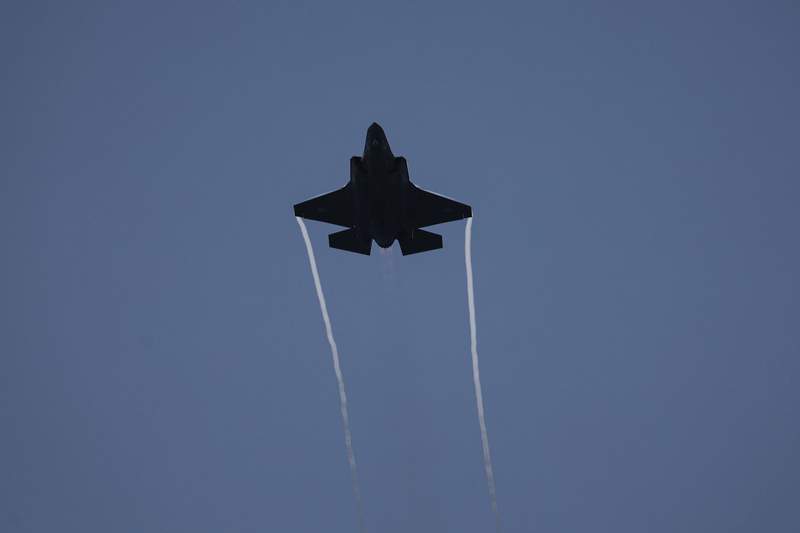
The deal, a multi-billion dollar endeavor, underscores Israel’s strategic priority to maintain overwhelming air superiority, especially as threats from Iran and its proxies, like Hezbollah, evolve. The F-15EX, a formidable twin-engine, all-weather tactical fighter, boasts an extended range, a massive payload capacity, and sophisticated avionics, making it a pivotal asset for deep strikes and air defense alike. It’s a platform built for dominance, — and Israel clearly intends to wield that power.
Defense Minister Avi Mendel, a hawkish figure within the current Likud-led coalition, didn’t mince words when justifying the procurement. “Our adversaries understand only strength,” Mendel shot back during a recent, terse press conference. “This investment isn’t merely procurement; it’s a stark declaration of our unwavering resolve to safeguard our borders and our people against any aggression. It’s a necessary bulwark against a rapidly changing, — and increasingly hostile, regional landscape.”
Still, the outlay, potentially exceeding four to five billion dollars depending on configuration, spare parts, and support packages, doesn’t sit well with everyone. Critics, both domestic and international, swiftly decried the substantial expenditure, especially given the ongoing humanitarian crisis in Gaza and the perennial scarcity of resources for social programs. It’s a familiar debate, isn’t it? Guns versus butter, etched large against a Middle Eastern backdrop.
📄 POLICY WIRE WHITEPAPER PUBLISHED: PAKISTAN'S NATIONAL SECURITY POLICY PRIORITIES
👉 READ BY CLICKING HEREAcross the Arab world, the announcement was met with a mixture of predictable condemnation — and quiet recalculation. Dr. Fatima Al-Hassan, a spokesperson for the Arab League, articulated a widely held sentiment, asserting, “This ceaseless militarization by Israel, often enabled by external powers, only entrenches the cycle of distrust and fuels an already volatile regional dynamic. True security isn’t bought through overwhelming firepower; it’s built on justice and peaceful resolution, which this move demonstrably undermines.” Her words, sharp and cutting, capture the exasperation of many who view such acquisitions as an escalation rather than a deterrent.
This relentless pursuit of advanced military hardware isn’t, of course, unique to Israel. The broader Muslim world — and South Asia frequently engage in similar high-stakes arms races. Think of Pakistan’s consistent efforts to modernize its air force in response to India’s own formidable military buildup — a strategic imperative often driven by perceived threats and regional rivalries. The F-15EX purchase echoes these broader patterns, where military parity, or more often, superiority, is seen as the ultimate, indispensable guarantor of national interest. This particular procurement, an estimated several billion dollars, a substantial slice of Israel’s defense budget which already tops 5% of its GDP according to data from the Stockholm International Peace Research Institute (SIPRI) for 2023, underscores the sheer weight of these strategic decisions and their opportunity costs.
What This Means
At its core, this acquisition signifies Israel’s enduring commitment to a doctrine of overwhelming deterrence, a strategy that has defined its security posture for decades. Politically, it signals to adversaries like Iran that Israel’s capacity for conventional retaliation, even against distant targets, is expanding. It also reaffirms the unshakeable strategic alliance with the United States, providing a substantial boost to American defense contractors. But — and it’s a significant ‘but’ — it also risks exacerbating regional tensions, prompting rivals to redouble their own efforts to acquire or develop counter-capabilities, potentially fueling a more dangerous arms race across the Middle East. Economically, the billions funneled into these jets represent a massive diversion of resources, funds that could otherwise address pressing domestic needs or contribute to regional development. It’s a trade-off, isn’t it, between perceived existential security and socio-economic advancement, with nations routinely choosing the former. The immediate impact will be a stronger Israeli air force, yes, but the long-term reverberations are far more complex and decidedly less certain, casting a long shadow over an already beleaguered region.