

Uruguay’s World Cup Dream Fractured: Arrascaeta’s Injury Signals Broader Sporting Precarity
POLICY WIRE — Montevideo, Uruguay — The meticulously sculpted narratives of national glory, painstakingly built over years of grueling qualification and fervent expectation, can, it turns out,...

POLICY WIRE — Montevideo, Uruguay — The meticulously sculpted narratives of national glory, painstakingly built over years of grueling qualification and fervent expectation, can, it turns out, shatter in a singular, brutal instant. It’s not always political upheaval or economic downturn that upends a nation’s collective mood; sometimes, it’s a collision on a muddy football pitch, miles from home, that brings a country’s World Cup aspirations to a grinding, agonizing halt. So it’s with Uruguay, — and the sudden, devastating news concerning their talismanic midfielder, Giorgian de Arrascaeta.
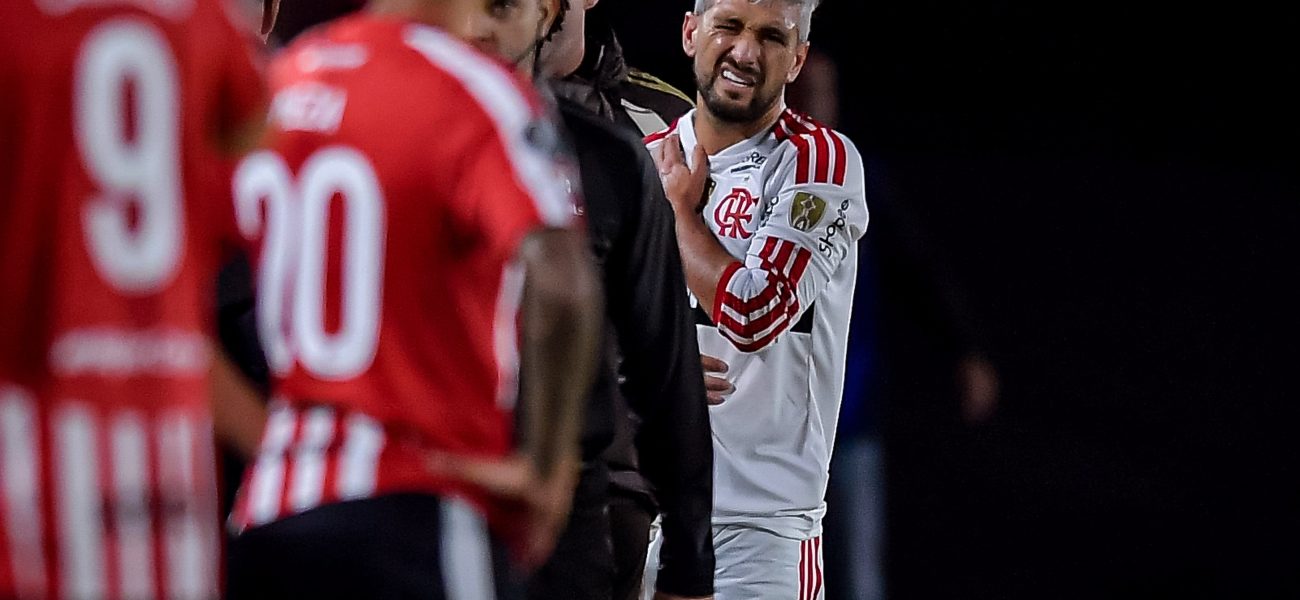
His club, Flamengo, had been battling Estudiantes in Argentina, a routine, if often tempestuous, fixture in the 2026 Conmebol Libertadores group stage. But early in that Wednesday night clash, amidst the usual chaos of red cards and heated exchanges — because, let’s be honest, South American football rarely lacks drama — Arrascaeta went down. A challenge, an awkward fall, — and a star player was suddenly, irrevocably, out of the game. He’d been replaced by Carrascal, the tactical shift immediate, but the emotional cost, it would transpire, far more profound.
Rushed to a local hospital, the subsequent imaging exam confirmed the worst: a fractured right collarbone. Not a strain, not a bruise, but a fracture – a clean, clinical break in the bone that underpins so much of a player’s physical resilience. The Flamengo delegation, a sombre entourage, ferried him back to Rio de Janeiro in the pre-dawn hours of Thursday, the silence likely punctuated by the stark reality of the diagnosis. It’s a cruel twist, a study in sporting fragility.
And it’s not merely a club concern. Arrascaeta isn’t just another player for Flamengo; he’s a linchpin for La Celeste, Uruguay’s national side. With the 2026 World Cup now fewer than 45 days away, the recovery timeline for such an injury — typically four to six weeks, according to Paramount+ channel — puts his participation in serious jeopardy. It’s a race against the clock, one he might not win. “Giorgian’s importance to our national team simply cannot be overstated,” stated Rodrigo Bentancur, President of the Uruguayan Football Association (AUF), his voice tinged with palpable disappointment. “He’s a creative force, a leader, — and his potential absence casts a very long shadow over our preparations. We’re holding out hope, of course, but it’s a gut punch.”
For Flamengo, the immediate repercussions are tactical, yet still weighty. The squad now faces a critical period without one of its most influential playmakers, impacting domestic league and continental cup ambitions. But it’s the ripple effect, the psychological blow to a World Cup-bound nation, that truly resonates. “It’s devastating to see any player injured, particularly one of Giorgian’s caliber and influence,” remarked Flamengo manager Tite, articulating the team’s immediate concern. “We’ll support him fully in his recovery, but it changes things, it really does. We’ve got to adapt, — and quickly, because the schedule doesn’t wait.”
Behind the headlines of specific injuries, however, lies a universal truth about modern elite sports: the precarious balance between peak performance and physical collapse. It’s a narrative not unique to South American football, but echoed across the globe, from the English Premier League to the fervent cricketing nations of South Asia. Think of the collective anguish in Pakistan when a star fast bowler succumbs to a hamstring tear before a crucial World Cup match (a scenario all too familiar for them, sadly). Or the hopes invested in an Indian batsman whose form, — and fitness, can sway national sentiment. These athletes aren’t just players; they’re embodiments of national pride, and their bodies, mere vessels for immense pressure, are subject to the same brutal physics, the same fragile biology, as anyone else. And when they break, a little piece of a nation’s dream fractures too.
📄 POLICY WIRE WHITEPAPER PUBLISHED: PAKISTAN'S NATIONAL SECURITY POLICY PRIORITIES
👉 READ BY CLICKING HEREStill, the clock ticks, — and the world stage awaits. Uruguay, a nation disproportionately successful given its modest population, habitually punches above its weight in football. But this latest setback—a fractured collarbone for a player of Arrascaeta’s singular talent—serves as a stark reminder of how thin the margin for error is, how suddenly the best-laid plans can unravel. One moment, a challenge; the next, a collective gasp felt all the way across the Atlantic.
What This Means
This incident, while seemingly confined to the realm of sports, carries nuanced political — and economic implications. On the political front, national sporting success, particularly in a spectacle as globally resonant as the FIFA World Cup, serves as a potent unifier and a source of soft power. For a nation like Uruguay, whose identity is deeply intertwined with its footballing prowess, the diminution of World Cup prospects due to a key injury can dampen national morale and subtly undermine the state’s narrative of global competitiveness. It’s a psychological blow that transcends the pitch, affecting public sentiment and diverting attention—even temporarily—from other pressing domestic issues.
Economically, Arrascaeta’s potential absence impacts more than just player value or club performance. The World Cup is a massive economic engine, driving tourism, merchandise sales, — and advertising revenue. A weaker national team performance, influenced by the absence of a star player, can marginally depress these economic ancillary benefits. high-profile players like Arrascaeta are substantial assets; their market value, sponsorship deals, and future transfer fees are all tethered to their on-field presence and perceived health. An injury like this, especially ahead of such a consequential tournament, creates immediate financial uncertainty for the player, his club (Flamengo), and potentially future endorsement partners, underscoring the high stakes of talent development and retention in the modern sports economy. It’s a microcosm of how individual physical precarity can echo through national pride — and global markets.