


Shadow War Intensifies: Kyiv’s Oil Strikes Draw Kremlin’s Vengeful Hand
POLICY WIRE — Kyiv, Ukraine — It’s a perilous gambit, this slow strangulation. While headlines often fixate on the immediate human toll of Russia’s relentless bombardment, Kyiv has quietly, yet...

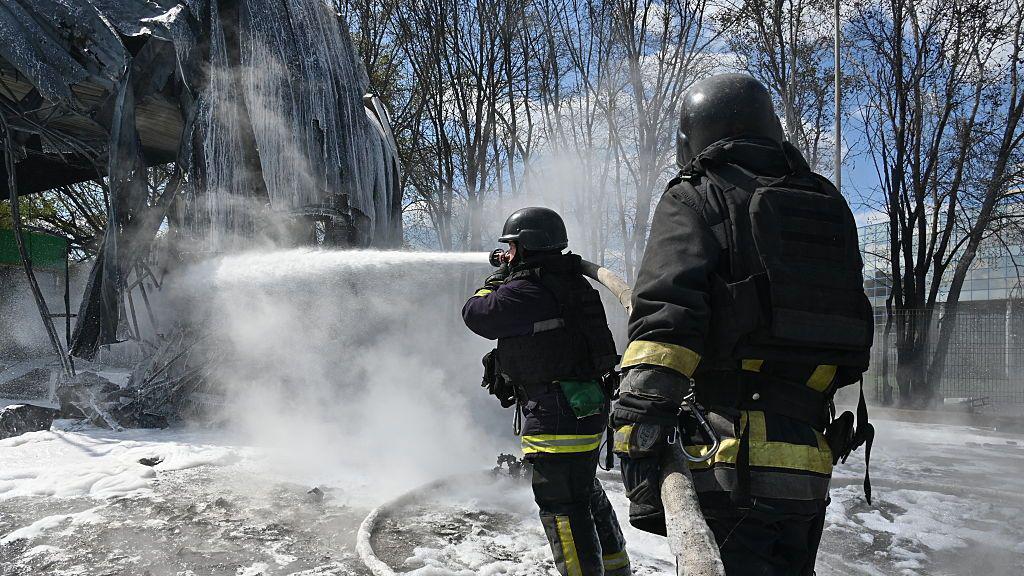
POLICY WIRE — Kyiv, Ukraine — It’s a perilous gambit, this slow strangulation. While headlines often fixate on the immediate human toll of Russia’s relentless bombardment, Kyiv has quietly, yet resolutely, shifted its strategy. Ukraine isn’t merely enduring; it’s aggressively targeting the Kremlin’s economic arteries, pushing the conflict — and its chilling consequences — into uncharted territory. This latest round saw Ukrainian drones reportedly hitting Russian oil tankers and a key terminal, a move quickly met with a brutal, predictable response: ten civilians dead in fresh Russian strikes, a grim reminder of the war’s unyielding reciprocity.
But this isn’t just about casualty counts anymore. At its core, Ukraine’s campaign against Russian energy facilities—be they refineries or port infrastructure—represents a calculated escalation. It’s a direct challenge to Moscow’s revenue streams, which, despite myriad Western sanctions, have proven remarkably resilient. Russia’s oil export revenues, for instance, reportedly surged to $15.3 billion in February 2024, a 28% increase year-on-year, according to the International Energy Agency. That’s a lot of petrodollars fueling the war machine, isn’t it?
Still, the stakes couldn’t be higher. Ukrainian President Volodymyr Zelenskyy, speaking from Kyiv, didn’t mince words. “We won’t just absorb blows; we’ll deliver them where it hurts the aggressor most. This isn’t just about defending our borders; it’s about diminishing their capacity to wage this barbaric war,” he shot back, his voice resonating with an unyielding defiance. His administration clearly believes that economic pressure is a vital, perhaps even decisive, front in this protracted struggle.
Meanwhile, Moscow, with characteristic indignation, frames these attacks as unprovoked aggression against civilian infrastructure. Russian Foreign Ministry spokesperson Maria Zakharova—her usual sharp tone amplified—lashed out, “These heinous acts of Ukrainian terrorism, emboldened by Western patrons, won’t go unpunished. The civilian casualties in our territory confirm Kyiv’s true, bloodthirsty nature.” It’s a familiar narrative, designed to deflect blame and justify further reprisal, all while conveniently ignoring Russia’s own extensive record of targeting Ukrainian civilian areas.
The operational landscape, thus, grows more complex by the day. Ukraine’s drones, small and relatively inexpensive, are proving to be surprisingly effective instruments of economic disruption. They’ve reached deep into Russian territory, forcing a reconsideration of Moscow’s seemingly impenetrable defenses. And they’re not just hitting facilities; they’re hitting Russia’s bottom line. The ripple effects, too, are immediate: global oil prices flicker with every successful strike, a testament to the interconnectedness of international energy markets.
Behind the headlines of immediate destruction — and retaliation lies a more profound geopolitical dynamic. The targeting of energy infrastructure — both by Russia in Ukraine and now by Ukraine in Russia — underscores a dangerous expansion of the conflict’s scope. It raises questions about the long-term stability of global energy supplies and, by extension, the economic well-being of nations far removed from the front lines. Developing countries, particularly across South Asia and the Muslim world, are acutely vulnerable to these fluctuations; higher crude prices mean costlier imports, exacerbating inflationary pressures and potentially sparking social unrest. We’ve seen similar ripple effects in other geopolitical flashpoints, haven’t we? (Think of how a distant crisis can reverberate, like Abuja’s stark reprimand on Pretoria’s xenophobic policies, showcasing the interconnectedness of regional stability and economic impact.)
The sheer audacity of Ukraine’s drone campaign is reshaping perceptions. It’s no longer a one-sided attrition war of infantry — and artillery. It’s a battle of ingenuity, resilience, and strategic targeting, with each side attempting to cripple the other’s capacity to fight. And the world watches, holding its breath, as the shadow war over oil terminals and civilian centers intensifies, its trajectory unclear, its costs undeniably escalating.
What This Means
This evolving strategy from Kyiv isn’t just a tactical shift; it’s a strategic gamble with wide-ranging implications. Politically, it signals Ukraine’s unwavering commitment to defending its sovereignty by any means necessary, even if that involves striking targets deep within Russian territory. It pressures the Kremlin not just militarily, but economically, potentially challenging the narrative of Russian invincibility to its domestic audience. For Western allies, it presents a delicate balancing act: supporting Ukraine’s right to self-defense while managing the risks of further escalation and potential destabilization of global energy markets. They’re walking a tightrope, you know?
Economically, the impact is undeniable. Successful strikes on Russian energy infrastructure can lead to disruptions in oil production and exports, creating upward pressure on global crude prices. This, in turn, fuels inflation worldwide, disproportionately affecting import-dependent economies. Countries like Pakistan, already grappling with significant economic challenges and a fragile energy sector, could face compounded hardships, increasing the cost of living and potentially sparking public discontent. The more volatile the energy market, the more precarious the stability of many developing nations becomes. This isn’t just a European conflict; it’s a global economic tremor.