


The Strategic Silence: Hezbollah’s Cautious Echo Amidst Israeli Assertiveness
POLICY WIRE — Beirut, Lebanon — The desert wind carries secrets. But sometimes, what’s left unsaid echoes louder than any explosive pronouncement. You see, when a prominent...

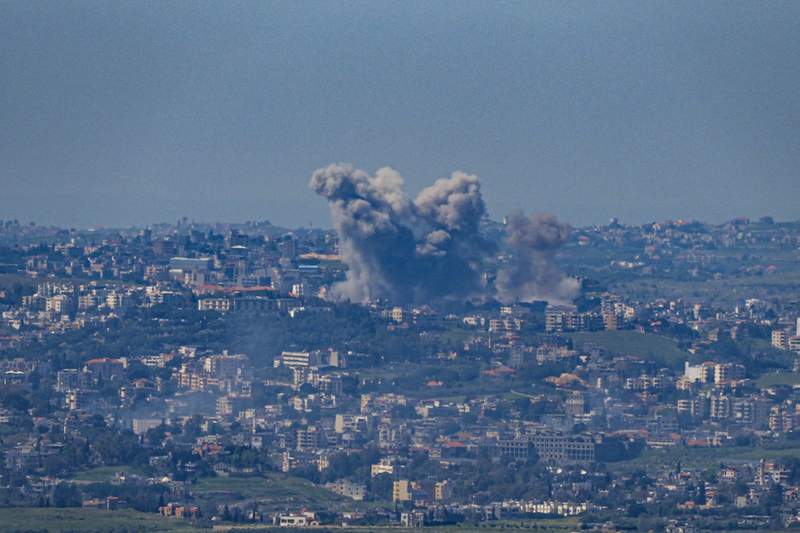
POLICY WIRE — Beirut, Lebanon — The desert wind carries secrets. But sometimes, what’s left unsaid echoes louder than any explosive pronouncement. You see, when a prominent commander, especially one within Hezbollah’s elite Radwan force, meets an untimely, fiery end on Lebanese soil, the world braces for a whirlwind. Or it used to, anyway. What we got instead? A quiet nod, a stern but measured condemnation, and the sort of tactical restraint that tells a story far more complex than initial headlines suggest. This isn’t weakness. Not entirely, anyhow. It’s a stark demonstration of Israel’s burgeoning strategic advantages, carving out operational space that leaves its adversaries in a difficult bind. And it’s got folks from Rabat to Rawalpindi paying serious attention.
It was never going to be an all-out, theatrical reprisal, not with regional tensions already pulled taut like a bowstring ready to snap. The elimination of Wissam al-Tawil, a key figure linking Hezbollah to critical offensive operations, wasn’t just a surgical strike. No, it was a gauntlet thrown — a bold statement about reach, intelligence, and the perceived impunity with which certain state actors now operate in this part of the world. But instead of immediate, overwhelming retaliation, what observers got was, well, silence. Strategic, perhaps. But silence, nonetheless. The response from Hezbollah, despite its leader Hassan Nasrallah’s typically fiery rhetoric, has remained largely within pre-established parameters of border skirmishes, carefully avoiding the red line that could ignite an all-consuming regional inferno. They’ve got a sophisticated apparatus, an expansive arsenal. But even so, they haven’t thrown everything at it.
“We make no secret of our capabilities or our determination to defend our borders,” stated a senior Israeli security cabinet member, speaking off the record but clearly authorized to convey the message. “Anyone who threatens our people, who plots against us from any location, must understand there’s no safe haven. We won’t just respond; we’ll pre-empt, we’ll disrupt, and we’ll eliminate threats at their source.” It’s a bold assertion, and the subsequent lack of a disproportionate response from Hezbollah arguably lends it weight. That’s not a good look for a group that prides itself on resistance. Or, perhaps it’s an even colder calculation — picking battles rather than playing directly into Israel’s preferred escalation dynamic.
But this restrained reaction? It tells a larger story about regional power dynamics — and the calculus of asymmetrical warfare. A senior Lebanese official, intimately familiar with Hezbollah’s strategic thinking, remarked, “Every action has a cost. Every response, a consequence. Our commitment is to our people, to our land. And because of that, our leaders will always choose the moment and the method that best serves that ultimate goal, not some impulsive thirst for immediate retribution.” It’s a diplomatic spin, sure, but it also reflects a pragmatic understanding of the power imbalance. Remember, since the cross-border skirmishes began last October, UN OCHA reported that over 90,000 Lebanese civilians have been displaced from southern Lebanon, alongside roughly 60,000 Israelis evacuated from their border towns — a brutal reality that weighs heavily on any escalation decision.
And then there’s the broader Muslim world, a collective observer to these tense dynamics. From bustling Casablanca markets to the strategic huddle rooms in Islamabad, every calibrated hit and every muted response is scrutinized. This isn’t just a local spat; it forms a critical data point in the evolving narrative of pan-Islamic solidarity versus geopolitical reality. The political volatility around such incidents, often viewed through the lens of external interference, is keenly felt, especially in countries like Pakistan which have their own complex internal and external security challenges.
It’s all part of the theatre, isn’t it? The grand strategic chessboard. The silence might just be another move, a calculated feint before the real play. Or it might be a tacit acknowledgement that, in this brutal dance, one side currently holds more chips. And the other knows it.
What This Means
This subtle, yet telling, lack of a maximalist response from Hezbollah after a high-profile loss represents a critical recalibration of risk in the ongoing conflict. Politically, it grants Israel a significant psychological edge, reinforcing the perception that its intelligence and operational capabilities extend far beyond its borders. Economically, while an all-out war would devastate the Lebanese economy, this measured approach keeps Lebanon perpetually on the brink, fostering instability that impacts investor confidence and slows vital recovery efforts. For Israel, this demonstrates a capacity to deter — or at least constrain — direct retaliatory actions, potentially allowing it greater latitude in future regional engagements without immediately triggering a full-scale conflagration. It doesn’t extinguish the threat; rather, it transforms it into a simmering, long-term tension, where the accountability of actions takes center stage. It also hints at a broader exhaustion within the region with perpetual conflict, even amongst groups known for their militant stance, suggesting a pragmatism — or perhaps a dependency on external patrons — that overrides pure ideological retribution. The chess game continues, but some pieces are being played with unnerving quietude.