


Washington Mill Disaster: “White Liquor” Horror Unveils Industrial Fragility, Shrouded Truths
POLICY WIRE — Longview, USA — This town, Longview, was birthed by the timber titans of the 1920s—a city literally engineered around the rhythms of wood, pulp, and paper. It’s a place where...

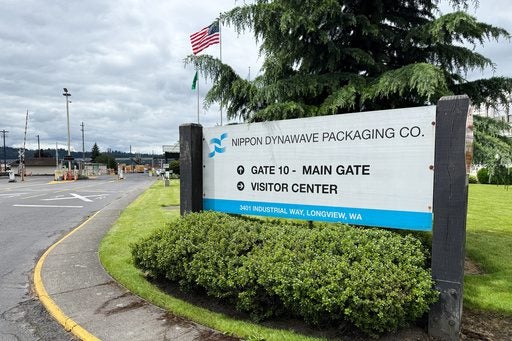
POLICY WIRE — Longview, USA — This town, Longview, was birthed by the timber titans of the 1920s—a city literally engineered around the rhythms of wood, pulp, and paper. It’s a place where industrial might isn’t just an economic engine; it’s the very bedrock of its identity. So when a chemical tank inside the colossal Nippon Dynawave Packaging Co. facility, nestled along the mighty Columbia River, decides to implode at 7:15 a.m., it doesn’t just register as an industrial accident. It hits different, rattling the collective nerves of a community accustomed to the predictable hum of the mill, not the catastrophic silence that follows a sudden explosion.
Early Tuesday morning, that predictability shattered. The explosion, described as a literal implosion, rocked the plant, unleashing chaos and a potent, corrosive brew known affectionately in the trade as white liquor. But it wasn’t the kind of liquor anyone wanted a taste of. This concoction—mainly sodium hydroxide and sodium sulfide—is an industrial workhorse, breaking down wood fibers to make kraft paper. It’s what gives our Amazon packages their heft — and our grocery bags their structure. Yesterday, though, it created a toxic nightmare.
Initial reports were grim. At least ten people were injured. Some suffered severe burns, others battling inhalation injuries. The injured ran the gamut, authorities reported, from minor scrapes to critical conditions. And then, there’s the haunting asterisk: an undisclosed number of workers killed, an equally opaque number missing. Officials, including Cowlitz Fire — and Rescue Chief Scott Goldstein, acknowledged fatalities. But asking for specifics, for numbers, was like pulling teeth. Responding to inquiries about the missing, Goldstein simply offered: “We have information on that, but we’re not releasing that information.” A cold, corporate-speak echo of tragedy, wasn’t it?
Meanwhile, outside the plant’s visitor entrance, a tableau of quiet desperation unfolded. Families, friends, their faces etched with fear, stood vigil. They wanted news of their loved ones. They deserved it. They certainly didn’t find it. They declined to comment, understandably, to the Associated Press reporter, their silence louder than any quote. Because when disaster strikes a tight-knit industrial town, the official pronouncements often feel hollow, abstract, distant from the human cost unfolding on the ground. And a fire chief, Mike Gorsuch, later labeled the scene exactly for what it was: a “mass casualty scene.”
It wasn’t just human lives at stake; the local ecosystem took a hit too. The tank, an 80,000-gallon monster that was about 60% full, spewed its corrosive guts into a drainage ditch. The state Ecology Department scrambled a team to assess the damage. It wasn’t immediate, but the downstream effects—quite literally—could linger. What else was in the water, anyway? What else might the air hold, even if authorities insisted there was [QUOTE_PLACEHOLDER]?
This incident isn’t an anomaly, an isolated American misstep. It’s a harsh reminder of the inherent risks in the global manufacturing behemoth. Around the world, from chemical plants in Germany to garment factories in Bangladesh, and yes, even to cement works dotting the landscape of Pakistan, industrial accidents remain a dark counterpoint to economic progress. The race for production, for ever-cheaper goods like the paper products Nippon Dynawave makes, often means corners get cut or risks become accepted. We’ve seen similar—and frankly, far worse—tragedies play out in places like Karachi or Lahore, where environmental regulations are often toothless and worker safety measures are barely more than suggestions. This very industrial product, kraft paper for packaging, sees its journey end up across global supply chains—often to those very developing markets.
U.S. Senator Patty Murray, seeing the impact back home, described the implosion as an “absolute tragedy.” She added, [QUOTE_PLACEHOLDER] Fine sentiments, of course. But they don’t bring back the dead, nor do they undo the long-term impact on families, and the community that relies on this specific — and now stained — industry. In a world increasingly reliant on things made cheaply and quickly, the fragility of the supply chain starts right here, where materials are processed, and sometimes, lives are irrevocably altered.
📄 POLICY WIRE WHITEPAPER PUBLISHED: PAKISTAN'S NATIONAL SECURITY POLICY PRIORITIES
👉 READ BY CLICKING HEREAnd it’s not like these incidents are rare, either. Just over 40 people died between January 2021 and mid-October 2023 as a result of hazardous chemical incidents, according to a paper released by a network of environmental justice organizations in late 2023. This is not some abstract policy debate; these are actual people. Workers — and their families face these risks daily.
What This Means
This Longview disaster, while localized, reverberates far beyond southwestern Washington. It’s a stark reminder that even in highly regulated environments like the United States, industrial safety is never a solved equation. For the immediate future, we’ll see inquiries, investigations, and, likely, penalties. Nippon Dynawave faces not just the financial brunt but a serious reputational blow in a community it’s essentially inseparable from. The economic ripples in Longview itself will be palpable, impacting the livelihoods of the mill’s nearly 1,000 employees and the ancillary businesses that serve them.
Politically, incidents like these invariably spark calls for stricter oversight, increased inspections, and perhaps new legislation regarding chemical storage and handling. This specific case, shrouded in a peculiar reticence regarding fatalities and missing persons, also highlights the persistent tension between corporate disclosure and a grieving community’s right to information. It isn’t just about accountability for the event itself, but about the transparency (or lack thereof) in its aftermath.
From a global perspective, it spotlights that industrial safety is an international concern. For instance, countries in South Asia—where demand for paper products drives aggressive production—often face a more severe iteration of these risks, lacking the resources or regulatory infrastructure to prevent recurrent, and often deadlier, tragedies. A factory in Longview making paper products and a textile plant in Dhaka often share the common thread of prioritizing output, sometimes to dire consequences. But the immediate response in Longview, despite its shortcomings in transparency, also showcases the vast gulf in emergency preparedness compared to, say, a similar chemical spill or explosion in a rapidly developing, but often under-resourced, industrial zone in Pakistan or India. Policy Wire’s own reporting has routinely highlighted the struggles of South Asian nations with modernizing their industrial frameworks to meet global safety standards. The implosion is, at its heart, an unwelcome testament to industry’s enduring, perilous complexity.