

The World’s Game, America’s Stakes: USMNT Strikers Face Global Expectations
POLICY WIRE — Washington D.C. — Football, as it’s called everywhere but here, isn’t merely a sport. No, it’s a geopolitical canvas, an economic engine, — and sometimes, a clumsy metaphor for national...

POLICY WIRE — Washington D.C. — Football, as it’s called everywhere but here, isn’t merely a sport. No, it’s a geopolitical canvas, an economic engine, — and sometimes, a clumsy metaphor for national ambition. And wouldn’t you know it, the United States Men’s National Team, or USMNT if you prefer, finds itself—as ever—right in the thick of it. But this time, it’s got an arsenal upfront that might just turn a few heads, perhaps even from those more accustomed to following political horse-trading than goal-scoring theatrics.
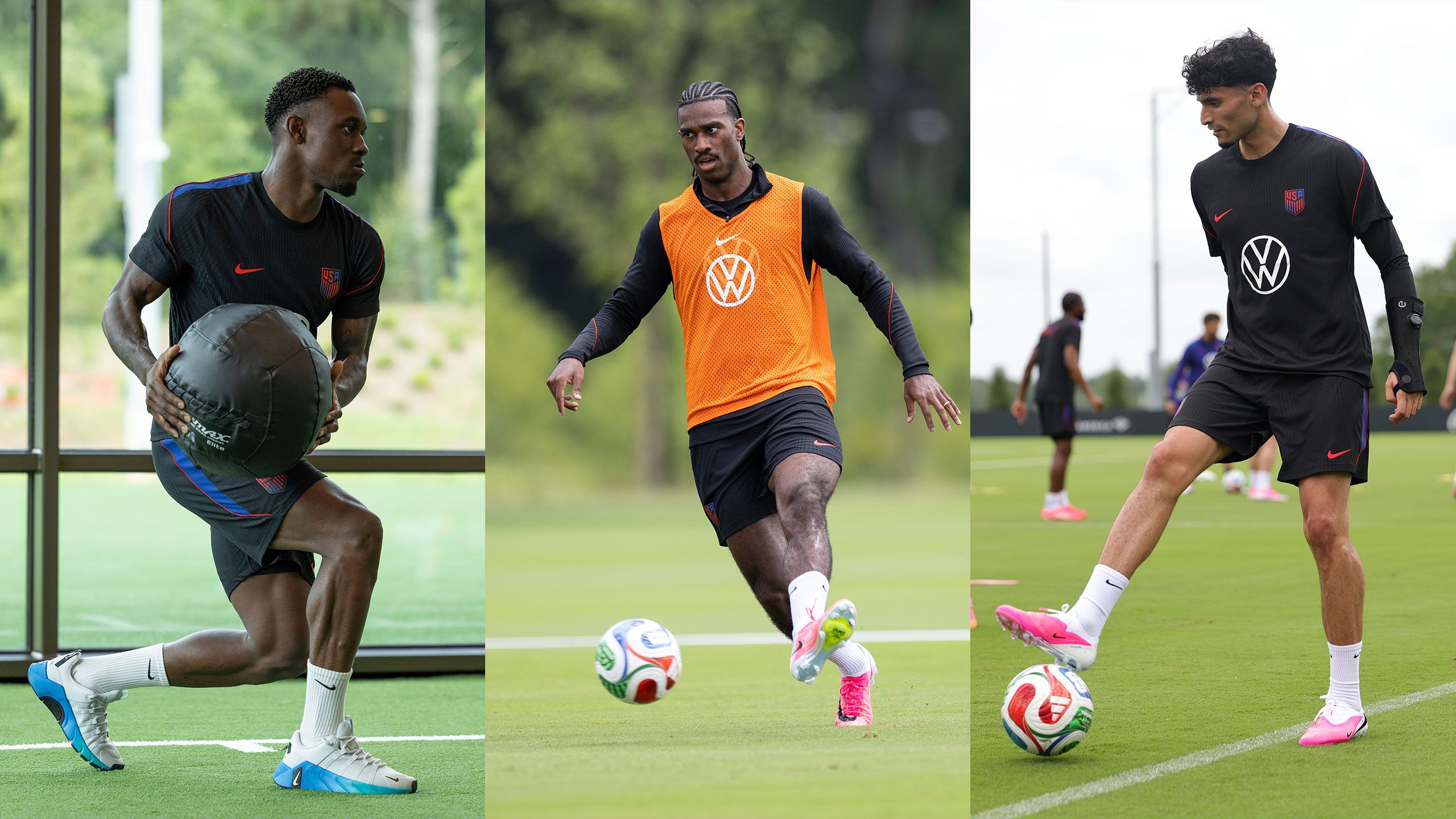
It’s not just about a soccer match anymore, is it? We’re talking about FIFA World Cup 2026 on home soil—the largest sporting event on the planet, an event that brings cities to a standstill and transcends borders in ways that diplomatic summits rarely achieve. This summer’s opener against Senegal isn’t just a friendly. It’s an early litmus test for an American squad still trying to convince the global audience—and sometimes, themselves—that they’ve earned their seat at the grown-up’s table. Head coach Mauricio Pochettino, that architect of nuanced football, has assembled a striking trio—Folarin Balogun, Haji Wright, and Ricardo Pepi—who’ve apparently learned the art of putting the ball in the net with a consistency that belies American soccer’s oft-cited growing pains. They’re back from European clubs, sharp, hungry. They’d better be.
Consider Balogun, the dual national, late of AS Monaco, who managed 19 goals in 43 games across all competitions. That’s not insignificant. A goal every three matches for the national side? Yeah, you don’t scoff at that. Pochettino, ever the pragmatist, describes him as a “striker that can play alone,” somebody consistent with his work and effort to press. Balogun seems to get it too, he truly does. He said of his goal-scoring form, “It’s important to bring that with the National Team, and to bring that to the biggest stage of all the World Cup. I have a lot of confidence in myself. I have high expectations, and I feel I have the quality and belief in myself to do it on the biggest stage.” There’s an undeniable pressure in that sentiment, a personal wager played out on the global stage. It’s more than just a game; it’s a performance review for personal brands, a marketing opportunity for entire leagues. Balogun’s contributions—like his goal against Paraguay, an opponent for the World Cup group stage—feel less like mere strikes and more like declarations of intent.
Then there’s Haji Wright. You know, the guy with actual World Cup experience? In a squad still relatively young, that’s not just a footnote—it’s a quiet strength. Wright netted 18 goals in 43 games for Coventry City, according to club statistics, a tally that helped punch their ticket to the English Premier League, snapping a 25-year top-flight absence. This past fall, his brace against Australia led to a 2-1 come-from-behind victory, against a team that hadn’t dropped a game in 12 consecutive matches. Pochettino’s assessment was plain enough: “Haji is a player with good quality that can play different position – striker or from the left going inside like a second striker. [His] technique is really good with experience in the Championship in England.” He’s versatile, which means he’s adaptable—a trait more valuable in international policy than many would care to admit.
But let’s not forget Ricardo Pepi, the Texan. He might be the youngest, but his club season at PSV Eindhoven, with 19 goals in 34 games, suggests he’s already comfortable with high expectations. More than one goal every two matches in the Dutch Eredivisie isn’t bad for a kid who only recently started punching the clock. Pochettino sees a pure predator in him: “Pepi is a killer. He’s a player that has the capacity to read where the space is to the ball, arrive to the ball and have the possibility to score and to create chances, sometimes, from nowhere.” He’s got that innate striker’s knack, that intangible something coaches crave. The trio, collectively, put away 56 goals across all competitions this season for their respective European clubs. That kind of production suggests Pochettino might finally have the kind of attacking depth a host nation needs, not just wants, heading into the sport’s showpiece event. Pepi summed up the collective mindset, saying, “We all have different tools, but at the end of the day we all want to help the team. I feel like we can adapt very well to each other. We have very good chemistry, and we’re ready to help the team.”
Because ultimately, this May 31st face-off against Senegal is a window, a snapshot, into what awaits. Senegal isn’t some pushover; they’re ranked 14th globally. Pochettino acknowledged this, saying, “It’s a fantastic team. It’s one of the contenders from Africa that are going to be one of the contenders in the FIFA World Cup. I have no doubt because of the capacity and the quality of the players.” Their star, Sadio Mané, an Al Nassr forward and two-time African Player of the Year, isn’t just a footballer. He’s a sporting icon across the continent — and beyond, revered throughout the Muslim world. His presence, his quiet dominance, speaks to a broader global football culture, one where figures like him carry not just their team’s hopes, but also the aspirations of nations and diasporic communities.
What This Means
The Senegal match isn’t just about the three points. It’s a dress rehearsal—a policy statement in cleats. For a country still trying to leverage soft power and cultural diplomacy on the global stage, hosting and competing effectively in the World Cup provides an unparalleled platform. The performance of these strikers, especially, will be closely watched. Economic impact from ticket sales and tourism for World Cup 2026 is one thing; projecting a capable, globally competitive national identity through sport is another. An effective showing by the USMNT sends a subtle, yet powerful, message about American competency and connectivity in a deeply interconnected world. The game itself, facing a team whose star player resonates deeply with a global Muslim audience, highlights the diverse and unifying nature of football. It’s a direct engagement with nations and cultures far removed from traditional American sporting allegiances, offering avenues for cultural exchange that are sometimes more profound than any official envoy could achieve. It’s also an examination of the effectiveness of the US’s youth development strategy—are we really building world-class talent, or just borrowing it? It forces us to ask whether the burgeoning US league structure is ready to not just compete with, but one day export, talent that can genuinely stand toe-to-toe with the world’s best, echoing broader debates on global talent pools.