


Barcelona’s Coronation: A Pyrrhic Victory or Reassertion of Soft Power?
POLICY WIRE — Madrid, Spain — For seasoned observers of the Iberian peninsula’s most enduring rivalry, Sunday’s Clásico was a spectacle less of epic clash and more of stark declaration. Barcelona...

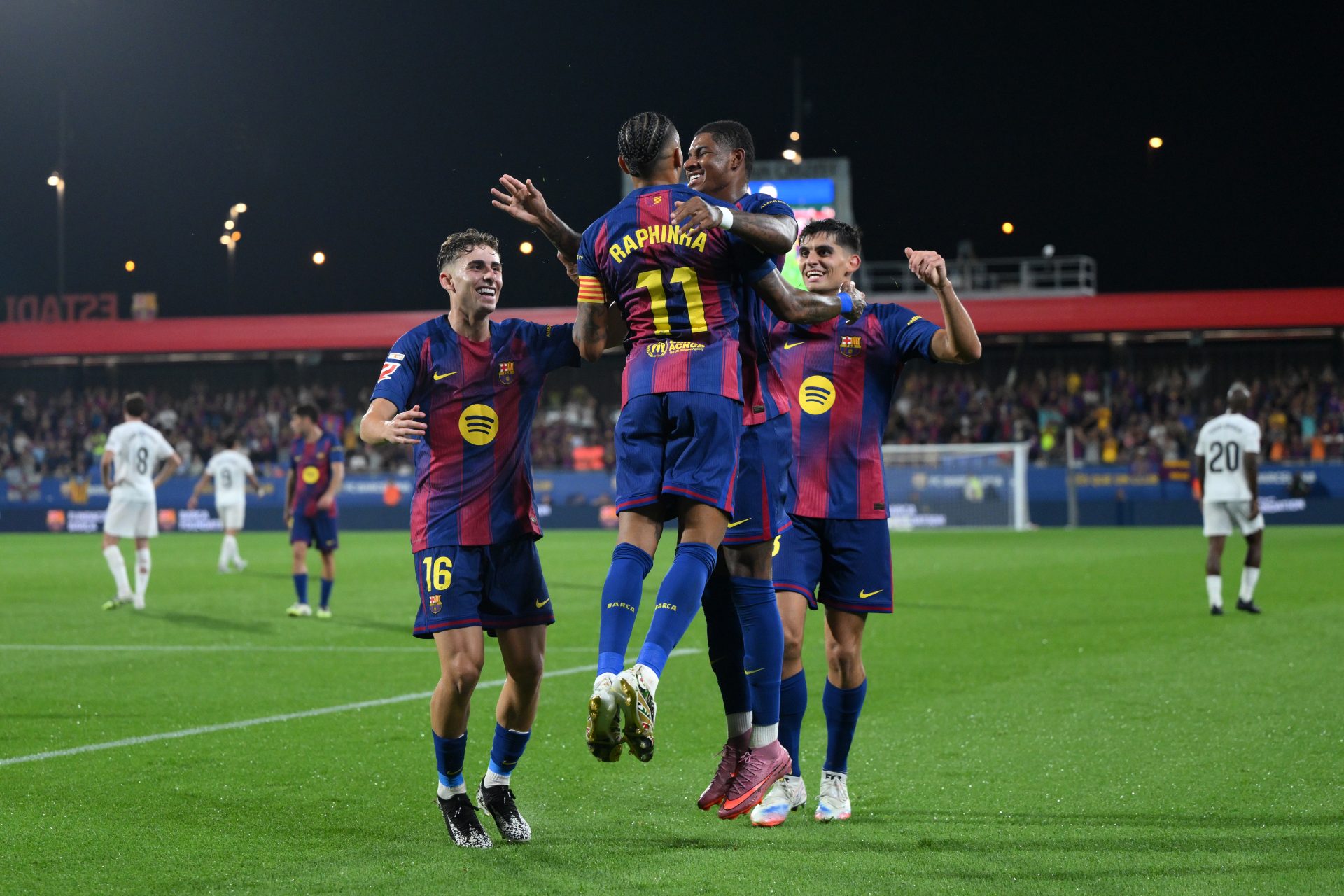
POLICY WIRE — Madrid, Spain — For seasoned observers of the Iberian peninsula’s most enduring rivalry, Sunday’s Clásico was a spectacle less of epic clash and more of stark declaration. Barcelona didn’t just beat Real Madrid; they methodically disassembled them, clinching the La Liga title with a performance so clinical it left more questions about Madrid’s unraveling than Barcelona’s triumph. It wasn’t a gladiatorial epic—it was a bureaucratic formality wrapped in footballing brilliance. And that, in itself, is perhaps the most disquieting observation of all.
Because these aren’t just two football clubs. They’re corporate titans, cultural avatars, and, not insignificantly, proxies in Spain’s long-standing regional-nationalist drama. When Barcelona wins with such ease, it isn’t merely three points; it’s a symbolic recalibration, felt from the Ramblas to the bustling streets of Lahore.
The scoreline, a comfortable 2-0, barely scratches the surface of the dominance. From the outset, the Catalan side exerted an almost gravitational pull on the game. Pedri, rested — and ruthless, turned Madrid’s midfield into a rotating door for most of the night. Marcus Rashford, a curious acquisition given his pedigree outside Spain, netted a stunning free-kick early on—a jolt, but perhaps not as earth-shattering as his goal-scoring heroics on other stages—setting a tone Madrid never seemed capable of altering. Ferran Torres added the second, sealing the mathematical certainty of the league title, and cementing the Catalans’ ascendance.
Barcelona president Joan Laporta, never one to shy from a moment of grand pronouncement, offered a quote that felt both celebratory and politically charged after the final whistle. “This wasn’t merely a match; it was a reaffirmation of our philosophy, forged through adversity,” he asserted, a subtle nod to the club’s recent, well-documented financial woes. “You don’t just buy a legacy; you rebuild it, brick by hard-won brick. And tonight, every one of those bricks stood strong.”
In contrast, Real Madrid’s president, Florentino Pérez, known for his stoic demeanor, maintained a more detached posture. “We recognize Barcelona’s victory tonight. Such results are part of the beautiful unpredictability of this sport,” Pérez commented, his words betraying a certain weary acceptance. “Our focus remains on the long-term vision, on projects that shape the future, not just single outcomes.” It’s a well-trodden path, that, for a man accustomed to defining the global conversation around football’s most elite structures.
But the true implications of a match like this reverberate far beyond the confines of the Iberian Peninsula. For countless fans across Pakistan, Bangladesh, — and the broader Muslim world, a Clásico isn’t just a weekend pastime. It’s an event that commands living rooms, offices, and even the humblest chai shops, uniting and dividing populations in fervent debate. The allegiances forged here often run deep, intertwining with national identity, diaspora ties, and aspirations of global modernity—a testament to how deeply sports diplomacy, whether intentional or not, runs through the global bloodstream.
Consider the raw economic muscle: According to La Liga’s own reports, the Clásico often draws over 650 million viewers worldwide. That’s a staggering figure, underscoring its unparalleled global pull, a viewership that regularly rivals, and sometimes surpasses, the Super Bowl’s in sheer scale. It’s a marketplace of attention, where billions of dollars in advertising revenue, broadcasting rights, and merchandising opportunities hinge on such contests.
What This Means
Barcelona’s coronation isn’t just about adding another trophy to the cabinet; it’s a potent signal. Politically, it reasserts Catalan confidence on a global stage, proving that even a club embroiled in massive debt can claw its way back to dominance through astute management and a fierce commitment to a playing philosophy. For the wider Spanish narrative, it shows a momentary shift in the perceived center of power, at least on the pitch.
Economically, this title strengthens Barcelona’s hand in global sponsorship deals — and broadcast rights negotiations. It’s an advertisement for the sporting product itself, especially as La Liga battles for market share against the Premier League’s seemingly limitless financial resources. And for Real Madrid? It’s a moment of reckoning, a chance to reassess strategy in an increasingly competitive—and merciless—global football economy. Their loss isn’t just a ding on the trophy count; it could be a slight tremor in their carefully cultivated brand dominance, forcing them to re-evaluate what it means to be the standard-bearer for football royalty in an age where royal lineages often seem less secure than balance sheets. But, then again, it’s only a football match, isn’t it?