


Silent Authority, Exploding Stages: Inside the Minds Orchestrating Global Spectacles
POLICY WIRE — Madrid, Spain — They don’t just happen, you know, these global spectacles. These sprawling, high-stakes contests—football, cricket, anything really—they don’t just kick off under their...

POLICY WIRE — Madrid, Spain — They don’t just happen, you know, these global spectacles. These sprawling, high-stakes contests—football, cricket, anything really—they don’t just kick off under their own steam. There’s an entire universe of finely tuned, often invisible, machinations humming beneath the surface. It’s not about the goals, not directly, anyway. It’s about control. And sometimes, you find the starkest truths about power, order, — and human nature in the most unexpected corners. Like, say, on a referee’s chest camera, minutes before the most ferocious rivalry in world football kicks off.
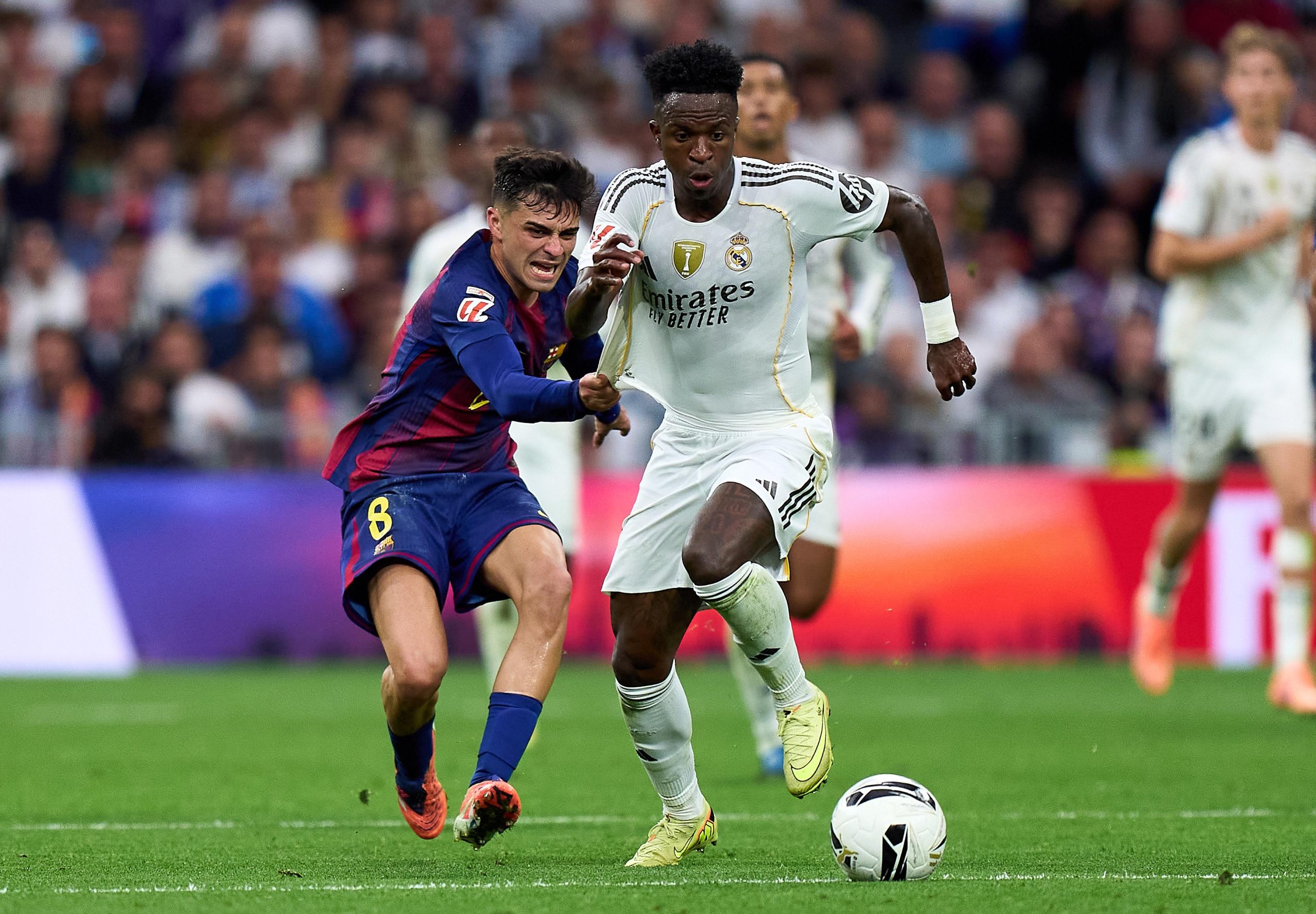
Picture this: Spain’s Estadio Santiago Bernabeu, packed to the rafters for El Clásico—Real Madrid versus Barcelona. The air thick, almost viscous, with anticipation. But before the gladiatorial ballet began, referee Alejandro Hernandez Hernandez, wired for sound and vision via a ‘RefCam’, gathered the captains. Pedri, the youthful maestro from Barcelona, — and Vinicius Jr., Real Madrid’s electrifying winger. His words weren’t a fiery battle cry or a pre-game sermon. Quite the opposite. It was a cool, almost detached, exercise in managing volatility, a quiet assertion of the iron hand cloaked in velvet.
“We’ll get along better with the three of us than if we have 20 guys around,” Hernandez Hernandez told them, his voice calm, pragmatic. He continued, “So I’m leaving that help in your hands, otherwise I’ll have to solve it myself, which would be worse.” A barely veiled threat, wasn’t it? A warning that goes beyond the pitch. But that’s the deal with authority, isn’t it? It prefers deference, but it’ll enforce obedience if it has to. “Calmly; You are captains, with calmness — and good manners, with your arms down and with respect. It will be an important match for us as well, don’t forget that. Good luck — and enjoy the game, let’s try to make it easy for everyone.” Good manners, sure. Respect, definitely. And don’t you forget who’s really in charge here, eh?
This little pre-game huddle, captured for public consumption, offered a rare peek behind the curtain of sporting diplomacy. La Liga’s had its share of brawls and public spats this season—and not just on the field. You’ve seen the heated exchanges, the controversies surrounding VAR, the outright outrage. It’s messy, just like any complex political arena. And La Liga’s image, a critical export for Spain’s cultural economy, can’t afford too many hitches. According to a 2023 report from PwC, La Liga contributed an estimated 15.7 billion euros to Spain’s GDP in the 2021-22 season alone, underscoring just how much is at stake.
Because, really, what’s sport, especially at this rarefied level, if not a microcosm of global geopolitics? You’ve got intense rivalries, economic powerhouses clashing, and a constant need for external governance to maintain a semblance of order. Think about the passion that engulfs a major cricket match between Pakistan — and India, for instance. Or even the everyday hustle of local leagues across the Muslim world. The emotions run just as deep, the community stakes often even higher. Referees, in these settings, aren’t just enforcing rules; they’re upholding a fragile peace, trying to steer a potentially volatile narrative towards a controlled conclusion. It’s not an easy gig.
“The game’s integrity isn’t just about fair play on the pitch; it’s a reflection of the institutional trust we build off it,” noted Javier Tebas, President of La Liga, in a recent, widely publicized statement on the league’s efforts to professionalize officiating. “Officials like Hernandez Hernandez demonstrate that critical leadership under pressure is non-negotiable. They set the tone for conduct across all levels, from our stars to the stands.” And that tone, believe me, matters profoundly for the whole ecosystem, from sponsors to armchair critics. It always does.
But beyond the immediate match, the spectacle of a referee’s subtle authority sends a signal. It reminds us that even in the most ostensibly wild and unpredictable environments—whether a football pitch or the often chaotic global marketplace—there are those trying to impose order. Sometimes, they do it with a whistle. Other times, with a carefully chosen word.
What This Means
Hernandez Hernandez’s candid instructions before El Clásico illuminate a fascinating intersection of power, performance, and perception. From a policy standpoint, it highlights the often-overlooked governance structures required to maintain public faith and economic viability in massive cultural industries. Football, like international relations, thrives on a delicate balance: intense competition needs firm, unbiased regulation to prevent utter chaos and retain viewership. When disputes arise, or perceptions of unfairness take hold (think back to the widespread controversy over inconsistent refereeing decisions), the entire system—its revenues, its prestige, even its political symbolism—stands to suffer.
The league’s investment in technologies like the RefCam, designed for transparency, might feel performative, but it’s a necessary strategic maneuver in an era where trust in institutions is increasingly challenged. It’s an acknowledgment that power must not only be exercised but also *seen* to be exercised fairly. This extends beyond European football. For leagues in emerging markets, or regions with historically sensitive political landscapes like South Asia, where cricket reigns supreme and national pride is intensely intertwined with sporting success, such gestures of calm, firm leadership are even more critical for stability and commercial growth. The micro-negotiations on a football pitch are, in essence, rehearsals for macro-governance, demonstrating that maintaining peace, even for 90 minutes, requires a strategic blend of diplomacy and absolute, unquestioned authority. It’s a game of shadows — and a study in very real control.