
Patriots’ Quiet Ascensions Hint at Deeper Strategy Shifts as Offseason Grinds On
POLICY WIRE — Foxborough, Massachusetts — The glitter and manufactured frenzy of an NFL schedule release often feels like a carnival side-show – all flashing lights, dubious rides, and the faint,...

POLICY WIRE — Foxborough, Massachusetts — The glitter and manufactured frenzy of an NFL schedule release often feels like a carnival side-show – all flashing lights, dubious rides, and the faint, sweet scent of desperation for engagement. Yet, amid the contrived thrills of players hurtling down Six Flags rollercoasters, a more consequential, quieter narrative unfolds within the Patriots’ complex: a deliberate, almost clinical, recalibration of leadership and strategy.
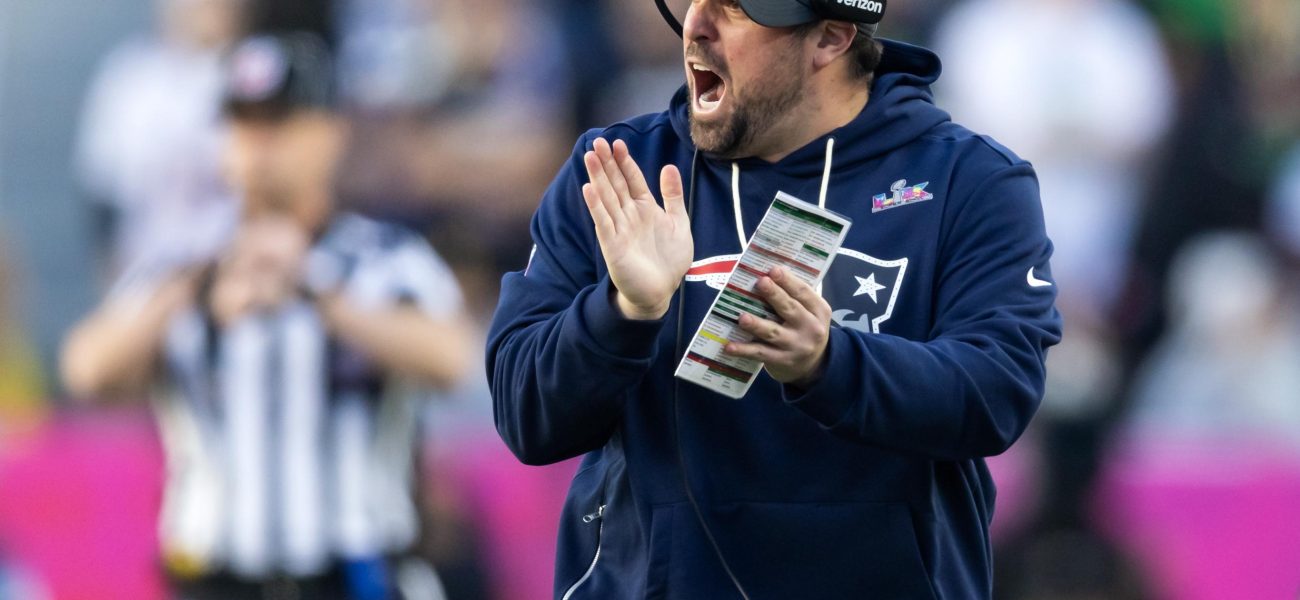
It wasn’t the scream-inducing drops or the forced joviality of star cornerback Christian Gonzalez — a man apparently far more comfortable tackling wideouts than plummeting at 80 mph — that signals the real story here. No, the true plot point came with Zak Kuhr’s confirmed ascent to defensive coordinator. He’d been operating in a caretaker capacity, having been flung into the breach when Terrell Williams stepped aside for medical treatment. Six seasons prior, he’d been a quality control grunt with Mike Vrabel in Tennessee, an offensive-minded guy making an unlikely switch. Now? He’s got the keys to a kingdom — or, at least, the Patriots’ notoriously intricate defensive scheme. This isn’t just about football; it’s a testament to quiet competence rewarded, a cold splash of meritocracy in an era often defined by inherited privilege.
Marcus Jones, a defensive captain who’s seen his share of high-stakes play — the man returned two punt touchdowns last season, a rare feat — put it plainly, without a shred of hyperbole. “I commend him for stepping in shoes that was big shoes at the time,” Jones said, a voice of measured approval. “He was always letting us know certain plays, certain schemes, ‘How you guys feel about this?’ ” That kind of collaborative, player-centric approach? It’s not just refreshing; it suggests a subtle yet significant departure from the ‘my way or the highway’ mentality that can sometimes permeate even the most successful organizations. And it clearly worked, with the defense allowing a league-low 13.8 points per game last season, a stark numerical truth about Kuhr’s on-the-fly leadership.
Brendan Schooler, a safety whose intensity seems to vibrate even through a transcript, echoed the sentiment. “I don’t think anybody’s more deserving than him, stepping into that defensive coordinator role,” Schooler stated. “You can tell how much he loves this group, how much he loves his job.” It’s a genuine endorsement, something hard-earned from men who stake their careers on every snap. Because for them, this isn’t just a game; it’s livelihoods, reputations, — and an awful lot of bruising effort. When the guys in the trenches vouch for a coach, you’d be wise to listen.
Beyond Kuhr, other nuggets emerge, painting a picture of an offseason designed not for headline-grabbing maneuvers but for strategic refinement. Kyle Williams, a second-year receiver, spoke of the lingering impact of Stefon Diggs’ short tenure – “wise words, and wise lessons that he taught me,” Williams reflected. That quiet mentorship, almost unheralded, can be more valuable than any draft pick. Meanwhile, first-round pick Caleb Lomu is being methodically cross-trained at both tackle positions, a disciplined approach that eschews instant gratification for long-term versatility. You’ve got to appreciate the grind, don’t you?
📄 POLICY WIRE WHITEPAPER PUBLISHED: PAKISTAN'S NATIONAL SECURITY POLICY PRIORITIES
👉 READ BY CLICKING HEREAnd then there’s Marcus Jones again, dismissing a career-best statistical season with a simple, almost dismissive, “Next page.” No basking, no self-congratulation. Just an immediate focus on the Super Bowl loss – “we didn’t finish the job.” That steely-eyed pursuit of collective success, that absence of personal aggrandizement, isn’t just good sportsmanship. It’s the engine of any genuinely winning enterprise, whether on a football field or navigating the treacherous waters of international policy.
What This Means
The Patriots’ operational paradigm, particularly this offseason, offers a fascinating microcosm for political and economic observers. Kuhr’s elevation from a low-profile analyst to defensive linchpin, predicated entirely on demonstrated capability during a crisis, signals a powerful shift towards an almost brutal meritocracy. This isn’t about seniority; it’s about demonstrable output under duress. Such models, while theoretically championed, are often elusive in larger geopolitical contexts, particularly in regions where patronage or established hierarchies often supersede individual brilliance. In countries like Pakistan, for instance, debates frequently rage about whether state institutions or private enterprises truly reward talent over entrenched networks. The Patriots, an ostensibly closed system, are here offering a practical lesson in how radical decentralization of responsibility—while still maintaining rigorous oversight—can lead to superior outcomes. Their insistence on cold, hard data and player feedback, the very tools that define modern sports management, aligns with broader global trends pushing for data-driven decision-making in everything from defense budgets to market strategies. The careful grooming of new talent like Lomu, not for immediate flash but for adaptive utility, further illustrates a patient, long-term strategic investment—a characteristic often missing in volatile political economies focused on short electoral cycles or quarterly profits. This is less a team-building exercise than a real-world, high-stakes application of adaptive leadership, and it’s something governments and businesses everywhere might learn from.
The stage is set for OTA practices, for Vrabel’s first media appearance since the draft. You know he’ll offer plenty of stoic pragmatism, probably punctuated by a wry aside or two. But it won’t be about flash. It’s about the steady, sometimes dull, march of competence.