


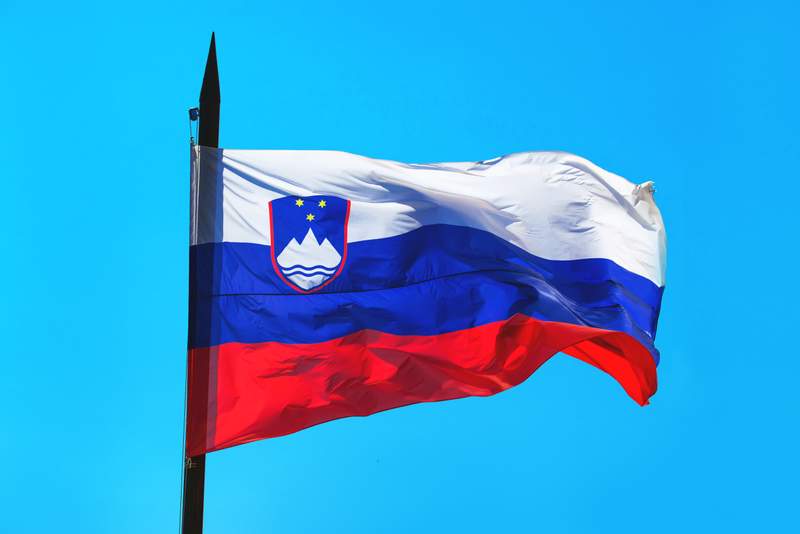
Jerusalem Extends European Reach as Slovenia Welcomes First Israeli Embassy
POLICY WIRE — Jerusalem, Israel — It’s rarely about the size of the dog in the fight; sometimes, it’s about the reach of its diplomatic paw print. The announcement—low-key, frankly, given its...

POLICY WIRE — Jerusalem, Israel — It’s rarely about the size of the dog in the fight; sometimes, it’s about the reach of its diplomatic paw print. The announcement—low-key, frankly, given its implications—that Israel is slated to open its very first embassy in Slovenia isn’t just a simple ribbon-cutting. It’s a subtle yet telling indicator of evolving foreign policy priorities, Jerusalem’s quiet push into a corner of Europe it hasn’t directly engaged before, and Slovenia’s own understated, but meaningful, step onto a broader diplomatic stage.
You see, nations don’t just open embassies on a whim. There are calculations, interests, — and often, an eye on broader strategic positioning. For decades, Israel’s diplomatic corps has focused heavily on the larger European powers, the United States, and of late, an accelerating normalization drive within parts of the Arab world. Small, central European states like Slovenia, nestled between giants and boasting a modest population, haven’t always been front and center on the Knesset’s diplomatic maps. But now, it’s ‘Turning a new page’. [QUOTE_PLACEHOLDER]
Because even in the quietest corners, political gravity shifts. The European Union, Slovenia included, has frequently wrestled with the nuances of Middle Eastern policy, often walking a tightrope between traditional allegiances and the practicalities of humanitarian concerns. An Israeli embassy in Ljubljana provides a direct, unmediated conduit for dialogue, certainly. It lets Tel Aviv advocate its positions without the layers of larger EU mechanisms. And it allows Slovenia—a country that historically held strong ties to its Balkan neighbors and Eastern Europe—a more direct, perhaps less deferential, engagement with one of the Middle East’s key players.
The move certainly bucks an old trend. For a long while, the flow of diplomatic posts tended to be outbound from Jerusalem to Western Europe, or lately, into parts of Africa and the Gulf. This particular outreach to Ljubljana might look incremental on paper, but it really underscores a subtle recognition within Israel’s Ministry of Foreign Affairs: Every European capital holds sway, particularly in an EU where unanimity, or at least a strong consensus, matters on various international votes. Consider that, globally, there were approximately 306,400 diplomats working worldwide as of 2021, as reported by Statista, and each embassy, however small the country, represents a point of presence, an ear, and a voice.
Slovenia, a nation that emerged from the dissolution of Yugoslavia with a pragmatic, outward-looking foreign policy, doesn’t possess the colonial baggage or historical complexities that burden some older European powers when engaging with Israel. It’s a fresh canvas, in a way. Don’t mistake a low profile for a lack of principle, though. Slovenia has consistently aligned itself with EU consensus on various geopolitical issues, including those pertaining to the Israeli-Palestinian conflict. But a direct bilateral channel could facilitate a deeper understanding, or at least a more granular negotiation of positions, moving forward. It’s an interesting play, to say the least, to go straight to the source, establishing a physical presence rather than relying solely on non-resident ambassadors or indirect channels through Rome or Vienna.
We can’t just talk about Europe without considering the broader ramifications. How does this kind of focused, even opportunistic, diplomatic expansion resonate in the Muslim world, especially in South Asia? While the Abraham Accords marked a seismic shift in some Gulf states’ relations with Israel, Pakistan, for instance, remains steadfast in its policy of non-recognition. They’re poles apart. Slovenia’s embrace of a direct Israeli diplomatic presence, while hardly surprising given EU member state status, acts as another data point in the ongoing global realignment. It contrasts sharply with the frosty, even antagonistic, stance that many other Muslim-majority nations, particularly those with strong historical ties to the Palestinian cause, continue to maintain.
This isn’t just about ‘adding another pin to the map’; it’s about altering the diplomatic topography, one subtle boundary shift at a time. It also tells us Israel isn’t relying solely on Washington or the established European heavyweights to champion its causes or represent its interests. No, they’re cultivating relationships, one smaller, accessible EU state at a time. It’s a long game, played out in the quiet hum of newly installed embassy air conditioners and freshly printed diplomatic credentials.
What This Means
This development is more than just a bureaucratic expansion; it reflects a sophisticated, multi-pronged foreign policy approach from Jerusalem. Economically, while Slovenia won’t suddenly become Israel’s largest trade partner, the establishment of a dedicated embassy typically facilitates trade missions, business-to-business networking, and investment opportunities. Think tech startups, cybersecurity, agricultural innovation – areas where Israel excels and smaller EU states like Slovenia might be eager to partner.
Politically, the implications are layered. It enhances Israel’s diplomatic footprint within the European Union, potentially providing another sympathetic voice or at least a clearer channel for communication within the EU’s often-complex political machinery. It enables Slovenia to diversify its international relations, aligning itself more closely with specific Mideast players, perhaps leveraging new avenues for regional engagement or cultural exchange. For Jerusalem, it’s about solidifying alliances, one member state at a time, strengthening its narrative, and creating new avenues for lobbying on various EU resolutions. It chips away at a perception of isolation — and normalizes its presence in all corners of the continent. And that, in the messy business of international relations, counts for quite a lot.