

The Seventh Round of China-Pakistan Foreign Ministers’ Strategic Dialogue
The recent Seventh Round of China-Pakistan Foreign Ministers’ Strategic Dialogue, held in Beijing on January 4, 2026, underscores a partnership that has matured into one of the most resilient in the...

The recent Seventh Round of China-Pakistan Foreign Ministers’ Strategic Dialogue, held in Beijing on January 4, 2026, underscores a partnership that has matured into one of the most resilient in the contemporary international system. While routine diplomatic dialogues often generate little beyond ceremonial statements, the joint communiqué released by Islamabad and Beijing demonstrates an unusual convergence of political will, economic ambition, and security alignment, reflecting both countries’ calculated responses to evolving regional and global dynamics.
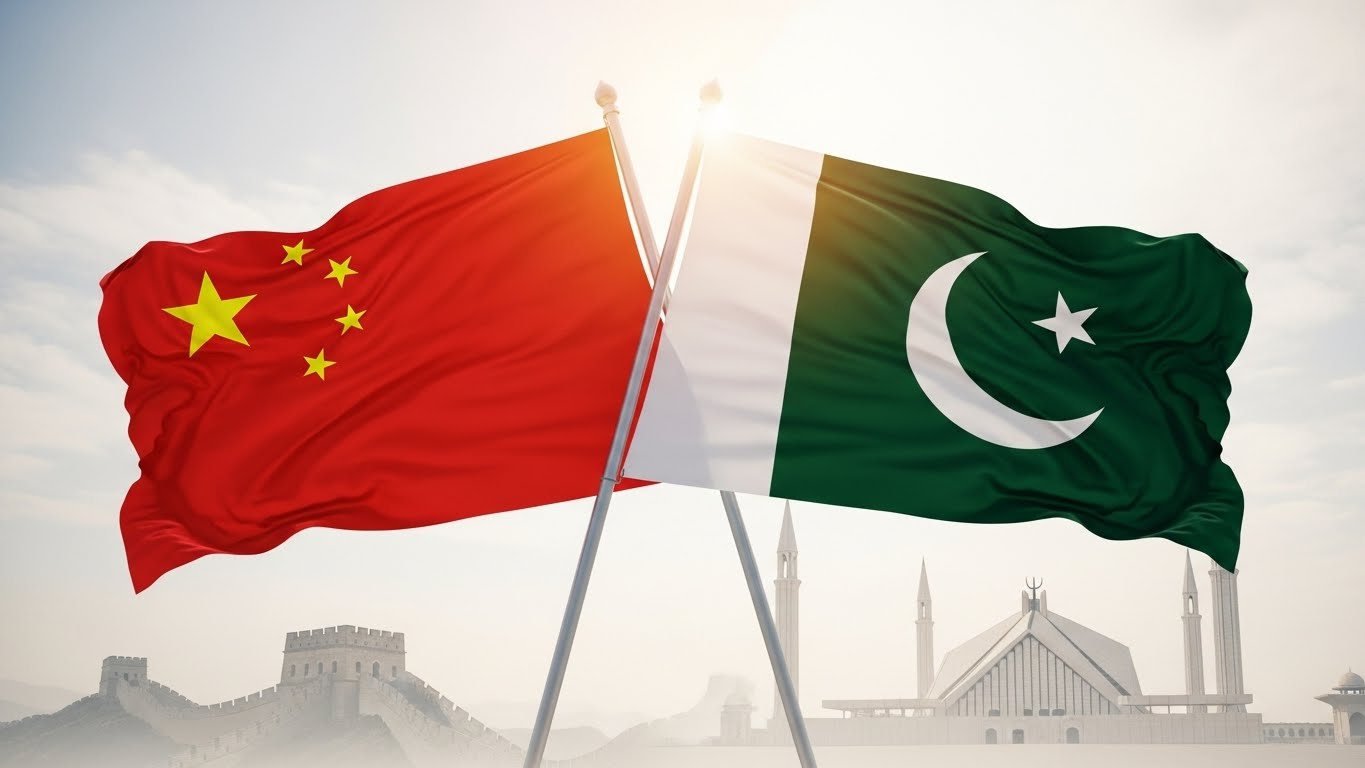
At the heart of the communiqué lies a reaffirmation of the “All-Weather Strategic Cooperative Partnership” that has defined China-Pakistan relations for decades. This enduring alliance is not merely symbolic; it is increasingly functional, structured around a multi-dimensional framework encompassing economic collaboration, security coordination, political alignment, and technological exchange. By emphasizing “ironclad friendship and deep mutual trust,” both sides signal that this relationship is prepared to withstand external pressures and internal uncertainties. This is especially relevant given the heightened turbulence in South Asia, ranging from shifting U.S. and European priorities to internal instability in Afghanistan.
Economic cooperation, particularly under the China-Pakistan Economic Corridor (CPEC) 2.0, occupies a central place in the communiqué. Both sides agreed to integrate development plans that go beyond traditional infrastructure investments to include industry, agriculture, mining, and high-tech cooperation. The expansion of Gwadar Port and the facilitation of trade via the Karakoram Highway are tangible steps toward operationalizing this vision. Significantly, the emphasis on year-round operation of the Khunjerab Pass not only enhances bilateral trade but also signals Pakistan’s intent to position itself as a reliable regional transit hub, integrating Central, South, and East Asia. In a world increasingly concerned with supply chain security, the deepening of this corridor represents a strategic hedge against global economic volatility.
Security coordination, as highlighted in the communiqué, remains a pillar of the China-Pakistan partnership. Both governments reaffirmed a zero-tolerance stance on terrorism, while emphasizing cooperation to secure Belt and Road projects in Pakistan. This is a critical acknowledgment of the persistent militant threats in the region, particularly in the borderlands, and reflects China’s growing stake in Pakistan’s internal security architecture. It also demonstrates Pakistan’s ability to balance domestic counterterrorism priorities with international obligations, showcasing Islamabad as a responsible partner in regional stability. Beyond terrorism, the dialogue touched upon broader security concerns, including the necessity for international action against terrorist groups operating in Afghanistan, a subtle nod to the failures of past interventions and the urgency of a cooperative regional approach.
Politically, the communiqué reiterates mutual support on core issues: Pakistan’s commitment to the One-China Principle and China’s backing of Pakistan’s sovereignty and territorial integrity. These declarations go beyond diplomatic formalities; they cement a framework of reciprocal legitimacy that strengthens both countries’ negotiating positions on contentious international issues. For Pakistan, Chinese support provides leverage in an international environment often dominated by Western narratives, particularly regarding regional disputes. For China, Pakistan’s endorsement of sensitive internal matters reinforces Beijing’s global stance on sovereignty and non-interference, which is central to its diplomatic posture.
The communiqué also reflects a forward-looking dimension, addressing regional and global issues. China and Pakistan discussed the Jammu & Kashmir dispute, emphasizing its resolution through United Nations mechanisms, and advocated for peace in the Middle East. This alignment underscores both countries’ shared preference for multilateral solutions over unilateral interventions, positioning the partnership as an alternative voice in global governance. Moreover, the commitment to commemorate 75 years of diplomatic relations through year-long activities highlights the intention to consolidate public support, creating a social and cultural foundation for sustained cooperation.
Another noteworthy aspect is the focus on space and scientific collaboration, including Pakistan’s prospective participation in China’s Space Station initiatives. While often overshadowed by security and economic narratives, this dimension signals a long-term vision for technological and scientific integration that could redefine the contours of Sino-Pakistani engagement in the 21st century. By including space cooperation, both countries demonstrate an ambition to move beyond conventional bilateral projects and into domains that carry both strategic and symbolic significance.
Analyzing this communiqué in the broader geopolitical context reveals several critical trends. First, the dialogue underscores China’s strategic depth in South Asia, a region where its influence competes with traditional Western and regional actors. Pakistan’s role as a dependable partner enhances Beijing’s capacity to pursue Belt and Road objectives while insulating its investments from instability. Second, the dialogue signals Pakistan’s reassertion of strategic autonomy, balancing relations with multiple powers while leveraging Chinese support to safeguard its interests vis-à-vis India and the West. Third, the emphasis on multilateralism and counterterrorism cooperation suggests a pragmatic understanding of contemporary security dilemmas, moving beyond rhetoric to practical coordination in areas of mutual concern.
The Seventh Round of the Strategic Dialogue is more than a routine diplomatic engagement; it is a strategic reaffirmation at a time of profound regional flux. With Afghanistan’s ongoing instability, India’s assertive posture, and global shifts in economic and military power, both China and Pakistan are seeking to consolidate their positions, ensuring that their partnership remains a stabilizing force, rather than merely a bilateral convenience. In this sense, the communiqué reflects both continuity and adaptation: continuity in the underlying political trust and economic integration, and adaptation in the operationalization of this partnership across new sectors and contemporary challenges.
In conclusion, the dialogue demonstrates that China and Pakistan are not content with passive cooperation. The communiqué conveys a multi-layered, proactive approach aimed at securing economic growth, political legitimacy, regional stability, and technological advancement. It signals to the wider international community that the partnership is resilient, forward-looking, and strategically significant. For observers of South Asia and global geopolitics, the Seventh Round of the China-Pakistan Strategic Dialogue is a reminder that enduring alliances are built on more than shared rhetoric, they require tangible, mutually reinforcing actions across every dimension of statecraft. In an era of uncertainty, the Beijing communiqué is both a statement of intent and a roadmap for future collaboration.
Author