


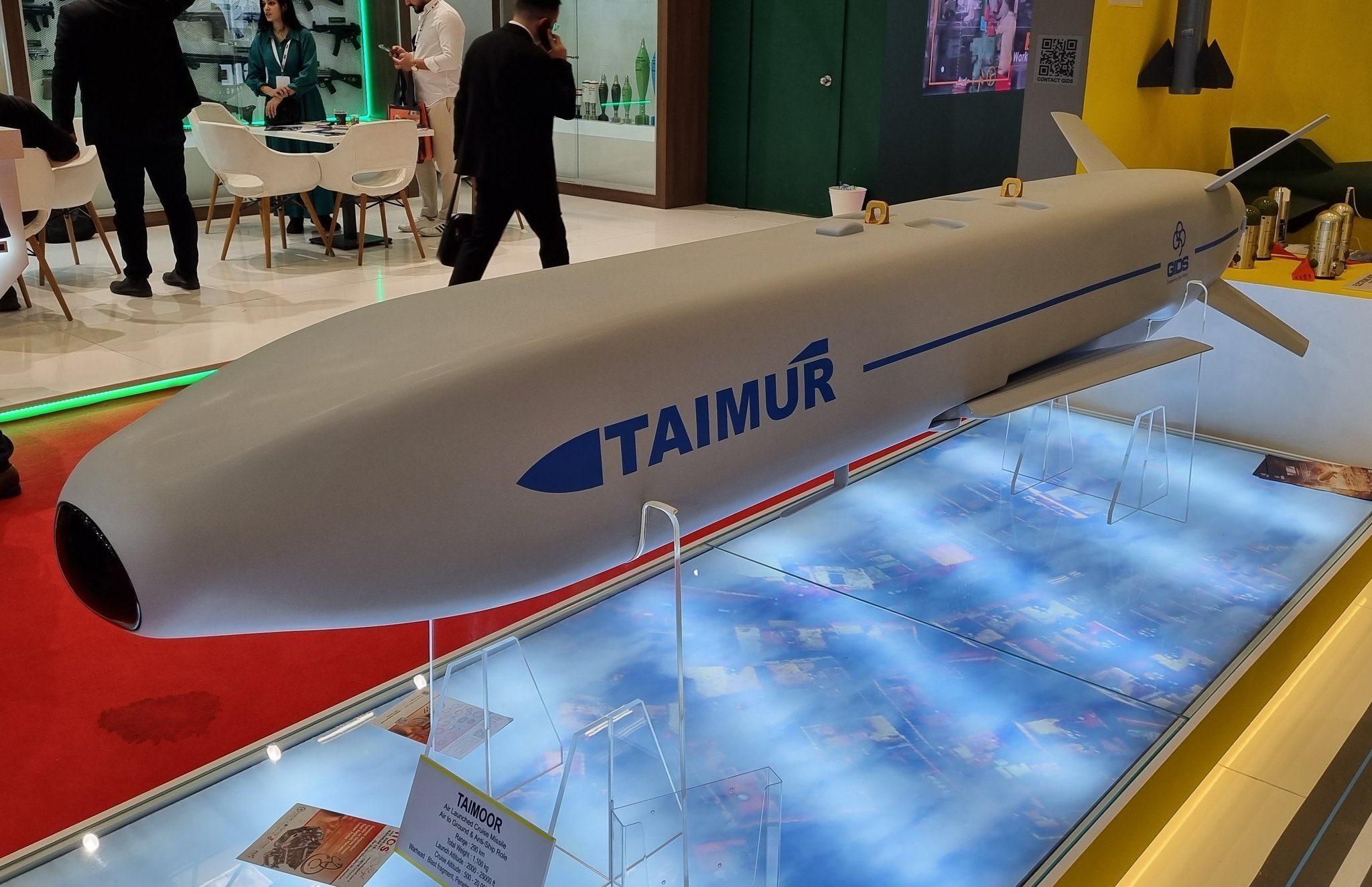
The Taimoor Stealth Cruise Missile and the Nation’s Defence Self-Reliance
On 3 January 2026, the Pakistan Air Force (PAF) successfully conducted the flight test of its latest domestically developed missile, the Taimoor Air-Launched Cruise Missile (ALCM). This achievement...

On 3 January 2026, the Pakistan Air Force (PAF) successfully conducted the flight test of its latest domestically developed missile, the Taimoor Air-Launched Cruise Missile (ALCM). This achievement represents a milestone in Pakistan’s defence technology and reflects the country’s ongoing pursuit of technological self-sufficiency. The Taimoor missile enhances Pakistan’s credible conventional deterrence while demonstrating the sophistication and innovation of its indigenous defence industry.
Technical Features and Capabilities
The Taimoor missile is designed as a low-flying, stealthy cruise missile capable of evading modern radar and missile defence systems. Its operational range of 600 kilometres allows Pakistan to target both land and sea objectives with high precision, giving the armed forces a significant standoff advantage. The missile is air-launched, making it flexible and compatible with a variety of fighter aircraft, including legacy platforms and future integration with the JF-17 Thunder.
Equipped with an advanced navigation system, Taimoor can follow terrain contours and fly close to the ground, minimizing radar detection. Its precision strike capability allows it to engage strategic targets effectively while carrying conventional warheads. This combination of stealth, low-altitude flight, and accuracy positions Taimoor as a highly versatile tool for modern warfare, enhancing Pakistan’s operational flexibility and deterrence posture.
Strategic Advantages
The Taimoor missile significantly strengthens Pakistan’s conventional deterrence. In a region where missile defence systems are increasingly sophisticated, Taimoor’s low-altitude, radar-evasive profile ensures that Pakistan can respond to threats while maintaining strategic stability. By extending the reach of the air force, it allows Pakistan to neutralize high-value targets deep within contested territories without exposing aircraft or pilots to undue risk.
From a broader perspective, Taimoor symbolizes Pakistan’s technological independence. Developing such an advanced system indigenously demonstrates the maturity of the country’s defence industry and reduces reliance on foreign suppliers, insulating national security from geopolitical pressures. It also reflects Pakistan’s long-term commitment to modernising its strategic capabilities and safeguarding national sovereignty.
Historical Context and Development
Pakistan’s journey toward advanced cruise missile technology spans decades. Early efforts included the Ra’ad series, first tested in 2007, which provided initial air-launched strike capabilities. Subsequent advancements, such as Ra’ad-II and the Babur ground-launched cruise missile, steadily improved range, accuracy, and operational flexibility. The development of Taimoor represents the culmination of this sustained effort, showcasing the technical expertise and industrial capacity Pakistan has built over the years.
The defence ecosystem behind Taimoor combines government research organizations, state-owned enterprises, and private-sector partners such as Global Industrial & Defence Solutions (GIDS). This collaborative approach has enabled Pakistan to design, test, and produce cutting-edge systems that meet modern strategic requirements, establishing the country as a credible regional defence power.
Regional and Strategic Implications
The induction of Taimoor into Pakistan’s arsenal carries significant regional security implications. Its stealth and precision enhance Pakistan’s ability to maintain credible conventional deterrence, ensuring that any potential aggressor recognizes the risks of escalation. By allowing precision strikes from a safe distance, Taimoor improves national security and operational flexibility, bolstering confidence in the armed forces’ ability to protect the country.
Moreover, Taimoor underscores Pakistan’s technological and strategic prestige. Demonstrating indigenous capabilities in advanced missile design not only deters potential threats but also showcases the country’s growing expertise in aerospace technology. This achievement strengthens Pakistan’s position as a modern, technologically capable nation capable of defending its sovereignty.
Looking Ahead
The Taimoor missile is part of a broader trend in Pakistan’s defence modernization, which includes upgrades to longer-range cruise missiles, electronic warfare capabilities, and advanced air defence systems. Integration of Taimoor with platforms like the JF-17 Thunder will expand the PAF’s operational reach, providing a powerful combination of stealth, precision, and versatility.
This development also sets the stage for future innovations in indigenous missile technology, ensuring that Pakistan remains capable of adapting to evolving threats while reinforcing its defensive posture. By achieving technological self-sufficiency in strategic systems, Pakistan can confidently pursue a deterrence strategy that safeguards its national interests and maintains regional stability.
Conclusion
The successful flight test of the Taimoor Air-Launched Cruise Missile represents a major strategic and technological achievement for Pakistan. With its stealth capabilities, precision strike potential, and extended range, Taimoor strengthens the country’s conventional deterrence while enhancing the credibility of its armed forces. Beyond its military significance, the missile symbolizes Pakistan’s progress toward defence-industrial self-reliance and positions the nation as a technologically advanced, capable, and resilient regional power.
Author