
Industry Leads Pakistan’s Economic Revival: Cement Exports To Be Boosted
Economic growth is rarely linear; it follows cycles of expansion and contraction influenced by policy frameworks, investment flows, and structural developments. Pakistan, after navigating years of...
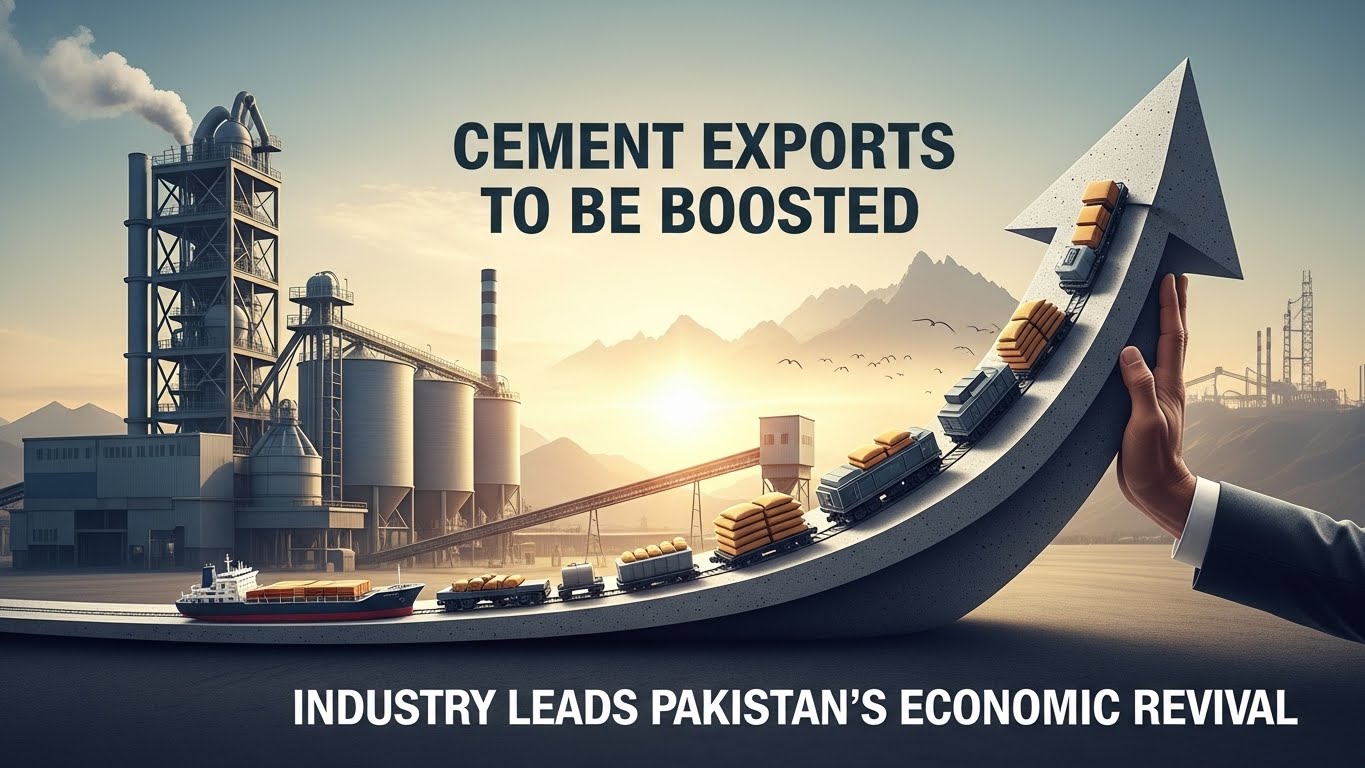
Economic growth is rarely linear; it follows cycles of expansion and contraction influenced by policy frameworks, investment flows, and structural developments. Pakistan, after navigating years of economic volatility, is now entering a renewed expansionary phase, marked by rising corporate confidence, industrial growth, and macroeconomic stabilization. Early-cycle indicators, particularly in industry and construction, demonstrate the country’s trajectory toward sustained growth.
Industrial Expansion: The Driving Force of Growth
Industrial activity is widely recognized in economic literature as a leading indicator of growth. In Pakistan, this is evident in the actions of DG Khan Cement, one of the nation’s largest cement producers. The company has announced a clinker capacity expansion featuring the largest single per-day production line in Pakistan, signaling both optimism and long-term commitment to the domestic market.
Investments of this magnitude, approximately PKR 40–50 billion (~US$160 million), are not undertaken lightly. They reflect confidence in future demand and the overall business environment. The new line is expected to become operational within 18 months, highlighting corporate willingness to invest in capital-intensive projects, a classic marker of early-stage economic recovery.
Macro Indicators: GDP Growth Amid Adversity
The first quarter of FY26 (July–September 2025) illustrates Pakistan’s improving economic fundamentals. GDP growth accelerated to 3.71%, a significant increase from 1.56% in the same period last year, and exceeding the 3.10% growth recorded in FY25. Remarkably, this growth occurred despite severe floods impacting various regions, demonstrating resilience in industrial and construction sectors.
From a policy perspective, this acceleration validates the government’s macro-stabilization measures and structural reforms. Stability in fiscal and monetary policy, coupled with improved ease of doing business, has fostered an environment conducive to investment, signaling that Pakistan is emerging from a period of uncertainty into one of steady economic expansion.
Rising Domestic and Export Demand
Cement demand exemplifies the broader trend of rising domestic consumption. In the first five months of FY26, cement demand grew at a double-digit rate, fueled by domestic construction activity and increased exports. Large infrastructure projects, housing development, and commercial construction have contributed significantly to this growth, creating a multiplier effect on employment, raw material suppliers, and related industries.
Financial conditions have also improved, with policy rates reduced and capital markets experiencing sustained rallies since mid-2024. Such an environment enables firms to expand production, invest in new technologies, and capitalize on emerging market opportunities.
Policy Consistency and Reform Progress
Corporate confidence is closely linked to the predictability of government policy and ongoing reforms. Investments like DG Khan Cement’s expansion indicate faith in the continuity of macroeconomic policies, regulatory stability, and transparent governance.
Economists argue that early-stage corporate investments often serve as signals to international investors, demonstrating a country’s potential for sustainable growth. By prioritizing reforms and providing clear economic direction, Pakistan is laying the groundwork for both domestic and foreign capital inflows. This alignment of policy and private sector action is critical to sustaining a long-term growth trajectory.
Challenges and Opportunities
While the outlook is promising, Pakistan faces ongoing challenges including climate-related vulnerabilities, regional geopolitical tensions, and global economic fluctuations. However, the current investment momentum, combined with structural reforms, suggests the country is increasingly resilient.
Future opportunities exist in technology-driven manufacturing, renewable energy, export diversification, and strategic public-private partnerships. Leveraging these areas can enhance productivity, attract foreign direct investment, and strengthen Pakistan’s position in regional and global markets.
A New Chapter in Pakistan’s Economic Story
Pakistan’s economy is at a pivotal juncture. Corporate-led industrial expansion, rising domestic and export demand, and consistent macroeconomic reforms indicate a transition into an expansionary phase. Projects like DG Khan Cement’s clinker line exemplify confidence in the country’s long-term economic potential.
As early-cycle sectors like industry and construction expand, momentum builds, creating an environment in which foreign investors are likely to follow domestic capital. This classic growth cycle, initiated by local investment and sustained by policy consistency, positions Pakistan to enter a new era of economic resilience and opportunity.
Pakistan is not merely recovering from past economic challenges; it is strategically shifting gears into a sustainable growth trajectory, driven by corporate confidence, industrial innovation, and policy-driven stability. The country’s investment story is evolving, and the evidence indicates a promising future for sustained economic expansion.
Author