


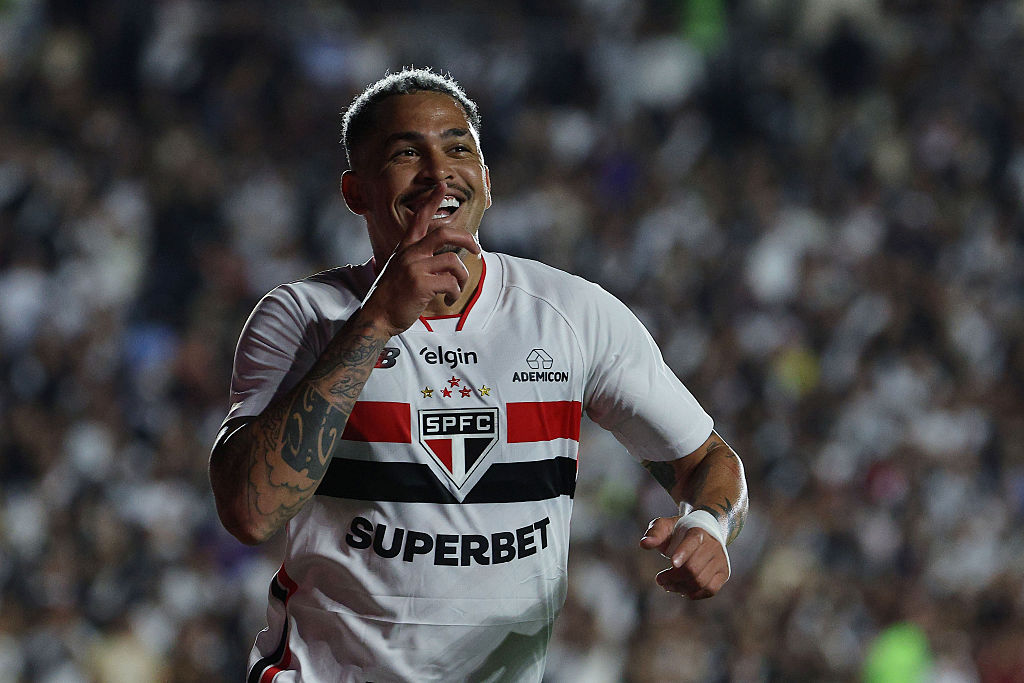
The Precarious Zenith: How Luciano’s Strike Underpins São Paulo’s High-Stakes Economic Play in Brasileirão
POLICY WIRE — São Paulo, Brazil — It wasn’t the breathtaking display of Brazilian ‘samba football’ that global audiences often romanticize. Nor was it a tactical masterclass...

POLICY WIRE — São Paulo, Brazil — It wasn’t the breathtaking display of Brazilian ‘samba football’ that global audiences often romanticize. Nor was it a tactical masterclass designed to mesmerize. Instead, last Saturday’s slender 1-0 victory for São Paulo over Mirassol in the Brasileirão was, at its core, a stark exposition of professional football’s relentless, unforgiving grind—a single, glancing header from Luciano serving as a fragile bulwark against looming financial and psychological despair.
For the uninitiated, Brazil’s top flight isn’t just a league; it’s a national obsession, an economic engine, and a psychological barometer for millions. And São Paulo, a club steeped in a rich, if sometimes turbulent, history, found themselves clinging precariously to the upper echelons after two consecutive league defeats. Their triumph at the Brinco de Ouro da Princesa wasn’t a statement of dominance; it was a desperate gasp for air, a necessary reprieve earned through the clinical, almost bureaucratic, act of netting a solitary goal.
“Every match is a referendum, isn’t it? Our fans, our sponsors—they expect performance, they demand it,” stated Club President Júlio Casares, speaking post-match with a weary candor that belied the narrow victory. “Luciano’s consistency, it’s not just about goals; it’s about stability for the entire club apparatus. It prevents the kind of downward spiral that can destabilize everything from player morale to sponsorship negotiations.” Indeed, the forward’s head, connecting with Wendell’s cross in a moment of acute tension, didn’t just alter the scoreboard; it momentarily shifted the club’s trajectory, easing pressure on coaches, executives, and—most importantly—the expectant throngs in the stands. It’s a perpetual high-wire act.
This isn’t merely about sport. It’s about an industry that, according to a 2023 report by Ernst & Young, contributes over R$50 billion (approximately $10 billion USD) to Brazil’s national GDP annually. Such figures underscore the immense economic weight resting on the shoulders of individuals like Luciano. One cannot overstate the impact of a winning or losing streak on everything from merchandise sales and ticket revenues to global broadcast rights and player valuations. It’s a high-stakes ecosystem where an inch of deflection can translate into millions of dollars.
Still, the context of São Paulo’s victory reveals a club not entirely comfortable. They registered 13 shots but only found the net once. Mirassol, a team languishing near the bottom, even had a goal disallowed. This kind of narrow escape, week after week, is precisely why the emotional investment in Brazilian football runs so deep. “The sheer economic weight resting on these athletes is often understated,” observed Dr. Elena Rossi, a sports economist from the Fundação Getulio Vargas. “A single goal can shift valuations, impact sponsorship deals, and quite literally dictate jobs from the groundskeeper to the CEO. It’s a brutal calculus of talent — and pressure.”
And so, Luciano (who’s now São Paulo’s third-highest scorer in Brasileirão history with 66 goals, a statistic that underlines his pivotal role), again became the improbable protagonist. His fourth consecutive scoring appearance provided temporary succor. But the underlying currents of expectation — and precarity remain. This is a narrative that resonates far beyond the vibrant stadiums of South America. Across the globe, in bustling metropolises from Karachi to Kuala Lumpur, similar passions—and similar, often disproportionate, economic hopes—are invested in national sports teams. Consider Pakistan’s fervent devotion to cricket, where the performance of eleven men can dictate national mood and, indirectly, influence investor confidence. The universal language of sport, it seems, is often one of high-stakes capitalism.
What This Means
São Paulo’s victory isn’t just three points on a table; it’s a brief stabilization of a multi-million-dollar enterprise navigating treacherous waters. In an environment where the difference between fourth and eighteenth place can mean vastly different revenue streams and global brand visibility, every goal, every save, is an immediate financial transaction as much as it’s a sporting feat. The relentless calendar—with São Paulo due to play Millonarios in Colombia this Tuesday and then Bahia next Sunday—epitomizes the modern football club’s dual existence as a high-performance athletic unit and a highly leveraged corporation. This constant pressure cooker environment ensures that while fans celebrate the spectacle, stakeholders are calculating the bottom line. It also highlights the precarious position of even established clubs, underscoring how financial stability is perpetually contingent on on-field results—a policy concern for any sports league hoping to maintain competitive balance and long-term viability. The speculative nature of athletic success isn’t unique to Brazil; it’s a global phenomenon.
Behind the headlines, this ongoing narrative of tenuous success also informs broader socio-economic discussions. In economies like Brazil’s, where football is deeply intertwined with national identity and provides a vital escape for millions, the performance of these clubs can have subtle, yet profound, effects on public morale and consumer sentiment. It’s an intangible, yet potent, factor in the national psyche, reminding us that policy isn’t always enacted in sterile halls but often played out on muddy pitches, under the searing gaze of a demanding public.