


The Art of Denial: How a Cloudcroft Garden Became a Graveyard’s Guise
POLICY WIRE — ALAMOGORDO, N.M. — It started, prosecutors reckon, with a fresh pile of dirt, a backhoe, and a plausible, almost folksy, excuse about an above-ground garden. That small domestic detail,...

POLICY WIRE — ALAMOGORDO, N.M. — It started, prosecutors reckon, with a fresh pile of dirt, a backhoe, and a plausible, almost folksy, excuse about an above-ground garden. That small domestic detail, meant to obscure a deeper, far more chilling reality, eventually unravelled into one of New Mexico’s most elaborate—and frankly, brazen—domestic murder cover-ups in recent memory. You can’t just dig a 6-7 foot long, 2-3 foot deep hole in the middle of nowhere without someone, eventually, noticing. Or, at least, someone finally connecting it to the missing husband.
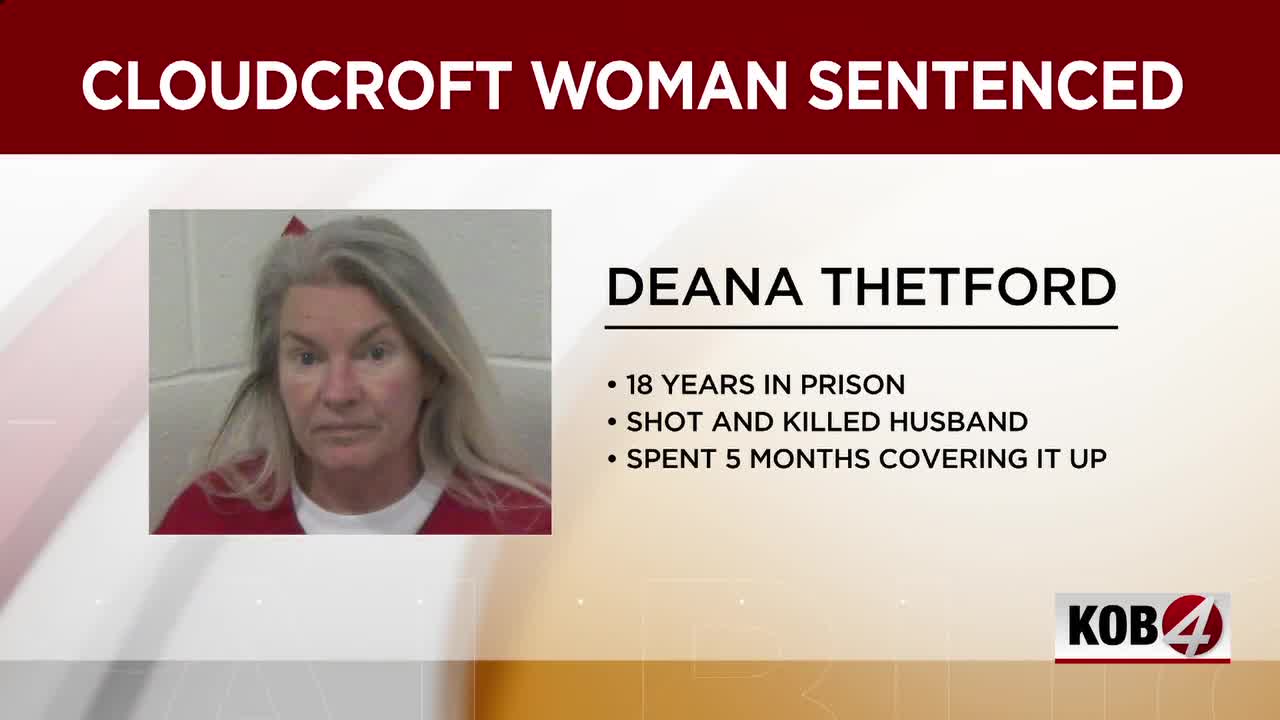
Deana Thetford, the Cloudcroft woman behind this meticulously fabricated normalcy, now has 18 years to think about what exactly grew in that garden of deceit. The 12th Judicial District Attorney’s Office confirmed her guilty plea to second-degree murder, tampering with evidence, and forgery in the killing of her husband, Craig Thetford. The justice, though grim, serves as a stark reminder: lies, however carefully cultivated, rarely bloom forever.
Craig Thetford simply vanished, first in January 2025. Family members, eventually, did what concerned families do—they started looking, then asking questions, then reporting him missing in May 2025. It’s what happens when someone you expect to hear from goes silent, and silence can often be the loudest alarm bell of all. The Otero County Sheriff’s Office poked around their home, naturally, but didn’t find much. Because, and this is where the story pivots from mere disappearance to calculated deception, his remains were right there, hidden in plain sight, or at least in the carport.
For months, Ms. Thetford, a woman apparently blessed with an impressive capacity for creative fiction, spun a web of stories about where her husband had supposedly absconded to. He was off in Mexico, you see, with another woman. Or perhaps he’d gone to Albuquerque for firefighter training. No, wait, he was caring for his mother in Texas. And then, finally, he was just plain working in Texas. Each story was a flimsy, gossamer veil over a horrific truth. And all the while, she was keeping up appearances, even if they were blood-stained. That takes some serious chutzpah, if we’re being honest.
Because, well, that’s what liars do. But this wasn’t just casual fabrication. Prosecutors found that she not only repeatedly lied about where he was but also committed serious acts of fraud. She impersonated Craig Thetford via fake text — and Facebook messages. She forged documents, adding his signature to records. It’s a level of commitment to deception you rarely see outside of spy thrillers, though here, the stakes were tragically mundane: avoiding accountability for murder.
The turning point, predictably, was an anonymous Crime Stoppers tip in May 2025. Somebody knew something. Someone, somewhere, dropped a dime claiming Ms. Thetford had shot — and killed her husband after a fight inside their Cloudcroft home. And that, dear readers, is when the dam broke. Suddenly, the conflicting narratives, the above-ground garden—they all coalesced into a single, terrifying picture.
Investigators dove deep. Forensic evidence. Financial records. Phone records. Credit card records. GPS data. Interviews across multiple states. They left no stone unturned, as District Attorney Ryan Suggs later attested. The forensic picture painted a gruesome reality: Deana Thetford shot Craig Thetford during the first week of January 2025. He suffered at least three gunshot wounds. After that, she spent over five months covering her tracks. Cleaning the scene, fixing damage, wrapping his remains in plastic and a rug, dousing them with lime (a detail straight out of a true crime podcast), and stashing them in the carport.
It was during an earlier welfare check, when suspicions were still vague, that an officer reportedly saw Thetford with a backhoe near the carport, making that seemingly innocuous comment about preparing an above-ground garden. But it wasn’t for marigolds. It was, rather, for burying the consequences.
On June 2, facing the inevitable, Thetford appeared before Judge Stephen P. Ochoa. She pleaded guilty. Eighteen years in the New Mexico Department of Corrections. A long stretch, but perhaps less than a jury might have handed down. For many victims’ families, this resolution, though somber, is what they pray for. They just want answers, closure, — and some semblance of justice. District Attorney Ryan Suggs voiced the relief many felt. “I am extremely proud of the work done by our law enforcement partners and my office during the course of this investigation,” he said. Adding that [QUOTE_PLACEHOLDER]
That relentless pursuit of truth is a constant. In 2022, for instance, the FBI’s Uniform Crime Reporting (UCR) Program indicated that only around 52.3% of homicides nationally were cleared. This New Mexico case falls into the resolved half, a grim victory for dedicated police work.
What This Means
This sentence—18 years—reflects a balancing act in the American justice system. The guilty plea to second-degree murder, tampering, and forgery likely avoided a lengthy and emotionally grueling trial for the family and, frankly, the taxpayers. From a judicial standpoint, it’s a pragmatic resolution, ensuring incarceration while perhaps reducing the burden of an expensive first-degree murder prosecution that could have risked a lesser verdict on technicalities. But let’s be real, a guilty plea isn’t an act of contrition; it’s a calculation of potential prison time versus a roll of the dice in front of a jury. It often ensures punishment but skirts the full, public dissection of the crime’s horrific details.
Economically, prolonged criminal deception, like forging records and maintaining a false narrative for months, can incur substantial costs on law enforcement, diverting resources that might otherwise tackle broader societal issues. But more profoundly, cases like Thetford’s highlight the deeply personal and often hidden tolls of domestic violence, where perpetrators aren’t just committing violence but then attempting to erase all traces, physical and digital. In many parts of the world, including parts of South Asia or Muslim-majority nations, domestic crimes often languish, justice is delayed, or cultural norms prevent proper investigation and sentencing. The concept of an anonymous tip leading to a comprehensive, multi-state investigation, resulting in conviction, often feels like a distant fantasy to families in places where disappearances are brushed aside or politically motivated, where authorities systematically deceive grieving relatives for years, even decades, without consequence. The New Mexico case, for all its horror, reached a definite conclusion, providing some measure of certainty that many global victims’ families only ever dream of. This kind of resolution, grim as it’s, speaks to a functional (if imperfect) system of accountability. And that, in many ways, is its own subtle form of reassurance, at least for those within its reach.