
Berlin’s Awkward Embrace: German Industry, Far-Right Eyes Turn East
POLICY WIRE — Berlin, Germany — A curious spectacle is unfolding, not on some fringe webcast, but in the heart of Germany’s commercial and political establishment. While Europe largely tightens...

POLICY WIRE — Berlin, Germany — A curious spectacle is unfolding, not on some fringe webcast, but in the heart of Germany’s commercial and political establishment. While Europe largely tightens its economic chokehold on Moscow, some German boardrooms and parliamentary offices appear to be quietly—or not so quietly—packing their bags for Russia. It’s less a defiant gesture and more an uncomfortable shrug, painting a nuanced picture of ‘unity’ that barely holds water beyond Brussels’ guarded hallways.
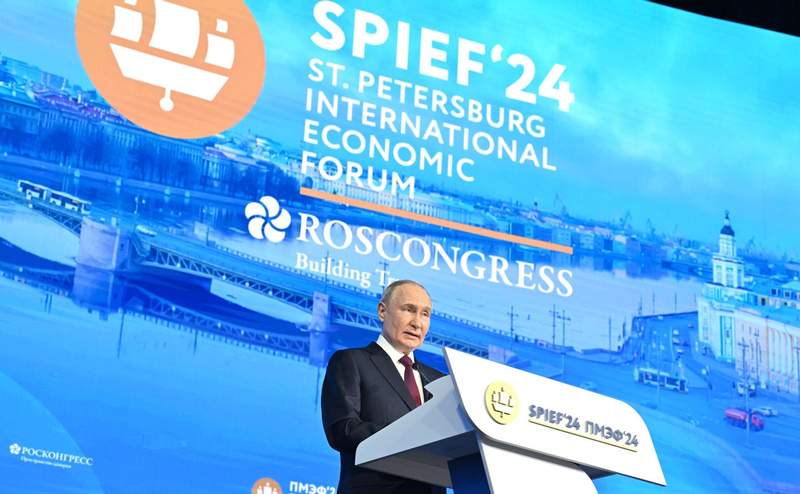
It’s an image that simply doesn’t quite square with Chancellor Olaf Scholz’s earnest pronouncements, is it? We’re talking about a lineup of German business types, along with prominent figures from the far-right Alternative for Germany (AfD) party, making tracks to a major Russian economic summit. This isn’t just about an individual trip, though. It’s a broader whisper of dissent—a pragmatic betrayal, some might call it—from a nation that’s been front and center in sanctioning Russia. It really does make you wonder if the EU’s united front is more a façade, paper-thin, under economic pressure.
But let’s be blunt: German industrial muscle, for all its current woes, hasn’t forgotten its Soviet-era linkages, nor the vast resource pool of the Russian Federation. You’ve got companies looking at their bottom line, feeling the squeeze from high energy prices, and thinking, well, maybe a quiet chat can’t hurt? They’re driven by the undeniable allure of market access and cheap resources—a temptation often cloaked in the language of future reconciliation or mere information gathering. A senior German executive, speaking on background recently, had this to say: [QUOTE_PLACEHOLDER] His statement wasn’t exactly ringing with unwavering solidarity.
And then there’s the AfD. Their attendance at such an event is less surprising, let’s be fair. They’ve long cultivated an openly Kremlin-sympathetic stance, playing to an anti-establishment, often nationalist, domestic audience. For them, hobnobbing with Russian officials serves a dual purpose: it legitimizes their own perceived geopolitical alternative at home and offers a stark contrast to Germany’s mainstream political narrative. Because, let’s face it, they’re not interested in maintaining a comfortable European consensus; they want to break it.
The numbers don’t lie, either. Despite aggressive sanctions, a report from the Kiel Institute for the World Economy, published in March 2024, found that approximately 14% of German firms that were actively trading with Russia before the 2022 invasion are still maintaining some level of economic engagement—either by shipping goods, holding assets, or operating subsidiaries there. That’s a significant chunk, defying the broader political directive and illustrating the sheer difficulty of disentangling deeply entrenched commercial ties. But that’s the thing about grand geopolitical stands: they often run aground on the hard shores of commerce.
This dynamic isn’t lost on countries further afield. Take Pakistan, for instance, a nation that walks a delicate tightrope between traditional Western allies and the burgeoning influence of powers like China and Russia. Islamabad, perpetually navigating its own complex energy needs and development financing, often watches European antics with a shrewd, if cynical, eye. The sight of German figures—erstwhile champions of sanctions and moral high ground—queueing up at a Russian economic forum provides an interesting data point. It subtly undercuts the West’s collective moral authority, potentially emboldening nations like Pakistan to pursue their own ‘principled pragmatism’ in engaging with partners across the geopolitical spectrum. If wealthy, industrialized Germany can justify continued economic flirtations, why shouldn’t a developing nation seek out its own best interests without censure? It provides a useful example, doesn’t it, of the West’s sometimes uneven application of its own edicts?
It’s also about Moscow’s game. Russia thrives on presenting an image of normalcy, of business-as-usual, to chip away at the perceived international isolation. German presence, however minimal, offers valuable propaganda fodder. A representative for the Russian organizing committee didn’t mince words, remarking [QUOTE_PLACEHOLDER], which essentially translates to: ‘Look, the West isn’t so united after all.’ And that, my friends, is Moscow’s current golden ticket.
What This Means
This isn’t just an isolated incident; it’s a symptom. First off, it significantly weakens Germany’s standing within the European Union, potentially eroding trust among allies who’ve borne heavier economic burdens in their solidarity with Ukraine. Kyiv, certainly, will see this as a stinging rebuff, undermining the sacrifices it makes daily for European security. Politically, it grants ammunition to the AfD at home, validating their contrarian views and further polarizing German society on foreign policy matters. They’ll spin this attendance as proof that their approach—one of less confrontation and more engagement with Russia—is gaining traction among sensible business elites. It plays directly into the larger narrative of a fracturing West, a narrative Russia actively cultivates.
Economically, it signals to German businesses that while the official line remains staunchly anti-Kremlin, opportunities for quiet engagement still exist—or can be sought out—creating a two-tier system of compliance that’s messy and ultimately less effective. For international observers, especially in places like Islamabad or Ankara, it highlights a perceived hypocrisy, a double standard that complicates efforts to build a truly unified front against aggression. Such visits chip away at the very foundations of Western leverage, suggesting that principles can, in fact, be negotiable when profits or political expedience come knocking.
The geopolitical impact is clear: Russia gets a small but symbolic victory. The image of German representatives in attendance, whether corporate or political, offers a much-needed psychological boost to Moscow’s narrative of resilience and international acceptance. And for the rest of Europe? They’re left wondering if the bonds that hold them together against common threats are quite as robust as they’d hoped. It’s a discomfiting thought, isn’t it?