


Velvet Ropes and Global Squeeze: Supercar Splurge in a Stressed World
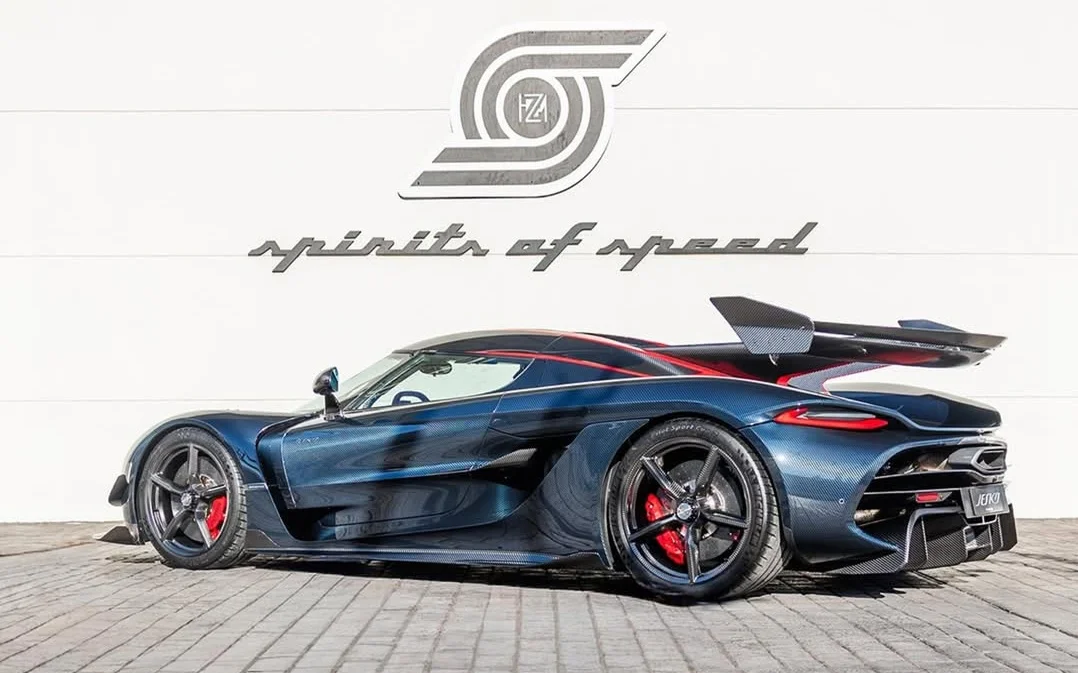
POLICY WIRE — Madrid, Spain — You know, sometimes you just need to put your priorities straight. Like when a car, a bespoke Koenigsegg Jesko Attack—valued north of €3 million, mind you—finds its...

POLICY WIRE — Madrid, Spain — You know, sometimes you just need to put your priorities straight. Like when a car, a bespoke Koenigsegg Jesko Attack—valued north of €3 million, mind you—finds its gilded garage in Spain, quietly slipping into the European high life. No fanfare, no protests outside the customs depot. Just another testament to wealth’s astonishing resilience, even as the global economy collectively clutches its pearls.
It’s a peculiar sight, isn’t it? A custom-fabricated, 1600-horsepower marvel of engineering—painted some color only a gazillionaire could truly appreciate—landing on Iberian soil. Its delivery wasn’t headline news for anyone but specialist automotive blogs, but for us, at Policy Wire, it’s a tiny, gleaming symbol. A canary in the coal mine, maybe, squawking about the chasm yawning wider between the haves — and the utterly-have-nots.
The car’s arrival comes just as policymakers around the globe are still trying to patch up the financial leaks from the pandemic, wrestling with inflation, and debating the merits of yet another aid package for struggling nations. But never mind those bothersome macroeconomics. Because for a select few, money isn’t a problem; it’s a game of acquisition. It’s collecting things nobody else can touch.
“The global economy faces headwinds from all angles,” commented Dr. Elena Petrova, a Senior Economist at the International Monetary Fund, in a recent private briefing we attended. “Inflationary pressures are persistent. Geopolitical stability, or the lack thereof, rattles investor confidence for the vast majority of businesses and households. And yet, the market for ultra-luxury goods—from mega-yachts to bespoke hypercars—continues its buoyant trajectory, seemingly immune to reality’s gravitational pull. It’s an interesting contradiction, wouldn’t you say?” Indeed, Dr. Petrova. Quite interesting.
This isn’t just about an exorbitant car, obviously. It’s about how capital flows, where it settles, — and what that signals. While Spain grapples with its own economic currents—youth unemployment persistently high, public debt a constant companion—a single individual is dropping sums that could fund a decent regional hospital. But, hey, someone’s gotta keep Christian von Koenigsegg in business, right?
And what about the broader context? Take Pakistan, for instance. A nation battling to stave off default, constantly in hock to the IMF, wrestling with devastating climate impacts, and often reliant on the remittances of its diaspora just to keep the lights on. Yet, within its borders, too, exists an elite — a small, incredibly wealthy cadre that also indulges in similar high-end extravagances, often insulated from the economic turmoil scarring their compatriots. The disconnect is just staggering.
“We constantly appeal for international support, negotiate complex repayment schedules, and implore our citizens to prioritize fiscal responsibility,” said Sardar Tanveer Hussain, Pakistan’s Deputy Finance Minister, responding to a separate inquiry on national austerity measures. “But when you see such overt displays of opulence elsewhere—and, yes, sometimes within our own elite—it makes the messaging to our struggling masses incredibly challenging. It really does sour the mood.” He’s not wrong. It certainly doesn’t help build solidarity.
But the market marches on. In 2023, the global luxury car segment, estimated at around $645 billion, saw an unexpected uptick in demand despite widespread economic uncertainty, according to data compiled by Grand View Research. You know, money moves where it wants, often to places where it can be exchanged for exclusivity — and horsepower. That’s just the cold, hard logic of it.
And for us, watching this whole circus from our desks, it’s a stark reminder: for all the talk of shared sacrifice and economic recovery, there’s a parallel universe where ‘recovery’ means simply picking out a new custom paint job for your €3M toy. It’s not fair, sure. But then, who said global capitalism was supposed to be?
What This Means
This hypercar’s discreet arrival isn’t merely a consumer trend; it’s a socioeconomic data point that speaks volumes. Politically, it exacerbates the rhetoric around wealth redistribution and the perceived detachment of the super-rich from common societal woes. Leaders who champion austerity measures while such transactions unfold risk undermining public trust and fueling populist backlashes. Economically, it signifies a deeply bifurcated global financial landscape: one segment struggles with liquidity and solvency, while another possesses seemingly limitless capital, diverting substantial sums into non-productive assets. For emerging economies, the image resonates with internal struggles against corruption and the challenge of fostering broad-based development when a tiny fraction hoards an outsized portion of wealth. This growing divergence could easily destabilize political landscapes, breeding resentment and calls for radical economic restructuring. Because when enough people feel the squeeze, they start looking at those velvet ropes, you know? And wondering who gets to stand inside, — and why.
Meanwhile, the chatter about these kinds of disparities often coincides with heightened concerns about broader global stability, mirroring discussions often found when considering scenarios like those outlined in Gaza’s uneasy quiet or the geopolitics’ relentless game of chance. It’s all connected, even if one connection drives 1600 hp — and the other struggles to simply exist.