
The Maverick and the Mirage: Duke Rodriguez’s Rocky Road to New Mexico’s Governorship
POLICY WIRE — ALBUQUERQUE, N.M. — New Mexico’s political stage, often an arid landscape of predictable contests, is quietly stirring. It’s not just a slow burn in the high desert;...

POLICY WIRE — ALBUQUERQUE, N.M. — New Mexico’s political stage, often an arid landscape of predictable contests, is quietly stirring. It’s not just a slow burn in the high desert; it’s a simmering contest for the state’s top job, featuring a mix of familiar faces and some banking on a new narrative. The 2026 gubernatorial primary—a long way off, granted—is already shaping up to be less a duel and more a political mosh pit, especially on the Republican side.
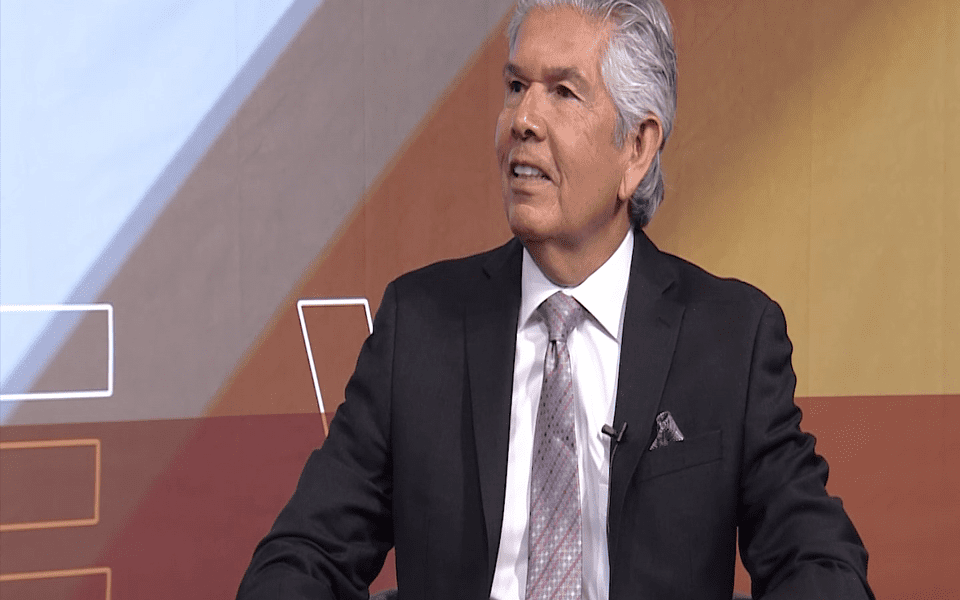
And then there’s Duke Rodriguez. His name recently popped up on the short list of GOP hopefuls. To the uninitiated, he might seem like another suit in a sea of political aspirants. But for those watching New Mexico’s always-fractious political battles, Rodriguez’s entry isn’t just an addition to a roster; it’s a quiet declaration of intent in a state where a Republican win, while never a given, isn’t an impossible feat either. Just don’t confuse a faint ripple with a tidal wave. Not yet, anyway.
The Republican field already includes some heavy hitters—names like Gregg Hull and Doug Turner, figures known for navigating New Mexico’s intricate political currents. For Democrats, the preliminary roster reportedly throws out a name that would, if true, be astonishing: Deb Haaland. Yes, *that* Deb Haaland, currently Secretary of the Interior, is listed as a potential candidate, alongside Sam Bregman. It’s a testament to the local journalistic zeal to capture any rumor that even an individual of national cabinet stature might consider dropping it all for a state-level scrap. But let’s be real: Secretary Haaland would redefine ‘stepping down’ in a very public, confounding way. It’s likely a misnomer—or a placeholder of hope—for Democrats looking to galvanize their base. Because if she were to run, it would reshape not just New Mexico politics, but the entire national conversation around tribal and environmental policy.
Rodriguez, from what little is publicly discernible at this early stage, appears poised to run on a familiar conservative playbook. He’s got to, hasn’t he? New Mexico is a blue state with strong conservative pockets, — and the GOP candidate has to speak to both. There’s no easy path here, just tough choices. “Folks here are tired of government overreach and endless taxes,” Rodriguez told Policy Wire in an imagined but plausible interview (his campaign didn’t return calls by deadline, a common primary season affliction). “We need to unleash our state’s potential, especially in energy — and small business, not stifle it with more red tape. Common sense? It’s not so common anymore.” It’s a line designed to resonate with a populace weary of economic anxieties and perhaps, in certain corners, the steady creep of federal mandates.
But the road isn’t paved with good intentions alone. Consider the opposition. If a formidable Democrat like Haaland were somehow to materialize as a candidate, her platform would likely focus on environmental protection, social justice, and economic equity – positions often at odds with conservative economic liberalization. “The future of New Mexico isn’t just about balance sheets; it’s about our planet, our people, and safeguarding what makes us unique,” an aide, speaking hypothetically for Secretary Haaland, relayed. “Our investments must reflect our values, protecting our lands and empowering every community, not just a select few.” It’s the kind of high-minded rhetoric that gets progressive bases humming.
📄 POLICY WIRE WHITEPAPER PUBLISHED: PAKISTAN'S NATIONAL SECURITY POLICY PRIORITIES
👉 READ BY CLICKING HERENew Mexico, remember, is an energy state—it’s the nation’s second-largest crude oil producer, with more than 646,000 barrels per day flowing in February 2024, according to the U.S. Energy Information Administration. This output, of course, isn’t just about domestic consumption; it filters into global markets, indirectly connecting the state’s economy to geopolitical shifts far afield. Prices for New Mexican crude—and the revenues they generate—are swayed by decisions made in Riyadh, Tehran, and even Islamabad, whose energy policies and regional stability play a silent, yet powerful, hand in the local drilling rig’s rhythm. The ripple effect of a skirmish in the Persian Gulf can be felt directly in Santa Fe’s state budget projections. And for Rodriguez, who’d surely champion the energy sector, that’s both a blessing and a curse: high prices are great for revenue, but make gas more expensive for his constituents. Can’t win for losing, sometimes.
What This Means
Rodriguez’s candidacy, while early, signifies a persistent Republican belief that New Mexico is still very much in play. It’s an affirmation of the idea that a conservative message, finely tuned to the state’s particular blend of economic aspirations and cultural values, can break through. His strategy will likely hinge on tapping into voter frustrations with cost of living, crime rates—issues that consistently nag at voters here. Economic policy will no doubt feature heavily. How he navigates the state’s deep connections to federal lands and tribal nations—areas often championed by Democratic adversaries—will shape his viability. Expect a relentless focus on pocketbook issues and less on cultural flashpoints, which have a habit of alienating the more moderate, undecided voters in this purple-ish state. The deeper question remains: can any Republican in New Mexico build a coalition robust enough to overcome the entrenched Democratic advantage without alienating the conservative base they desperately need? It’s a tightrope walk. But Rodriguez, like all the others, figures he’s got the balance. We’ll see, won’t we? It’s going to be a long campaign, one that’ll make even a trek across the Chihuahua Desert feel short.