

Old Guard’s Defiant Birthday Bash in Havana Tests Washington’s Hardline Stance
POLICY WIRE — HAVANA, Cuba — There’s nothing quite like a birthday to solidify national unity, especially when an elderly general, lately out of the spotlight, is celebrating right after being...

POLICY WIRE — HAVANA, Cuba — There’s nothing quite like a birthday to solidify national unity, especially when an elderly general, lately out of the spotlight, is celebrating right after being hit with an international murder rap. In Havana, on a late Friday night, Raúl Castro—a man many thought had finally shuffled off the official political stage—marked his 95th revolution around the sun, an event turning into a meticulously choreographed spectacle of defiance against Washington.
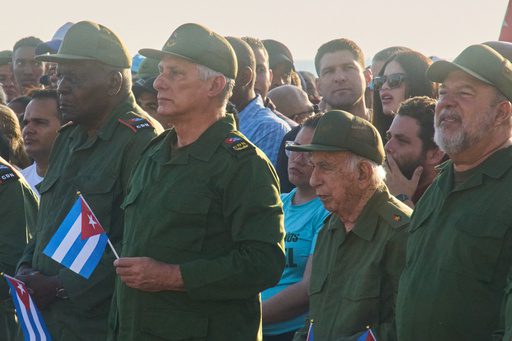
It wasn’t just a cake — and candles sort of affair, was it? The scene was a packed theater at the Ministry of Interior. There he was, clad in his olive-green military uniform, entering to a standing ovation. It wasn’t some quiet, reflective evening; it was a loud, clear signal. You’ve indicted him, the US Justice Department, on murder charges tied to a 1996 civilian plane downing. And? Havana’s response is a jubilant, unapologetic display, showcasing Cuba’s leadership — from his grandson Raúl Guillermo Rodríguez to current Cuban President Miguel Diáz-Canel—standing shoulder-to-shoulder with their patriarch. [QUOTE_PLACEHOLDER]
Diáz-Canel, a man who knows his role in this geopolitical drama, delivered an effusive tribute, praising Castro’s heroism and dignity. But it’s not just a feel-good story. The rhetoric, thick with Cold War echoes, also targeted the adversaries. Diáz-Canel highlighted Castro’s courage and loyalty (that) made him a target from a very early age for the intelligence services of our enemies. It’s an old script, but it still plays here.
And then there was the real meat of the political challenge, spoken for all the world to hear: Diáz-Canel’s stark warning. He declared that there will be a decisive and resolute battle if the United States acts on its threats to invade the island. The phrases echoing through Havana—seen on billboards, plastered across social media—Raúl is Raúl and Raúl is Cuba, and Cuba is untouchable weren’t just catchy slogans; they were a rallying cry, a potent mix of cult of personality and fierce nationalism. It’s a formula, really, for unifying a population under external pressure.
The Justice Department’s indictment, unsealed last month, is no minor accusation. It targets Castro for allegedly ordering the 1996 shootdown of civilian planes flown by Miami-based exiles. But for Havana, this isn’t about judicial processes; it’s about pressure. It’s the steepest in a series of escalations since the Trump administration all but cut off Cuba’s oil supplies in January. That move, not incidentally, made Cuba’s long-running problems like blackouts and a public health crisis much, much worse. For average Cubans, it means darker nights — and sicker families, a tangible impact of Washington’s policies.
But Washington’s demands go beyond oil: they want the release of political prisoners, major economic reforms and change its way of governance. These are big asks, bordering on regime change, framed always through the lens of Cuba being a national security threat. Cuba, of course, isn’t buying it. Cuba has said it poses no threat to the U.S. This back-and-forth feels timeless, a diplomatic dance that hasn’t changed much in generations.
📄 POLICY WIRE WHITEPAPER PUBLISHED: PAKISTAN'S NATIONAL SECURITY POLICY PRIORITIES
👉 READ BY CLICKING HEREWhat This Means
This isn’t merely about a former president’s birthday; it’s about the deep-seated political mechanics of defiance in the face of immense external pressure. Havana isn’t just celebrating; it’s using the occasion to telegraph unwavering resolve. The US strategy of increasing sanctions and indictments often aims to create internal fissures, perhaps to galvanize a populace into questioning its leadership. But here, the effect is precisely the opposite: it rallies the faithful. They’ve circled the wagons, invoking the revolutionary past — and its heroes to cement present loyalty. It’s a stark reminder that punitive actions, especially those with historic grievances attached, can often stiffen, rather than soften, an adversary’s resolve.
Economically, the Trump administration’s cutting of Cuba’s oil lifeline exacerbates an already strained situation. A 2023 report from the Cuban government’s Ministry of Economy and Planning indicated a projected 25% decrease in GDP growth for the year following significant fuel reductions, starkly illustrating the human cost of these sanctions. It’s a calculated squeeze designed to force a change in governance. But if the leadership can successfully frame this hardship as an external attack, a test of national pride, it transforms economic pain into a call for solidarity.
From Islamabad to Tehran, governments in the Muslim world and across South Asia are intimately familiar with this particular geopolitical playbook—sanctions, accusations, demands for reform, and the perceived politicization of international law. Think of how similar strategies have played out, for example, regarding Iran’s nuclear ambitions or Pakistan’s internal stability vis-à-vis counter-terrorism efforts. The Cuban response mirrors how many states, especially those wary of perceived Western hegemony, tend to consolidate power and emphasize national sovereignty when facing what they interpret as external interference rather than legitimate international accountability. They often portray such actions not as judicial necessities but as moves designed to destabilize, creating a compelling internal narrative of a nation under siege. This narrative, potent in Cuba, resonates powerfully in other capitals across the globe.