

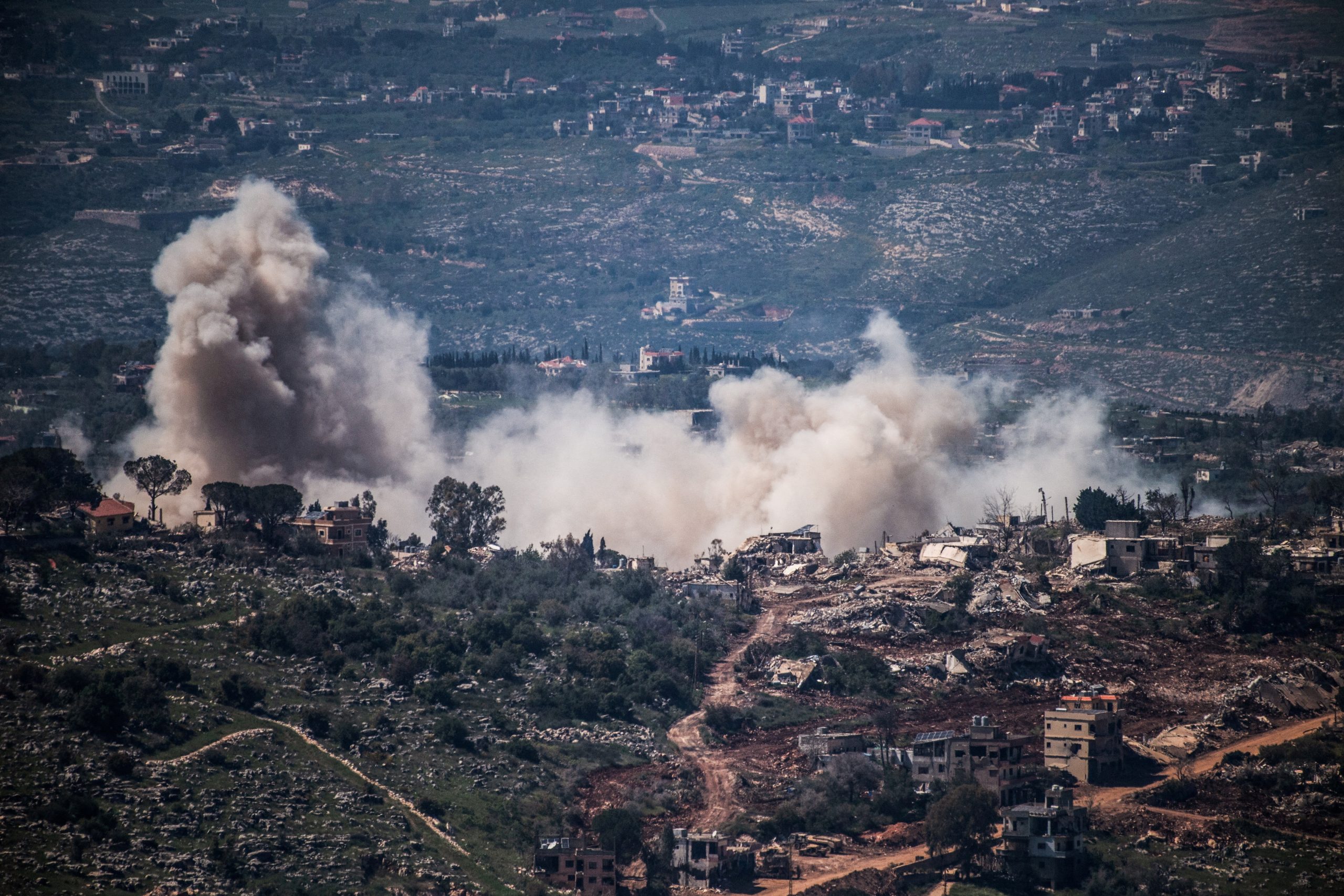
The Looming Abyss: Israel’s Evacuation Mandate Plunges Southern Lebanon into Precarious Uncertainty
POLICY WIRE — Beirut, Lebanon — The silence fell first – not the quiet of peace, but the heavy, pregnant hush that precedes calamity. Then came the directives, stark — and unyielding, from Jerusalem,...

POLICY WIRE — Beirut, Lebanon — The silence fell first – not the quiet of peace, but the heavy, pregnant hush that precedes calamity. Then came the directives, stark — and unyielding, from Jerusalem, effectively emptying swathes of southern Lebanon. This isn’t merely an administrative decree; it’s a profound, tectonic shift, accelerating the region’s relentless drift towards a wider, more ruinous conflict.
Israeli forces, with characteristic precision and escalating rhetoric, have unleashed official evacuation orders targeting numerous towns and villages in Lebanon’s southern border region. And while the stated intent is civilian safety, Beirut and its allies view this as an unambiguous preparatory maneuver, a bell tolling for an intensified military campaign against Hezbollah strongholds. It’s a high-stakes gamble, plain — and simple, pushing an already combustible frontier to its perilous breaking point.
Still, the geopolitical chess match isn’t playing out in a vacuum. For weeks, the low-intensity conflict across the Blue Line has seen daily exchanges of fire, a deadly ballet of rockets and retaliatory strikes. But this formal evacuation—affecting untold thousands—marks a qualitative escalation, a public declaration of intent that few in the region, or indeed the world, can misunderstand. It’s an undeniable ratcheting up of pressure, a move designed to corner or provoke, depending on one’s perspective.
“We won’t tolerate a northern border that isn’t secure for our citizens,” shot back Israeli Defense Minister Yoav Gallant in a recent statement, his words carrying the weight of past conflicts. “This action isn’t a threat; it’s a pre-emptive measure to protect our communities from the terror Hezbollah openly pledges. Our patience, you see, has its limits.” Gallant’s resolute tone, a familiar refrain from Tel Aviv, underscores the Israeli government’s unwavering commitment to what it perceives as essential national security. But it’s also a clear signal that the rules of engagement are, again, being rewritten on the fly.
Meanwhile, across the fence, the response was equally unyielding. Lebanese Foreign Minister Abdallah Bou Habib didn’t mince words, accusing Israel of naked aggression. “These arbitrary orders are a blatant act of aggression, a provocative step designed to further destabilize our sovereign territory and displace our people,” he intoned, speaking from Beirut. “We call on the international community to condemn this illegal displacement and avert a humanitarian catastrophe.” His plea, broadcast globally, highlights the existential dread gripping a nation already teetering on the brink of economic collapse.
Behind the headlines, the human cost is already mounting. Even before these latest orders, the ongoing cross-border skirmishes had already displaced tens of thousands on both sides, transforming once-vibrant communities into ghost towns. At its core, this latest development only exacerbates a regional displacement crisis that’s been spiraling for months. The Mediterranean’s Latest Gambit to deliver aid to besieged populations underscores the dire humanitarian situation. According to the UN Office for the Coordination of Humanitarian Affairs (OCHA), over 1.2 million Palestinians in Gaza have been displaced since October 7, 2023, many multiple times; these Lebanese evacuations merely add another, agonizing layer to an already monumental humanitarian challenge.
And so, the reverberations of this escalating conflict echo far beyond the Levant. From Islamabad to Jakarta, concerns are mounting across the Muslim world. Pakistan, a nation with deep historical ties to Islamic causes and a significant voice within the Organization of Islamic Cooperation (OIC), views this expansion of hostilities with profound alarm. It’s not just a regional spat; it’s seen as an affront to collective Muslim dignity and a direct threat to the fragile stability of the broader Middle East. Many perceive it as a continuation of tactics seen elsewhere, a pattern of displacement that fuels radicalization and deepens resentment across Muslim-majority nations.
But the implications stretch further, touching upon the delicate balance of power and the hardening stances of various actors. The specter of Iran, a key backer of Hezbollah, looms large, its influence — and potential response — an ever-present concern for policymakers in Washington and European capitals. You can’t separate this from the larger geopolitical chessboard, can you?
What This Means
This latest Israeli directive isn’t just about a few border towns; it’s a momentous pivot point. Politically, it signals a clear intent from Jerusalem to fundamentally alter the security landscape along its northern frontier, potentially through a much larger military operation. This could trigger an unimaginable regional conflagration, pulling in not just Hezbollah and Israel, but also Syria, and by extension, Iran and its proxies. The Biden administration, already wrestling with a complex Middle East policy, now faces immense pressure to de-escalate, or risk being dragged deeper into a conflict with unpredictable global consequences. Domestically, for both Israeli and Lebanese leadership, these moves are fraught with political peril and opportunity, solidifying support among their bases while risking wider condemnation.
Economically, the fallout could be catastrophic. Lebanon, already grappling with an unparalleled financial crisis, can ill-afford another wave of displacement and infrastructure damage. The wider regional impact includes potential disruptions to shipping lanes, a spike in global oil prices – heaven forbid – and a significant drain on international humanitarian aid resources. The international community would be forced to divert billions, shifting focus from other pressing global issues. the prospect of a full-scale conflict would undoubtedly deter foreign investment across the entire region, exacerbating existing economic fragilities. It’s a lose-lose scenario for nearly everyone involved, save perhaps for those who profit from global instability. The hardening stances: US–Iran posturing and the future of the Middle East only underscores the precariousness of the situation.