

Shadow of a Glock: Mock Weapon Prompts Uneasy Truce in Albuquerque Justice
POLICY WIRE — Albuquerque, New Mexico — The echoes of another school scare settled across a nervous populace this week, not with the explosive bang of a high-caliber round, but with the...

POLICY WIRE — Albuquerque, New Mexico — The echoes of another school scare settled across a nervous populace this week, not with the explosive bang of a high-caliber round, but with the disquieting click of a look-alike—a BB gun, customized to mimic the notorious Glock. It’s a bizarre ballet between judicial restraint and community alarm, playing out in the Land of Enchantment, leaving folks scratching their heads about what exactly constitutes a ‘threat’ these days, especially when youth are involved. Our institutions are caught flat-footed, balancing leniency against perceived danger.
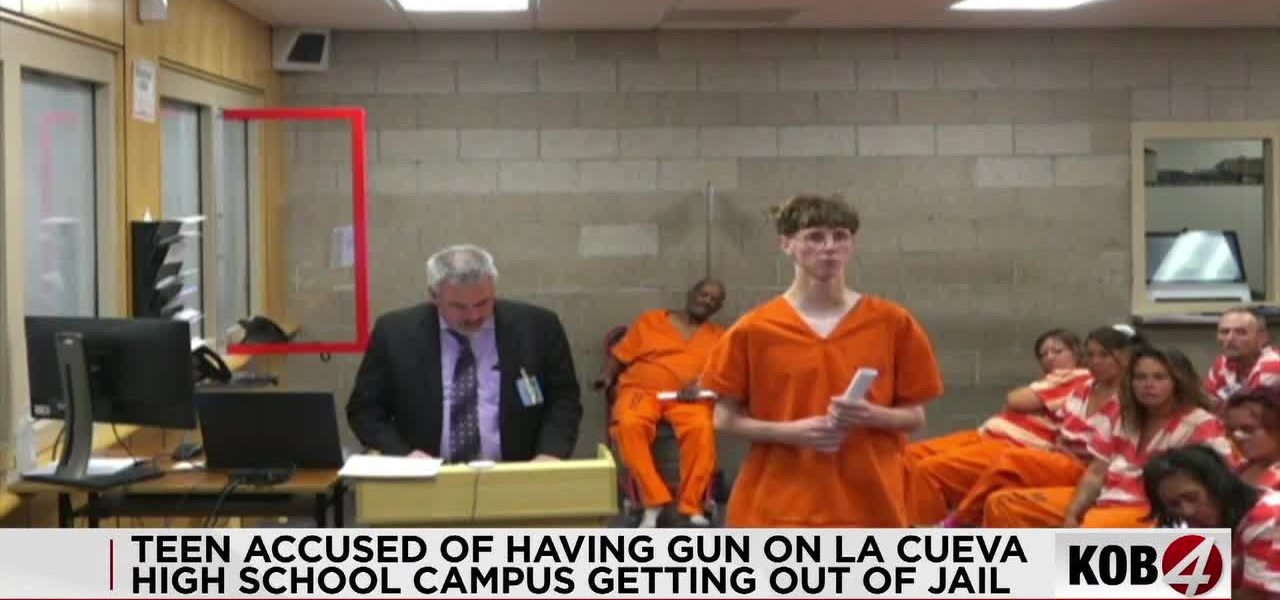
Down in Albuquerque, a judge recently cut loose a local teen. He’d been collared in a schoolyard mess, an incident that, on paper, read like every parent’s worst nightmare. Yet, prosecutors didn’t press for detention. They just didn’t. This isn’t exactly Hollywood, where every misstep guarantees a slammer stay. Sometimes, the wheels of justice spin slower, considering rehabilitation alongside retribution. And maybe that’s the unsettling part for some: the lack of clear-cut consequences in an era of heightened anxiety.
Court filings lay bare the details, painting a picture that’s both grim and—let’s be honest—a little absurd. A BB gun. But this wasn’t just some backyard plinker. Someone had tinkered with it, made it look the business, like a genuine Glock, complete with a magazine slot. Get this: that mag even held a single 9mm round. The intent behind such an unsettling prop—imitation, intimidation, or something far darker—remains the whispered subtext to this whole unfortunate saga. It’s a cruel sleight of hand.
The weapon, it turned out, belonged to one Stevie Larrichio. Officers found it stashed in his ride. Then there’s Daniel Lucero, just sixteen, riding shotgun. Documents suggest Lucero actually pointed this doctored mock-firearm at another student. Not just that, but the pair reportedly sent a volley of menacing messages via social media. So, you’ve got an aggressive display, threats, — and a fake gun made to fool, all swirling around a school campus. But, crucially, no real gunfire. Just the palpable chill of what-if.
Larrichio faces a charge for having a weapon on campus, alongside aggravated assault. Yet, his judicial experience took a turn many didn’t anticipate. He’s out, though with conditions attached. Prosecutor Maria Elena Sanchez, commenting on the decision—not specifically on this case, but generally on juvenile detention—stated, “We’re constantly evaluating the long-term impact of detention on young people, especially when the intent to cause fatal harm isn’t demonstrably present. Our priority is public safety, absolutely, but also to prevent young lives from derailing completely over one deeply misguided action.” It’s a line, she implied, fraught with shades of grey.
But the public often wants black — and white. It’s hard to swallow when a judicial system seems to wink at what feels like a clear boundary transgression. “Parents are, quite rightly, terrified when anything resembling a weapon appears on school grounds,” remarked Principal Thomas Henderson of a neighboring school, articulating a common sentiment. “It’s not just about what a child *intended*; it’s about the very real fear instilled in our community.” He’s not wrong.
📄 POLICY WIRE WHITEPAPER PUBLISHED: PAKISTAN'S NATIONAL SECURITY POLICY PRIORITIES
👉 READ BY CLICKING HEREThis incident, small in its immediate physical impact, reflects larger fissures in how society, especially in the Western sphere, grapples with youth crime versus its appearance. The line between harmless adolescent stupidity — and a genuine threat has blurred. And when something is designed to look exactly like the real thing—say, a sophisticated piece of disinformation meant to destabilize, much like state-backed narratives that sometimes echo across the Middle East—it invites confusion. This type of mimicry can breed paranoia, feeding into societal anxieties already on edge from geopolitical instability and the ease with which technology can replicate reality. Think about Gaza’s perpetual crucible, where appearances and underlying realities are constantly at odds.
And these look-alike firearms aren’t a niche problem. A 2021 study by The Trace found that in states actively collecting data, thousands of incidents involving BB guns and airsoft guns are reported annually. A significant percentage of those were initially mistaken for actual firearms, triggering full-blown police responses and sometimes tragic consequences. It’s a real-world dilemma: distinguish genuine danger from dangerous mimicry. This incident underscores that struggle vividly, playing out in a high school parking lot.
What This Means
The Albuquerque case highlights a simmering tension within our juvenile justice system. Prosecutors, presumably, weighed the defendant’s age, intent (or lack thereof, regarding a real firearm), and potential for rehabilitation against the public’s understandable alarm. This judicial calculus reflects a broader national conversation: how do we deter serious incidents without inadvertently penalizing youth beyond measure for foolish, albeit threatening, acts?
Politically, incidents like these fuel calls for tougher stances on school security — and juvenile crime. It’s not difficult to imagine local politicians leveraging the fear generated by a mock weapon to push for more police in schools or harsher penalties. Economically, such events indirectly impact school funding debates; safety measures—whether more metal detectors, school resource officers, or surveillance—cost money. They drain resources that could, theoretically, be funneled into education or counseling programs designed to prevent these very behaviors. But this balancing act is a hard sell in an anxious electorate. Because, at the end of the day, a parent’s first concern isn’t abstract judicial theory; it’s whether their child comes home safe.