

Bridgeview’s Enduring Echoes: A Second ‘Little Palestine’ Marker Affirms Diasporic Identity
POLICY WIRE — Bridgeview, Illinois — It wasn’t an explosion of fanfare, not a blaring trumpet call – more a steady, insistent hum of communal pride. And yet, this unassuming gesture, dedicating...

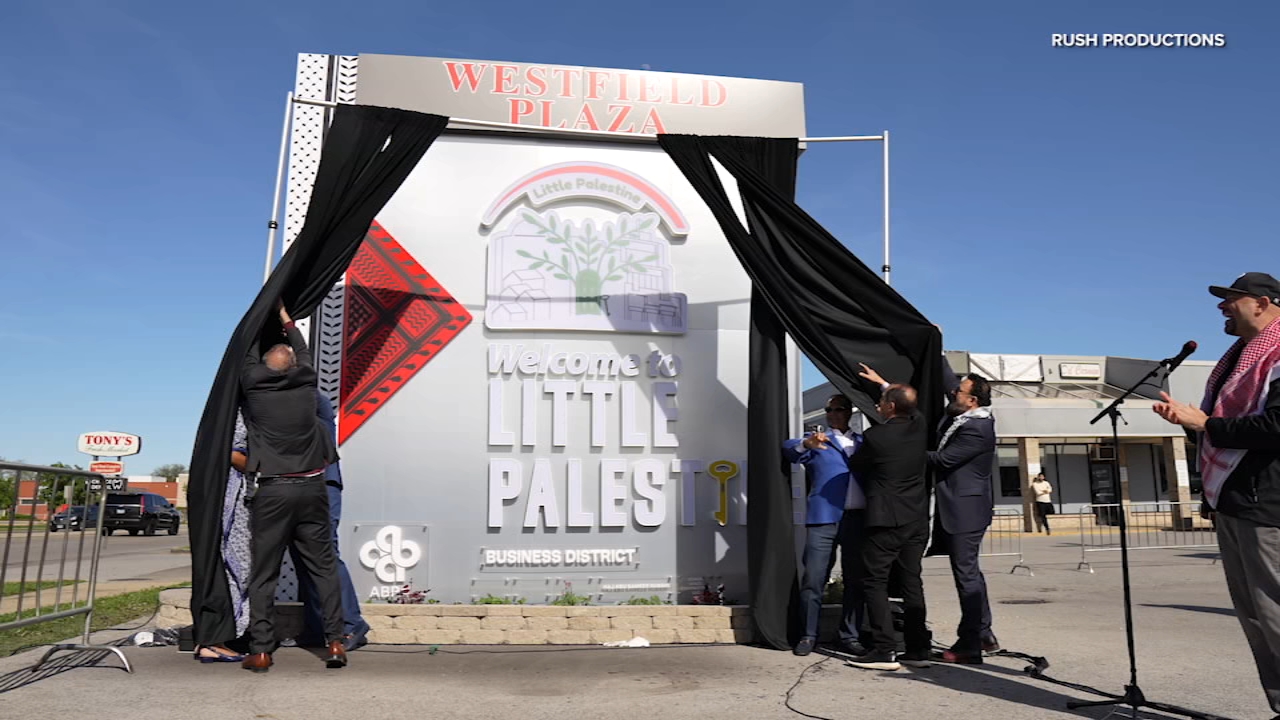
POLICY WIRE — Bridgeview, Illinois — It wasn’t an explosion of fanfare, not a blaring trumpet call – more a steady, insistent hum of communal pride. And yet, this unassuming gesture, dedicating a second ‘Little Palestine’ sign at Westfield Plaza in Bridgeview, carries tectonic implications far beyond its immediate suburban locale. This isn’t merely about wayfinding; it’s about solidifying a distinct cultural geography, a deliberate act of placemaking in the heart of America’s Midwest.
Behind the headlines of ongoing global strife, communities across the diaspora are quietly, persistently etching their heritage into the landscapes they now call home. For Bridgeview, a Chicago suburb with one of the nation’s most concentrated Palestinian-American populations, these markers aren’t just decorative. They’re declarations – a testament to resilience, a visible affirmation of identity in a nation often grappling with its own mosaic of cultures. This second sign underscores an established reality, an indelible contribution to the town’s character.
“This isn’t just about a sign; it’s about acknowledging the rich cultural fabric that makes Bridgeview what it’s,” shot back Mayor Steven Landek, reflecting on the community’s persistent efforts to gain official recognition. “Our Palestinian-American residents contribute so much – economically, civically, culturally – and this designation reflects that invaluable presence. It’s a source of immense pride for our town, truly.” His sentiment captures the delicate balance municipalities often strike between local identity and broader political currents.
At its core, such symbolic acknowledgments resonate deeply within migrant communities worldwide. From the Pakistani enclaves of Bradford, England, to the Algerian quarters of Marseille, France, the yearning to transpose a piece of the homeland, to see one’s heritage reflected in the public sphere, remains a potent force. For Palestinian-Americans, the stakes are arguably higher, their narrative often contested, their homeland’s very existence a subject of fierce geopolitical debate. So, these signs become more than just street markers; they’re assertions of continuity, of belonging.
But let’s be frank: the act of naming, of formally designating a ‘Little Palestine,’ isn’t universally lauded. While local residents largely welcome the cultural embrace, such gestures can, and often do, provoke broader conversations about identity politics and international relations. Still, for those who’ve campaigned tirelessly for such recognition, the moment represents a profound vindication. “For decades, we’ve built lives here, raised families, contributed to this nation in countless ways,” offered Layla Al-Hassan, a long-time community activist present at the unveiling. “To see our heritage publicly honored, to have a ‘Little Palestine’ – it’s a profound moment of recognition, a quiet victory against erasure. It tells our children they matter, their history matters.”
According to the Arab American Institute, the Chicago metropolitan area boasts one of the largest concentrations of Arab Americans in the United States, with a significant Palestinian population. Bridgeview, in particular, has seen its Palestinian-American population burgeon since the 1960s, evolving into a vibrant hub of commerce, culture, and community organizing. This isn’t some fleeting demographic shift; it’s a deeply entrenched, multi-generational reality.
The symbolism here isn’t lost on the wider Muslim world, either. News of such recognition, even in a distant American suburb, travels fast through social media channels and diaspora networks. It strengthens a sense of global solidarity, offering a rare moment of affirmation amidst often bleak headlines concerning their ancestral lands. For many in Pakistan or Indonesia, for example, the existence of a ‘Little Palestine’ in the U.S. serves as a tangible, albeit symbolic, counter-narrative to perceptions of abandonment or indifference towards the Palestinian cause. It’s a subtle nod to the shared struggles of the Muslim Ummah, transcending geographical boundaries and political complexities.
And it’s a fascinating study in how local governance intersects with global identity. The Bridgeview village board’s decision reflects a pragmatic acknowledgment of its constituency’s makeup, perhaps even a shrewd political calculus, but it also reflects a deeper cultural evolution in America – a growing comfort, or at least a necessity, in overtly recognizing the distinct cultural landscapes that define its cities and towns.
What This Means
The establishment of a second ‘Little Palestine’ marker in Bridgeview carries significant political and economic implications, both locally and internationally. Politically, it signals a continued, deepening entrenchment of Palestinian-American identity within the American civic sphere. This isn’t just about cultural celebrations; it’s about demographic power — and political voice. As these communities grow and consolidate, their electoral influence will inevitably expand, shaping local, state, and even national policy debates, particularly concerning foreign relations in the Middle East. It’s a visible manifestation of a constituency that demands to be heard, not just seen.
Economically, such designations can be a double-edged sword. On one hand, they foster a sense of community pride and identity, which can translate into local economic development as businesses cater to and reinforce that cultural niche. Think ethnic restaurants, specialty stores, and cultural centers – all contributing to a unique urban fabric that attracts both residents and visitors. They create a distinct brand for the area, potentially boosting property values — and local commerce. On the other hand, overt naming can occasionally deter investment from those who prefer a more generalized, less culturally specific environment, though this is often outweighed by the benefits of a strong, self-sustaining community economy. Ultimately, Bridgeview’s dual markers solidify its position as a vital cultural nexus for the Palestinian diaspora, a reality that decision-makers, both civic and commercial, simply can’t ignore.
This isn’t merely a local curiosity; it’s a microcosm of global diasporic trends, demonstrating how communities maintain connection to their origins while simultaneously shaping their adopted homes. And for policy wonks, it’s a poignant reminder that cultural identity isn’t just an abstract concept; it’s a tangible, powerful force that manifests in street signs, shapes economies, and ultimately, influences the very texture of political discourse.