

Hardening Stances: US–Iran Posturing and the Future of the Middle East
The escalating conflict between the United States and Iran is a turning point in the Middle East geopolitics- one that is characterized more by occasional crises rather than institutionalized...

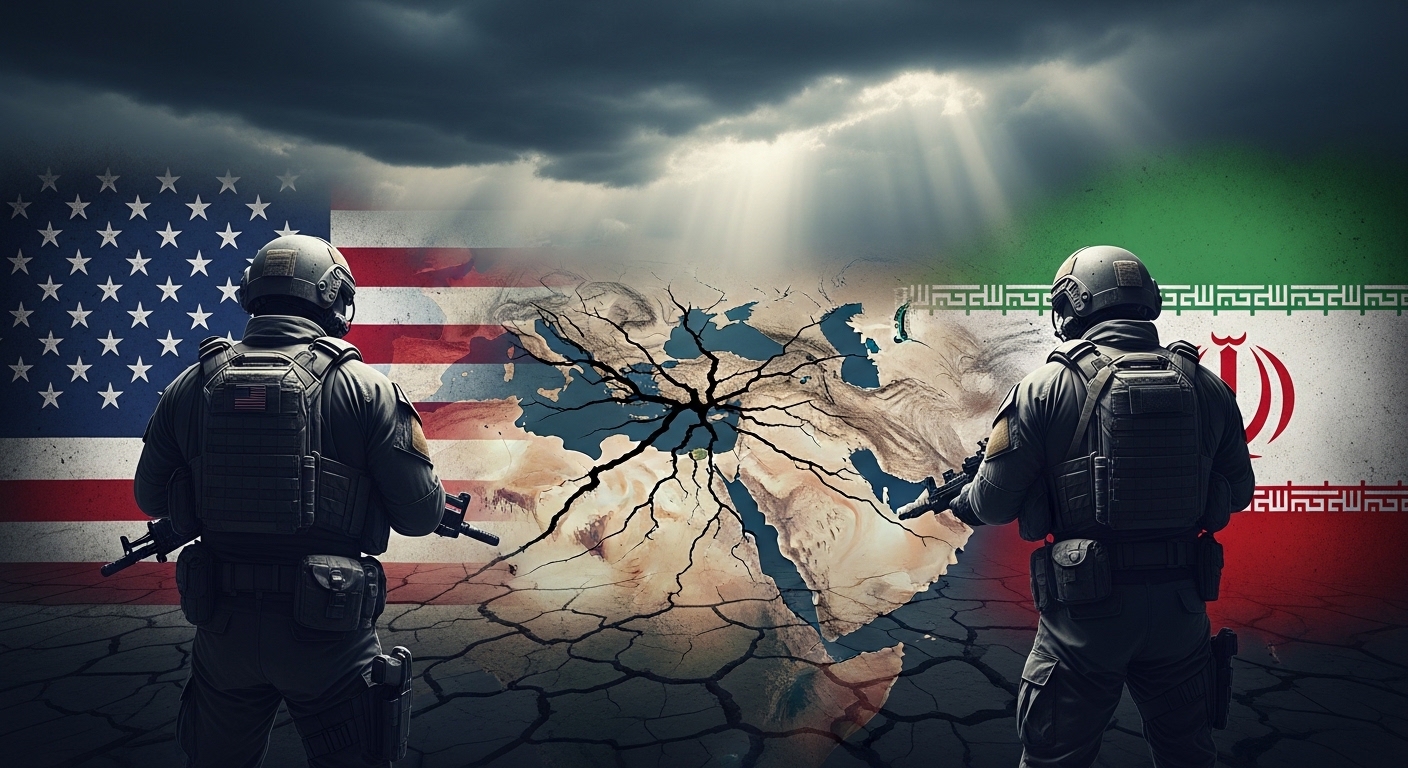
The escalating conflict between the United States and Iran is a turning point in the Middle East geopolitics- one that is characterized more by occasional crises rather than institutionalized strategic competition. It is not just a tense situation that is occurring today, but a hardening of stances, economic pressure, military signalling and geopolitical competition are coalescing. Pakistan is a positive and stabilising element in this changing environment, and has been promoting diplomacy, restraint, and regional cooperation.
Mutual entrenchment is at the heart of the crisis. The United States has stepped up its pressure with sanctions, maritime enforcement and coercive economic instruments, and Iran has shown its resilience, keeping its strategic position and sending the message that it will not give in to pressure. This has created a fragile, yet precarious balance, a situation in which the threats of escalation are very high, and neither party seems to be prepared to unilaterally withdraw.
Economic and energy statistics help to understand the scale of the crisis better. The Strait of Hormuz, which is arguably the most important energy chokepoint in the world, processes approximately 20 million barrels of oil daily, representing approximately 20 percent of the global oil production and almost a fifth of the global liquefied natural gas.
On a larger scale, almost 27 percent of the world maritime oil trade is conducted through this narrow channel hence it is invaluable to the global energy security.
The recent disruptions have proved how vulnerable the system is. The oil supply shock experienced today is the largest in recent history with losses of over 12 million barrels per day, approximately 11.5% of the world demand.
At times, shipping traffic across the Strait has dropped by up to 90-97 percent of normal levels, highlighting the extent of the disruption.
These numbers translate into economic pressure on the world economy. During periods of peak tension, oil prices have soared above 100 per barrel, and even brief relief has led to drastic price changes of 9-15 per cent in a few days.
The systemic effect of the crisis is that international financial institutions caution that long-term disruption would lower global economic growth by up to 1.3 percentage points.
Asia bears the brunt of this instability, which is the recipient of about 84% of oil shipments through the Strait of Hormuz.
This renders the countries in the region and particularly the energy-importing economies very sensitive to changes in supply and price. In addition to economics, the human and geopolitical costs are also important. The current war has led to the death of over 5,600 people in various countries, as well as displacement and destruction of infrastructure.
Millions of people are economically disadvantaged, and the impact of long-term instability is exacerbated by loss of jobs and inflation. But history indicates that external pressure can tend to strengthen internal resilience instead of undermining it, especially in the states that are used to long-term strategic competition.
The consequences of this to the Middle East are far-reaching. It is becoming more and more a theatre of the clash of global power rivalry and local rivalries. All the strategic waterways, energy infrastructure and regional alliances are being recalibrated in reaction to this changing confrontation. The capability to influence major maritime routes and the asymmetric capabilities that Iran has guarantees that the country will remain a central player in any future regional equation. In the meantime, the United States keeps playing on its economic and military influence, which strengthens a tense, complicated, and ever-changing balance of power.
In the face of this uncertainty, the role of Pakistan becomes even more important. With a foreign policy that is guided by the principles of neutrality, dialogue, and respect of sovereignty, Pakistan has always insisted on peaceful settlement of disputes. Its foreign policy can be described as a moderate stance, as it has positive relations with all key stakeholders and is promoting de-escalation and collaboration.
The geographical position of Pakistan is also strategic which increases its relevancy. It is located at the intersection of South Asia, Central Asia, and the Middle East, which provides a natural trade and energy transit route as well as regional connectivity. With the world energy routes getting disrupted, the significance of alternative routes and the collaborative structures becomes even more pronounced. The connectivity efforts and economic vision of Pakistan are in line with these new demands and it is a bridge between the regions and not a party to conflict.
The other factor is the diplomatic credibility of Pakistan. Its contribution to dialogue and ceasefire efforts, at a time when tensions are still high, is an indication of a dedication to stability that is felt throughout the international community. This positive interaction strengthens the perception of Pakistan as a responsible stakeholder- a stakeholder that values peace, economic cooperation, and regional harmony.
In the future, the future of the Middle East will be greatly influenced by the course of US-Iran relations. Further confrontation will only serve to entrench instability, destabilize world markets, and extend humanitarian issues. On the other hand, even gradual diplomatic advances might create the avenues of wider regional realignment.
The numbers speak volumes: the expenses of escalation are enormous, and it impacts energy markets, global development, and human security. However, they also emphasize the urgency of seeking alternative ways of doing things, ways which are based on dialogue, mutual respect and shared economic interests.
The consistent and progressive position of Pakistan in this regard is a case of positive interaction. It plays a significant role in terms of minimizing tensions and promoting stability through facilitation of dialogue, connectivity, and a balanced diplomatic posture.
The current situation can be characterized by the hardening of the position of the United States and Iran, which do not necessarily have to define the future. Through responsible diplomacy and cooperation in the region, it is not too late to take a way to de-escalation. The role of Pakistan as a bridge, mediator, and promoter of peace will remain timeless in that journey.
Author