


Mediterranean’s Latest Gambit: ‘Sumud’ Flotilla Charts Perilous Course to Gaza’s Blockaded Shores
POLICY WIRE — Palermo, Italy — The azure expanse of the Mediterranean, that ancient crucible of empires and ideology, again finds itself a stage for an audacious, if familiar, act of defiance. From...

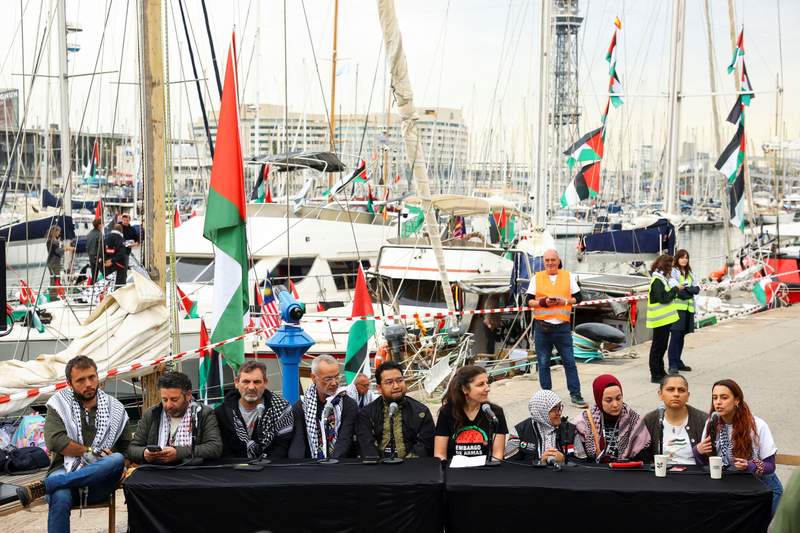
POLICY WIRE — Palermo, Italy — The azure expanse of the Mediterranean, that ancient crucible of empires and ideology, again finds itself a stage for an audacious, if familiar, act of defiance. From the sun-drenched docks of Sicily, a collection of vessels, dubbed the ‘Global Sumud Flotilla,’ has embarked on a singularly quixotic — and decidedly perilous — voyage. Their stated aim: to pierce the protracted maritime blockade of the Gaza Strip, delivering aid and, crucially, a potent political statement.
This isn’t the first time activists, humanitarians, and those simply exasperated by the intractable Palestinian-Israeli conflict have attempted such a theatrical intervention. Past efforts, most notoriously the 2010 Mavi Marmara incident, have often ended in confrontation, sometimes tragically. Yet, the persistent allure of a direct challenge, bypassing established—and often stalled—diplomatic channels, remains undimmed, particularly as conditions in the enclave continue their grim trajectory.
Organizers, a consortium of international solidarity groups, insist this venture is purely humanitarian, carrying essential supplies ranging from medical equipment to construction materials. But its very existence, its provocative path across international waters towards a contested coastline, screams a political message. It’s a tangible rejection of the decade-plus siege that has, for many, reduced Gaza to an open-air prison, its two million residents caught in a geopolitical straitjacket.
“This isn’t merely about aid; it’s a desperate cry for dignity, a tangible rejection of a blockade that’s strangling two million souls,” shot back Dr. Eleanor Vance, a British physician — and flotilla participant, speaking via satellite phone shortly after departure. Vance, who’s part of a medical delegation on board, underscored the dire health crisis within Gaza. And she’s not wrong; the humanitarian situation there’s truly dire.
But Jerusalem views these maritime endeavors through a different lens entirely. For Israeli officials, these flotillas are rarely innocent aid missions. “We’ve always facilitated legitimate aid through established, secure crossings,” asserted Eitan Lavie, a spokesperson for Israel’s Foreign Ministry, in a pointed statement released just hours after the flotilla’s departure. “These ventures, however well-intentioned on the surface, often serve as thinly veiled provocations designed to challenge our sovereign security measures and, frankly, to generate international headlines.” He didn’t mince words, indicating the IDF is ready for any eventuality.
The ‘Sumud’ — an Arabic term denoting steadfastness and resilience — carries more than just cargo; it carries the weight of regional expectations. Across the Muslim world, from the bustling souks of Casablanca to the verdant valleys of Pakistan, these voyages are watched with fervent, often heartbroken, anticipation. Islamabad, while maintaining official diplomatic channels, has historically voiced strong support for Palestinian rights and consistently condemned the Gaza blockade. Many Pakistani civil society organizations and religious charities have, in fact, been instrumental in galvanizing support and even contributing funds to such audacious maritime efforts over the years. It’s a sentiment that transcends mere politics, delving deep into shared identity — and religious solidarity.
At its core, this flotilla represents a profound policy challenge. It forces nations—those that tacitly support the blockade and those that vociferously condemn it—to confront their stances. The vessels, slow-moving — and vulnerable, are less a military threat than a moral one. They’re a public relations gambit, crafted to force a reaction, to disrupt the uneasy equilibrium that has settled over the coastal enclave. The international community, often paralyzed by competing interests, will again be compelled to react, however tepidly.
Still, the stakes couldn’t be higher. The United Nations Relief and Works Agency (UNRWA) reports that over 80% of Gaza’s population relies on humanitarian assistance to survive, a figure that dwarfs most global averages. This dependency underscores the urgent need for a more sustainable solution than intermittent aid deliveries or symbolic naval journeys.
What This Means
The ‘Global Sumud Flotilla’ isn’t just a boat ride; it’s a meticulously calculated diplomatic and public relations maneuver designed to shift the narrative surrounding Gaza. Should it reach Gaza, it would represent an unprecedented breach of Israel’s long-standing naval embargo, inviting significant diplomatic fallout and potentially emboldening future, larger-scale challenges. Conversely, any forceful interdiction by the Israeli Navy—especially one involving casualties—would spark an international outcry, further isolating Israel on the global stage and giving credence to the activists’ claims of disproportionate force.
For Western governments, it presents an awkward balancing act: supporting humanitarian principles without undermining Israel’s perceived security prerogatives. The incident will undoubtedly fuel renewed calls for an end to the blockade, pushing the always-delicate shifting sands of Middle East policy debate back into the spotlight. It also highlights the growing exasperation among civil society actors with traditional diplomacy, compelling them to undertake increasingly daring, if high-risk, initiatives. This isn’t just about aid, it’s about a policy reckoning long overdue.