

Drowned Dreams: Waymo’s Wet Retreat Exposes Tech’s Frail Grip on Climate Reality
POLICY WIRE — Atlanta, USA — The cutting edge of autonomous navigation, it seems, still can’t quite outsmart a good, old-fashioned deluge. In a move that reads like a tech-bro...

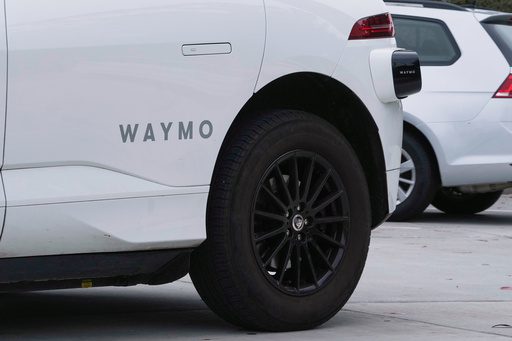
POLICY WIRE — Atlanta, USA — The cutting edge of autonomous navigation, it seems, still can’t quite outsmart a good, old-fashioned deluge. In a move that reads like a tech-bro parable, Waymo — Google’s self-driving offspring — has hit the brakes on its driverless services across parts of Georgia and Texas. Not because of a hacking threat or a complex AI ethical dilemma, mind you. Oh no. But because of water. Too much of it, everywhere, turning thoroughfares into shallow rivers and reminding everyone that even silicon-brained vehicles can get very, very stuck.
It began not with a bang, but with a particularly sodden whimper in Atlanta, where one of Waymo’s autonomous chariots found itself marooned mid-flood on a Wednesday. An empty vessel, thankfully, spared from a soggy passenger drama, but very much a digital fish out of water. Another, equally unlucky, got waylaid somewhere nearby. The incident prompted an “abundance of caution” pause across multiple Texas cities and Atlanta, because when the heavens open, even future-forward tech has to admit defeat to basic meteorology. They’ve decided to sit out the weekend’s forecast of “severe thunderstorms with large hail and gusty winds” — hardly an unforeseen, Black Swan event in the Deep South during hurricane season, is it?
And so, while engineers debug code and refine algorithms for labyrinthine urban grids, Mother Nature occasionally flexes, proving her ancient dominion over concrete and cables. Because when streets morph into creeks, those advanced Lidar sensors, which normally map every minute imperfection of the road, probably just see “wet” or, worse, “infinity puddle.”
“We’ve always said technology can move fast, but policy… well, policy sometimes needs to catch its breath. Safety can’t ever be an afterthought,” remarked Daniel Holloway, a spokesperson for the Georgia Department of Transportation, his voice betraying a hint of “I told you so” for those listening closely. It’s an unspoken truism: innovation can’t outrun infrastructure. Not yet, anyway.
Indeed, this isn’t just about a rogue self-driving vehicle experiencing an impromptu aquatic adventure. It’s a flashing amber light on the dashboard of our urban planning — and tech integration. Floods — particularly flash floods — are increasing in frequency — and intensity, driven by climate shifts. It’s not an ‘if’ but a ‘when’ for these types of disruptions.
“This isn’t just about a self-driving car getting wet; it’s about our failing infrastructure,” lamented Dr. Anisha Rahman, an urban resilience expert based in Texas. “We’re talking millions, potentially billions, in lost productivity each year because we aren’t planning for these bigger, nastier storms. What does a paused robotaxi fleet mean for people who actually need rides or deliveries in a storm?” Her frustration is palpable.
📄 POLICY WIRE WHITEPAPER PUBLISHED: PAKISTAN'S NATIONAL SECURITY POLICY PRIORITIES
👉 READ BY CLICKING HEREThe economic ripples are quite serious, too. A 2021 study by the First Street Foundation, for instance, indicated that chronic flooding could cost U.S. homeowners nearly $16 billion annually by 2050. Imagine adding disrupted automated logistics — and transportation to that ledger. That’s no small change.
What This Means
The Waymo pause, while ostensibly a minor operational glitch, peels back layers on several interlocking policy conundrums. First, it vividly illustrates the chasm between the promise of autonomous vehicles and the gritty reality of existing urban environments, especially those ill-equipped to handle erratic climate patterns. Tech companies are pitching systems for a perfect world, but we don’t live there. Not on this planet, anyway. There’s a regulatory gap, certainly, in how states and municipalities will permit these vehicles to operate under extreme weather — or even moderate weather that causes infrastructural failures. Whose call is it? The company’s? Local emergency services? Policy hasn’t quite caught up.
Secondly, it casts a long shadow on the “smart city” narrative. Can a city truly be “smart” if its “smartest” transportation solutions crumple in the face of routine severe weather? This incident echoes a problem magnified manifold in places like Karachi, Pakistan, where monsoon flooding routinely brings a sprawling metropolis to a standstill. Or even Dhaka, Bangladesh. They don’t have robotaxis to fret over getting stranded, but the underlying issue of strained infrastructure against an intensifying climate crisis is remarkably similar. Wealthier nations and advanced tech firms may deploy fancier machines, but they’re still facing Mother Nature on the same battlefield. We’re all in this mucky puddle together.
The political economy implications are significant: municipalities need to fast-track resilience investments. Investors in autonomous tech, on the other hand, might have to recalibrate their timelines and expectations regarding true, all-weather operability. It’s a reminder that even when you design for the future, the present — and its very wet habits — will always have the final say. Perhaps Waymo needs a boat mode. Or, more realistically, our cities need better drainage. Or both.