The Golden Goal: How Ronaldo’s Saudi Crown Elevates a Kingdom’s Grand Ambitions
POLICY WIRE — Riyadh, Saudi Arabia — Three years and a staggering sum later, the curtain finally drew on an audacious bet. Not on a mere football match, mind you, but on a grander national...

POLICY WIRE — Riyadh, Saudi Arabia — Three years and a staggering sum later, the curtain finally drew on an audacious bet. Not on a mere football match, mind you, but on a grander national narrative—a carefully constructed performance that sees sporting spectacle interwoven with the very fabric of Saudi Arabia’s geopolitical aspirations. Cristiano Ronaldo, the man whose every touch still commands global headlines, just clinched the Saudi Pro League title with Al-Nassr. It’s a glittering prize, sure, but what it really signifies isn’t just personal glory; it’s a meticulously planned splash, intended to ripple far beyond the pitch.
Many thought it a retirement tour, an expensive coda to a storied career. But no one, not really, should underestimate Riyadh’s long game. They’ve poured astronomical resources into rebranding, revitalizing—some might say inventing—a vibrant entertainment economy. This victory, cloaked in the gilded trappings of petrodollars and grander national narratives, arrives precisely three years after the five-time Ballon d’Or winner—then a global sporting monarch on a descent from European pedestals—first touched down on Riyadh tarmac, a move many viewed as both desperate and defiant.
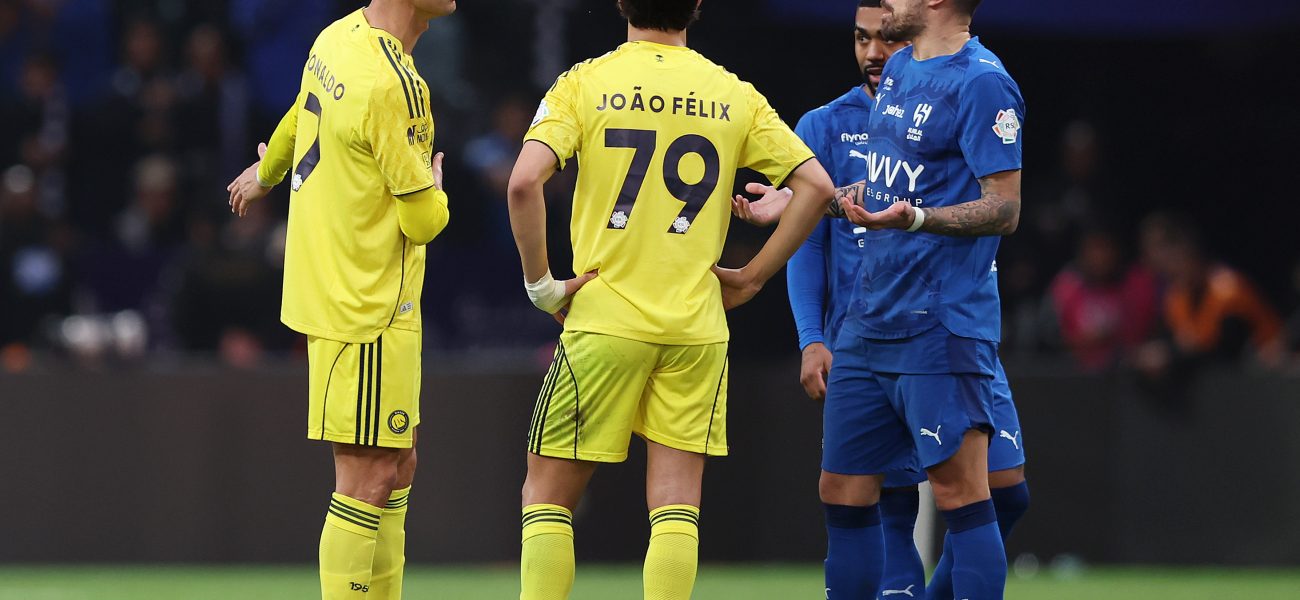
On Thursday, in a climactic clash that had all the manufactured drama of a high-stakes blockbuster, Al-Nassr sealed their championship. Ronaldo himself delivered a signature moment: a laser-precise free kick in the 62nd minute. He bagged a brace, yes, — and shed tears that circulated almost instantly across every news feed on the planet. Sadio Mané — and Kingsley Coman had already chipped in. But it’s the optics, isn’t it, the carefully cultivated image of success, that truly matters here. Portugal’s coach Roberto Martínez now beckons, another World Cup on the horizon. But that’s a different story.
The Kingdom’s Ministry of Sport certainly isn’t hiding its delight. Prince Abdulaziz bin Turki Al Faisal, Saudi Arabia’s Minister of Sport, made his thoughts clear—his pronouncements, often delivered with a crisp certainty, carry weight across the region. “This isn’t just about football; it’s about projecting an image, a future for the Kingdom that’s robust, dynamic, and connected to the world,” Al Faisal stated in a recent interview, barely concealing his satisfaction. “Ronaldo’s victory validates that vision, doesn’t it? It puts Saudi Arabia right there, on the global stage, proving what we can build when we set our minds to it. We’re changing perceptions, aren’t we?”
But the broader picture reveals more than just triumphant sports stars. It speaks volumes about Saudi Arabia’s determined pivot away from absolute oil dependency, towards a more diversified economy outlined in its Vision 2030 agenda. Investment in marquee events and global sporting figures—like Ronaldo—serves multiple purposes: boosting domestic engagement, driving tourism, and burnishing international soft power. Reports indicate the Kingdom has pumped over $6 billion into sports acquisitions and events since 2021, according to a recent analysis by Grant Thornton, dwarfing similar regional efforts and cementing its reputation as a serious player.
Across the bustling chai stalls of Karachi to the digital marketplaces of Dhaka, Ronaldo’s triumph undoubtedly resonates. South Asia, home to vast populations that follow football with a near-religious fervor, watches. The Kingdom understands this reach, knows it can wield cultural influence by hosting and succeeding in these high-profile spectacles. It’s a shrewd move, this leveraging of star power. It allows Riyadh to cultivate connections, strengthen alliances, — and simply put, look good.
“Look, we’re building an economy that won’t just stand on oil forever. Every stadium filled, every jersey sold, every match broadcast, that’s capital flowing, jobs created,” a senior official from the Ministry of Economy and Planning, speaking on background, explained candidly. “It’s smart. Very smart. And it’s not just for us, you know? It shows others in the region—our neighbors, our partners—what’s possible when you truly commit to change.” That commitment, expensive though it’s, is visibly paying dividends, both on and off the field. This isn’t just about scoring goals, folks; it’s about scoring influence.
What This Means
Ronaldo’s long-anticipated championship in Saudi Arabia represents far more than just a footballer’s personal achievement. It’s a significant propaganda victory for the Kingdom, legitimizing their extravagant investments in global sports. It projects an image of a modern, forward-thinking nation, capable of attracting and integrating the world’s biggest names. Economically, this success fuels the Vision 2030 strategy, aiming to reduce reliance on oil by diversifying into entertainment and tourism. Expect an acceleration of similar high-profile acquisitions—whether in football, golf, or even motorsport—as Saudi Arabia continues its aggressive soft power campaign.
Politically, the imagery of Ronaldo’s global celebrity celebrating a Saudi title serves to mute criticism, shifting international discourse away from less flattering narratives towards a more glamorous, dynamic facade. And it has genuine regional impact. It enhances Saudi Arabia’s standing as a cultural and sporting hub within the wider Muslim world, drawing interest from countries like Pakistan, where sports fandom runs deep. Such initiatives foster cultural ties and showcase the Kingdom as a leader, influencing opinions far beyond its immediate borders. For Riyadh, this trophy, which seemed at times almost secondary to the wider project, now justifies a massive strategic investment—both in human capital and pure capital. It isn’t just a win; it’s a statement.