

Dallas Green: Korean Billions and the Quiet Diplomacy of Texas Golf
POLICY WIRE — McKinney, Texas — Forget the perfectly manicured fairways and the hushed tones of sports commentators. When Scottie Scheffler—bless his heart, and that magnificent short game—stepped...

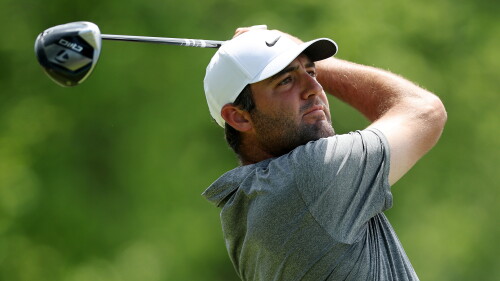
POLICY WIRE — McKinney, Texas — Forget the perfectly manicured fairways and the hushed tones of sports commentators. When Scottie Scheffler—bless his heart, and that magnificent short game—stepped onto TPC Craig Ranch for the second round of the CJ Cup Byron Nelson, he wasn’t just chasing birdies. He was, unwittingly perhaps, a key figure in a quietly profound exercise in economic diplomacy, bankrolled by a Korean conglomerate whose reach stretches far beyond Dallas County.
It’s not often you connect a golf tournament, particularly one staged in the Dallas exurbs, to the subtle maneuvers of global capital. But the Byron Nelson isn’t just any tour stop; it’s a showcase—a very polite, very well-funded showcase—for the CJ Group, a sprawling South Korean giant known more for logistics, food processing, and entertainment back home than for greens and bunkers in Texas. This isn’t charity; it’s branding, influence, — and a tangible handshake across the Pacific.
“These events aren’t just about sports anymore,” stated Governor Greg Abbott (R-Texas), in a statement Policy Wire received this week, alluding to the tournament’s broader impact. “They’re economic multipliers, plain — and simple. They put Texas on a global stage for investment and tourism, showing we’re open for business to companies like CJ that want to partner with the Lone Star State.” That’s one way of putting it—a very gubernatorial, very boosterish way, mind you. But it points to a truth often missed in the analysis of chip shots and hole-outs: significant foreign investment shapes local economies, even in ways Texans might not immediately recognize.
This particular weekend—and, let’s be frank, the considerable viewership it commands, whether you’re glued to the Golf Channel from 3-7 PM ET or just catching highlights—draws eyes and capital. Because a tournament like this doesn’t just sell tickets — and hotdogs. It projects an image of stability, affluence, and robust infrastructure that global corporations find highly attractive. The PGA Tour itself reported an estimated total economic impact of $3.3 billion for the U.S. in 2023, with over $190 million generated for charity—a chunk of which stems from events just like this one. Those aren’t pocket change numbers. And they certainly capture the attention of a certain kind of investor.
And you’ve got to admit, it’s pretty savvy. While some might scoff at the idea of golf as a serious tool of geopolitics, consider the evolving landscape. Countries, particularly those in the Gulf states, are pouring obscene amounts of money into sports—soccer, boxing, and yes, golf—to reshape international perceptions, diversify economies, and exert soft power. So, an established Korean entity doing its part to connect with the burgeoning Texas economy is actually less about sports and more about the interconnected threads of finance, culture, and, frankly, strategic positioning in an increasingly volatile global marketplace. They’re not just trying to sell Bibigo dumplings; they’re buying goodwill — and access.
It’s not exactly direct foreign aid to struggling economies, of course. But this web of international business has tendrils that can surprise. Many South Korean conglomerates, CJ Group among them, maintain robust supply chains and investment portfolios extending into South Asia. Take Pakistan, for instance, where an emerging middle class is gradually creating demand for international consumer goods and logistics expertise—exactly the kinds of services CJ provides. The global visibility a U.S.-based golf sponsorship provides isn’t lost on regional players; it signals a robust, internationally savvy partner.
“Our goal isn’t just market share in one region,” offered Kim Hyun-soo, CJ CheilJedang’s CEO, during an investor call earlier this year, his words echoing across the investment community. “It’s global synergy, fostering trust, — and demonstrating our long-term vision. Sporting partnerships offer a unique, widely accepted platform to communicate that intent.” And he’s not wrong. It’s an unspoken agreement: We bring the cash, the cameras, and a dash of glamour; you provide the economic stability and access to a massive market. And we all hope Scottie makes the cut.
And it’s this delicate balance—between commercial enterprise, regional boosterism, and subtle international outreach—that plays out in full view every spring at places like TPC Craig Ranch. While golf purists are dissecting swing planes, the actual game, in the background, involves billions changing hands, national interests intersecting, and corporate empires extending their influence, one precisely mowed green at a time.
What This Means
The CJ Cup Byron Nelson might seem like just another stop on the PGA Tour, but it functions as a highly visible, yet understated, exercise in economic statecraft. For Texas, it reinforces its image as a destination for global capital, diversifying its traditional energy-centric economy toward a broader, more international profile. It’s a calculated move to attract high-value industries — and tech, something Dallas-Fort Worth is aggressively pursuing. The optics of a South Korean titan sponsoring a major American sporting event create a powerful message of trans-Pacific partnership and mutual economic benefit, potentially paving the way for larger trade deals and investment opportunities. From CJ’s perspective, this isn’t just about selling kimchi in America. It’s about building brand equity, fostering political capital within influential U.S. circles, and subtly expanding their global footprint in a manner that’s far more palatable and enduring than a dry trade seminar. Such initiatives are especially potent given rising protectionist sentiments in some quarters, providing a ‘soft diplomacy’ alternative that benefits everyone involved—even if it’s mostly for show. Ultimately, these types of corporate-sports entanglements offer an accessible, low-friction pathway for global entities to entrench themselves in crucial economic markets, with ripple effects stretching to emerging markets further afield, including across Asia where American connections hold sway. It’s less about golf, — and more about global financial gravity pulling in unexpected directions.