
The Four-Day Classroom: West Bank’s Children Pay the Price for UNRWA’s Fiscal Famine
POLICY WIRE — Ramallah, Palestine — The bell now tolls just four days a week for countless children in the West Bank, a stark, unwelcome cadence marking not a pedagogical innovation but a profound...

POLICY WIRE — Ramallah, Palestine — The bell now tolls just four days a week for countless children in the West Bank, a stark, unwelcome cadence marking not a pedagogical innovation but a profound fiscal capitulation. It isn’t merely a reduction in classroom hours; it’s a subtle yet devastating erosion of childhood normalcy, a quiet concession to the relentless pressures squeezing the United Nations Relief and Works Agency for Palestine Refugees (UNRWA).
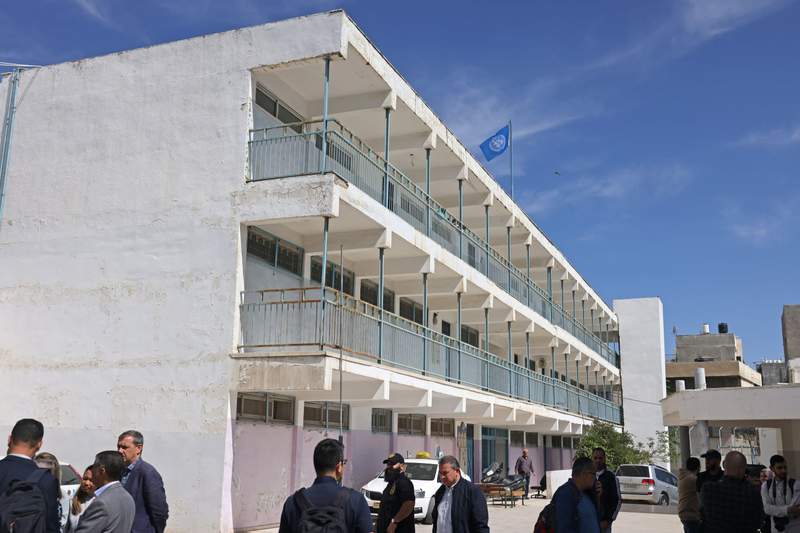
For decades, UNRWA has been the bedrock beneath the precarious lives of Palestinian refugees, providing everything from education to healthcare. And now, the agency confirms a precipitous shift: its schools across the West Bank are implementing a four-day school week. This isn’t some experimental curriculum; it’s a direct consequence of a deepening financial abyss, an inescapable reality for an agency perpetually caught in the crosshairs of geopolitical maneuvering and donor fatigue.
Behind the headlines of diplomatic pronouncements and geopolitical posturing, this operational cut represents a cruel calculus. It means fewer teachers, scarcer resources, and a palpable sense of abandonment for a population already living on the margins. UNRWA, it’s worth remembering, isn’t just an aid organization; it’s a de facto government for millions, its services intrinsically linked to the stability of an already volatile region.
“We’re not just educating children; we’re providing a semblance of normalcy in profoundly abnormal circumstances. This isn’t merely a budget cut; it’s a profound divestment in peace and stability,” shot back Juliette Touma, UNRWA’s Director of Communications, her voice edged with a familiar frustration during a recent press brief. It’s a sentiment echoed across the agency, where staff grapple daily with impossible choices.
The agency’s chronic funding woes escalated dramatically after the Trump administration’s decision in 2018 to cut U.S. aid entirely, though some funding was later reinstated by the Biden administration. Still, the damage was done, creating a gaping hole other donors have struggled, or been unwilling, to fully patch. It’s a cruel game of political football, with the well-being of millions as the stakes.
“Every day my child doesn’t go to school is another day they spend wondering if the world has forgotten them,” lamented Fatima Al-Ghoul, a mother of four in a West Bank refugee camp, her voice weary. “We rely on UNRWA for everything – food, health, and now, even the promise of a full education is being stolen.” It’s a bitter pill, this slow withdrawal of basic services from communities that have known little else but displacement.
And the ramifications extend far beyond the immediate beneficiaries. The plight of Palestinian refugees resonates deeply across the wider Muslim world, from Cairo to Kuala Lumpur, and particularly in nations like Pakistan, which has historically shown solidarity with the Palestinian cause. Such cutbacks fuel a gnawing sense of injustice and helplessness, often leading to increased calls for greater pan-Islamic support or, conversely, a disillusionment with international institutions. They’ve seen how the perilous stalemate in neighboring regions bleeds into civilian suffering, and this is no different.
According to UNRWA’s own financial reporting, their 2023 appeal for $1.6 billion to fund critical services across its five fields of operation (Jordan, Lebanon, Syria, West Bank, and Gaza) faced a staggering shortfall of over $100 million. That’s a significant deficit, leaving the agency to continually scramble, often at the eleventh hour, to keep essential services afloat.
The move to a four-day week, then, is less a temporary adjustment and more an admission of a deeply entrenched, systemic crisis. It’s a tacit acknowledgement that the international community’s commitment to Palestinian refugees—and by extension, to regional stability—is faltering, inch by agonizing inch. The long-term implications for social cohesion and the potential for increased radicalization in an increasingly desperate population are stark.
What This Means
At its core, this seemingly administrative decision by UNRWA to cut school days unveils a deeper, more consequential political and economic quagmire. Politically, it signals a further erosion of the international community’s commitment to the Palestinian refugee issue. Donors, battling their own domestic pressures or shifting geopolitical priorities, seem increasingly disinclined to fully fund an agency that has become, in some circles, a lightning rod for criticism.
This creates a dangerous vacuum. A generation of children, already living under occupation — and hardship, will now receive less education. That isn’t merely an academic loss; it’s a direct threat to the social fabric. Less structured time in schools can lead to increased vulnerability, youth disillusionment, and a fertile ground for extremism—a phenomenon observed in other conflict zones, from the Levant to the fringes of the Dead Sea’s grim ecology. Economically, the impact is equally dire. A less educated populace means a reduced human capital pipeline, trapping communities in cycles of poverty and dependence. It exacerbates an already strained job market and places an additional burden on local Palestinian Authority services, which are themselves teetering on the brink. Ultimately, the four-day school week is a symptom of a larger illness: a protracted political impasse being paid for, quite literally, by the futures of children.