

London Braces for Unruly Saturday as Capital’s Confluence of Crowds Tests Resolve
POLICY WIRE — London, UK — Forget your quiet Saturday morning latte; Britain’s capital city is gearing up for a day so thoroughly packed with potential pandemonium, even the pigeons seem stressed....

POLICY WIRE — London, UK — Forget your quiet Saturday morning latte; Britain’s capital city is gearing up for a day so thoroughly packed with potential pandemonium, even the pigeons seem stressed. It’s not just a few placards — and a casual kickabout. What we’ve got brewing is a volatile cocktail of competing political passions, hundreds of thousands of souls converging for vastly different reasons, and the ever-present threat of things getting ugly, testing the very seams of a metropolis long accustomed to managing—not always gracefully—its own magnificent chaos.
Downing Street has been in something of a huddle, you can bet your last quid on that. The Met Police, bless ’em, they’re preparing for what’s undoubtedly their busiest stretch in ages. Imagine: two sprawling, diametrically opposed political demonstrations pulling in hordes of impassioned citizens, all while Wembley Stadium—a symbol of British sporting glory—becomes a cauldron for a major cup final. It’s an administrative nightmare on an epic scale, one that sees ordinary Bobby-on-the-beat feeling the pressure from Whitehall.
One rally, expected to draw considerable numbers, will focus on Palestinian solidarity, calling for a ceasefire in Gaza. It’s a perennial fixture on London’s protest calendar, but the sheer emotional charge—especially with regional tensions continuing to fester across the Middle East and its echoes felt keenly from Islamabad to Jakarta—means police won’t be taking any chances. Then there’s the counter-protest, or a separate rally with sharply differing views, likely centered around patriotism and support for Israeli actions, adding another layer of geopolitical angst right onto London’s very thoroughfares.
Because London, despite its cosmopolitan sheen, still feels the pulse of global unrest perhaps more acutely than other European cities. We’re talking about a significant demographic that feels deeply, viscerally connected to conflicts far away. In fact, protests on the Palestinian-Israeli conflict in the UK alone surged by 450% in the last quarter of 2023 compared to the same period in 2022, according to analysis by the Henry Jackson Society. This ain’t just a London problem, it’s a barometer for the world, reflected in city streets.
Commander Karen Miller of the Metropolitan Police, sounding weary but firm, commented recently, “We’re committed to facilitating peaceful protest, that’s a democratic right. But our primary duty is public safety. The sheer volume of people, the differing ideologies, the risk of flashpoints—it drains our resources profoundly. Every officer is on deck, practically speaking, and we’re working overtime to ensure disruptions are minimized and everyone stays safe.” It’s a tightrope walk, one that’s getting trickier with every passing month. They’ve gotta get it right; the stakes are just too high.
📄 POLICY WIRE WHITEPAPER PUBLISHED: PAKISTAN'S NATIONAL SECURITY POLICY PRIORITIES
👉 READ BY CLICKING HEREBut amidst the political friction, football’s pulling power remains unchallenged. The FA Cup final, arguably England’s most cherished club competition, promises thousands of boisterous fans descending on Wembley. These aren’t usually folks looking for trouble, not in a political sense, but their sheer numbers, their thirst for celebration (or commiseration), and their own consumption habits present a whole different challenge. And traffic, don’t even get me started on the traffic. It’ll be a proper nightmare, affecting transit across the entire network.
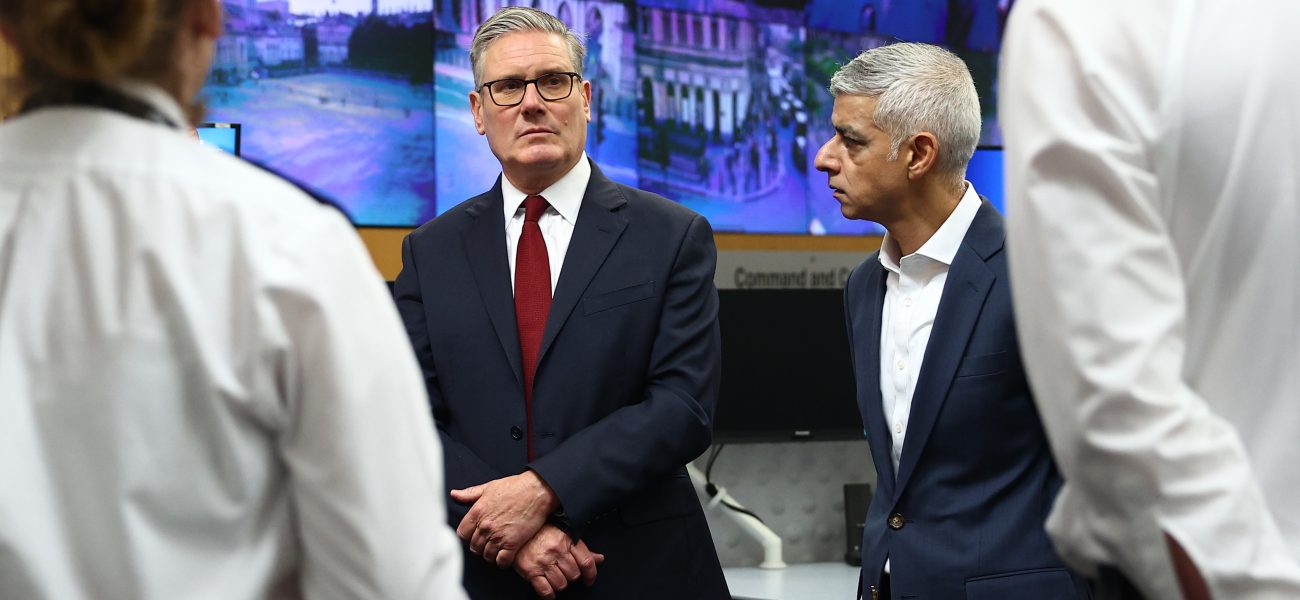
Mayor of London, Sadiq Khan, offered a measured perspective: “London is a global city, a place where diverse opinions thrive, and yes, sometimes clash. We’ve always been able to balance these competing interests with remarkable resilience. We fully expect a challenging day, but Londoners are tough. We ask everyone to act responsibly, respect our city, and allow our police to do their incredibly difficult job without obstruction.” A politician’s lot is never an easy one, especially when their city transforms into a grand, public stage for such disparate human dramas.
What This Means
The convergence of these events signals a broader strain on public resources — and social cohesion in the UK. Politically, the handling of these concurrent mass gatherings will serve as a stark performance review for the Mayor’s office and the Home Secretary. Any serious incidents—public disorder, significant clashes, or a catastrophic failure of logistics—would quickly escalate into a national embarrassment, offering immediate fodder for opposition parties. Economically, beyond the immediate policing costs (which run into the millions for such events), the pervasive disruption will inevitably hit local businesses. Small retailers, eateries, and public transport operators, many still reeling from post-pandemic malaise, face lost revenue from tourists and residents avoiding the city center. It paints a picture of a capital increasingly stretched, managing both domestic dissent and the global political reverberations that find an inconvenient home on its streets. For Islamabad, for example, the robust visibility of pro-Palestinian sentiments in London sends an internal message of solidarity and sustained pressure—even as it underscores the challenge Western governments face in navigating fiercely held convictions at home and abroad. It ain’t just about traffic; it’s about the very soul of the city, — and frankly, a microcosm of today’s fractured world.