


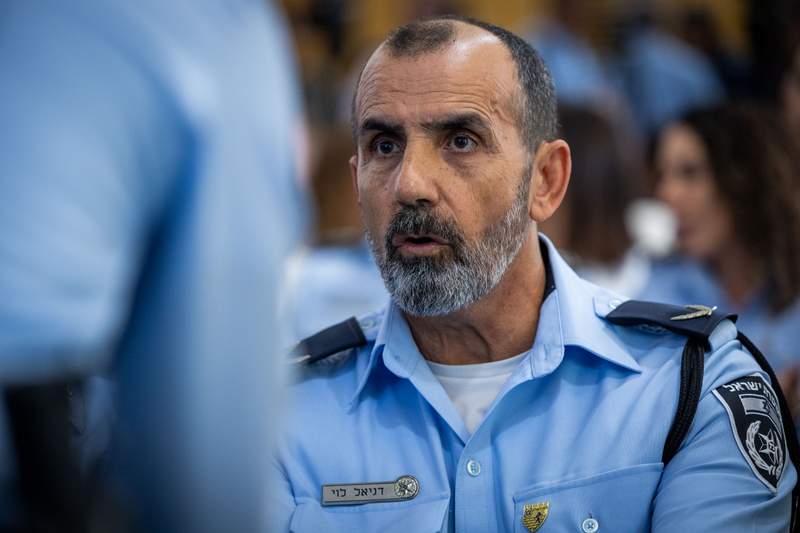
After Carnage, Police Chief’s Fatalism Ignites Political Firestorm
POLICY WIRE — Capitol City, USA — The raw nerve of public outrage, already frayed by a week of unprecedented bloodshed, finally snapped. It wasn’t the grisly tally of five homicides...

POLICY WIRE — Capitol City, USA — The raw nerve of public outrage, already frayed by a week of unprecedented bloodshed, finally snapped. It wasn’t the grisly tally of five homicides in seven days — an almost unheard-of clip for this sedate metropolis — that proved the final incendiary spark, but rather the disarmingly candid assessment from the very man charged with safeguarding its citizens. Police Chief Arthur Vance, known more for his measured pronouncements than sudden bursts of philosophical fatalism, essentially declared parts of his job — and indeed, parts of society — beyond human intervention.
His utterance — that some murders are simply "impossible to prevent" — wasn’t delivered as a concession, but as a sober, almost weary truth. Yet, its resonance was immediate — and corrosive. It didn’t calm nerves; it ignited a political firestorm, drawing a sharp, indignant retort from City Hall and rattling an already shaky public confidence in institutions. At its core, the statement laid bare an uncomfortable chasm between the public’s expectation of absolute safety and the complex, often grim realities of urban governance. It’s a sentiment, one might observe, not entirely dissimilar to the lessons in political survival from the Levant’s edges, where leaders often grapple with intractable problems.
"Look, we’re not magicians," Chief Vance shot back during a testy press conference, his voice raspy from what seemed like a week without sleep. "Some acts of depravity, particularly those driven by domestic disputes or sudden, irrational impulses — family annihilations, crimes of passion — they defy conventional policing. They happen behind closed doors. It’s an inconvenient truth, but one we must confront if we’re to have an honest conversation about crime." His gaze, typically unblinking, momentarily darted to the ceiling, as if seeking celestial confirmation of his professional impotence.
But that honesty, however brutal, landed with the force of a brickbat on Mayor Evelyn Reed’s desk. "The public isn’t looking for excuses; they’re demanding solutions," Mayor Reed retorted later that day, her tone icy, her message unequivocal. "We’ve invested heavily in community policing initiatives — and preventative measures. We’ve poured millions into mental health support — and youth programs. But clearly, the current strategies aren’t stemming this tide of violence, and statements that suggest otherwise do little to reassure a populace living in fear." She didn’t name Vance, but then, she didn’t have to; everyone knew.
The numbers, grim as they’re, buttress the public’s unease. The city has logged a staggering 25% increase in homicides year-over-year, significantly eclipsing the national average of 8% for similar-sized municipalities, according to the latest Bureau of Justice Statistics Quarterly Crime Report. This isn’t just a statistical blip; it’s a profound civic malady. And it’s happening against a backdrop of dwindling police recruitment and increasing skepticism from younger generations regarding law enforcement’s role.
Still, the Chief’s statement carries an unsettling echo beyond American shores. In rapidly urbanizing centers across South Asia, like Karachi or Lahore, police forces frequently grapple with similar public disenchantment and resource constraints. There, too, a culture of fatalism can sometimes permeate official pronouncements, especially when facing deep-seated societal issues like sectarian violence or economic disparity that spill into everyday crime. It’s a shared global challenge: how do you police the unpoliceable, or rather, how do you manage public expectations when the root causes of violence are so fundamentally societal?
Behind the headlines, the political maneuvering is already underway. Council members are reportedly scrambling for explanations, some quietly whispering about a "vote of no confidence" in Vance, others publicly demanding a "comprehensive review" of police department operations. It’s not just about crime statistics anymore; it’s about the narrative, the perception of control, and the very viability of elected officials.
What This Means
Vance’s startling admission, while perhaps intended as a dose of unvarnished reality, has inadvertently shifted the policy debate from operational effectiveness to institutional legitimacy. Politically, it’s a gift for his detractors — providing an easy target for those who wish to portray City Hall as out of touch, or worse, incompetent. Economically, prolonged fear can deter investment, depress property values, and hollow out urban cores, particularly if residents feel their safety isn’t a guaranteed municipal service. Don’t forget, businesses thrive on stability, — and an acknowledgment of unpreventable violence is anything but. This isn’t merely a police problem; it’s a governing crisis, forcing a reckoning with what communities can reasonably expect from their civil servants versus the deeper, often intractable social ills that manifest as crime.
And so, the city finds itself at an inflection point. The question isn’t just how to prevent the next crime, but how to rebuild trust when those tasked with protection admit to limits that defy easy solutions. It’s a complex, fraught calculus, one that could redefine the very social contract between the governed and their governors for years to come.