
The Dragon Dance: Trump’s Looming China Trip Sends Ripples, Not Shocks, Through Global Strategy
POLICY WIRE — Washington, D.C. — The geopolitical chessboard, always a bustling place, rarely sees a knight charge quite as unexpectedly as this. It isn’t the White House announcing a state...

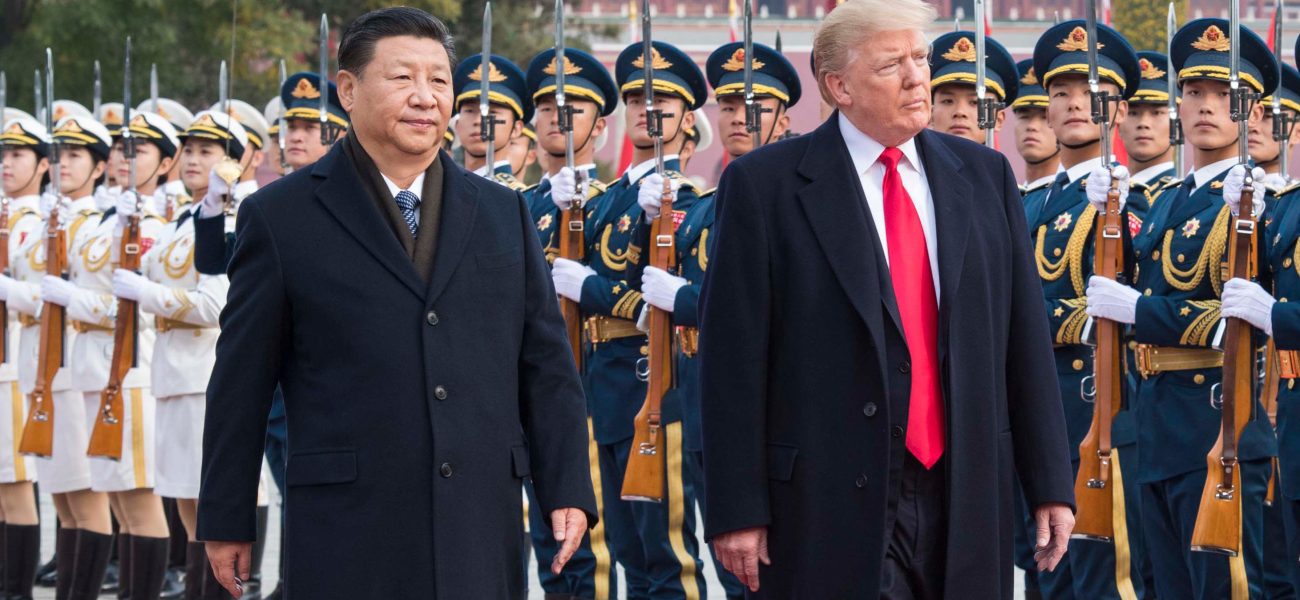
POLICY WIRE — Washington, D.C. — The geopolitical chessboard, always a bustling place, rarely sees a knight charge quite as unexpectedly as this. It isn’t the White House announcing a state visit, you see, but a former occupant, whose pronouncements still possess an unnerving gravity. Donald J. Trump, never one for understatement, recently quipped his upcoming trip to China would be a “wild one.” A characteristically Trumpian declaration, sure, but what does it really mean when the erstwhile Commander-in-Chief promises a ruckus on foreign soil?
It’s not just about trade anymore, if it ever truly was. We’re well past the naive days when tariffs alone captured the full narrative of U.S.-China relations. Today, this complex tango between superpowers spins on everything from advanced semiconductor chips to who gets to call the shots in distant island chains. And Beijing? They’ve been playing a long game, often leveraging economic heft to carve out influence, particularly in places like the Belt and Road Initiative’s crown jewel, Pakistan. They’ve poured an estimated $62 billion into the China-Pakistan Economic Corridor (CPEC) since 2013, an infrastructure spree that significantly deepens Beijing’s regional footprint, as reported by the Council on Foreign Relations.
So, when the possibility of a Trumpian jaunt to the mainland surfaces, capitals worldwide don’t just twitch; they brace themselves. But because, let’s be frank, nothing is ever quite straightforward where he’s concerned, the timing here isn’t random. It’s an election year, isn’t it? The stage lights are hot, and the current administration, for all its diplomatic rhetoric, hasn’t exactly turned the dial down on Washington’s hawkish stance toward Beijing. A private visit, from a private citizen—even one vying for the top job again—grants Trump the kind of leverage for grandstanding that official channels just don’t offer. He can rail against Chinese trade practices without having to coordinate with the State Department. He can promise breakthroughs only he can deliver, without actually needing to deliver them, not yet anyway.
“It’s gonna be a wild one,” Trump reportedly declared, always relishing the theater. “We’re going to talk turkey, — and frankly, nobody talks turkey like me. China respects strength, and they’ll get an earful, believe you me.” This sort of rhetoric, while jarringly informal for diplomatic circles, plays directly to his base, assuring them he’s the only one who can bring Beijing to heel. And China, always eager for a perceived advantage on the global stage, would no doubt calibrate their response with exquisite precision. They wouldn’t want to squander a chance to present themselves as reasonable actors willing to engage even with an unpredictable former leader. It’s a high-stakes performance for both sides, if you ask me.
But the official line, as you might expect, stays firmly in the realm of boilerplate diplomacy. A State Department official, speaking on background and clearly opting for caution, offered a rather vanilla perspective: “America’s commitment to dialogue with all major global powers remains unshakeable. This trip, should it ultimately materialize, presents an opportunity to explore complex issues and areas of mutual—and diverging—interest. We anticipate careful observation of any such engagements.” Notice the lack of enthusiasm there? That’s not just protocol; it’s subtle, pointed skepticism, especially from an administration that has been working to re-establish more traditional, multi-lateral alliances to counter Chinese influence.
And then there’s the broader global implications, which aren’t small. For our friends in the Muslim world, and particularly countries across South Asia that Beijing has diligently courted with loans and infrastructure, a Trump visit could spark a fresh round of American attention. It’s a delicate balance for nations like Pakistan, navigating between deeply entrenched Chinese economic partnerships and the enduring, if sometimes distant, embrace of Western allies. Beijing’s quiet acquisition of influence, whether through infrastructure loans or strategic port deals, always bears watching. Perhaps the prospect of a more aggressive, ‘America First’ policy, rebooted by Trump, would prompt a re-evaluation of long-term economic vulnerabilities—even supply chain disruptions—that might not be obvious right now.
📄 POLICY WIRE WHITEPAPER PUBLISHED: PAKISTAN'S NATIONAL SECURITY POLICY PRIORITIES
👉 READ BY CLICKING HEREThis trip, even in its hypothetical form, messes with carefully constructed diplomatic messaging. The Biden administration’s approach to China has involved rallying allies, pushing back on human rights, and competing economically. Trump’s approach? Often a transactional, go-it-alone gambit, leaving allies wondering whether they’re still playing on the same team. It’s bound to raise eyebrows in Brussels, in Seoul, in Tokyo, and probably even in some very posh London townhouses, too. Because uncertainty, in geopolitics, often breeds unease. It just does.
What This Means
Politically, a visit like this — or even the sustained rumor of one — serves Trump’s narrative perfectly. It portrays him as a global player, able to negotiate with the toughest adversaries, untethered by officialdom. It’s pure political spectacle, designed to draw contrasts with his successor and to showcase a brand of decisive, if informal, diplomacy. He isn’t confined by State Department cables or interagency consensus. But, in this freedom lies both his appeal — and his danger. A single misspoken word could destabilize a carefully managed, albeit tense, bilateral relationship. And, well, he’s never been known for his verbal discipline, has he?
Economically, expect the market to shrug, mostly. Investors have learned to live with Trump’s rhetoric. They understand the difference between a pre-election blast — and actual policy. However, any indication that he might reignite trade wars with renewed ferocity would certainly spook sectors heavily reliant on global trade and interconnected economies. Long-term, if a Trump presidency does materialize and this freewheeling diplomatic style continues, it could force multinational corporations to completely re-evaluate their supply chains and market access strategies, preparing for an era of greater unpredictability. It’s not just a handshake; it’s a possible economic earthquake.