Silent Shortages: Iran Conflict Jolts Tech’s Microscopic Lifelines, Prices Swell
POLICY WIRE — Washington D.C., USA — Remember that shiny new phone in your pocket, or the smart thermostat humming quietly on your wall? Ever pause to consider the impossibly tiny,...

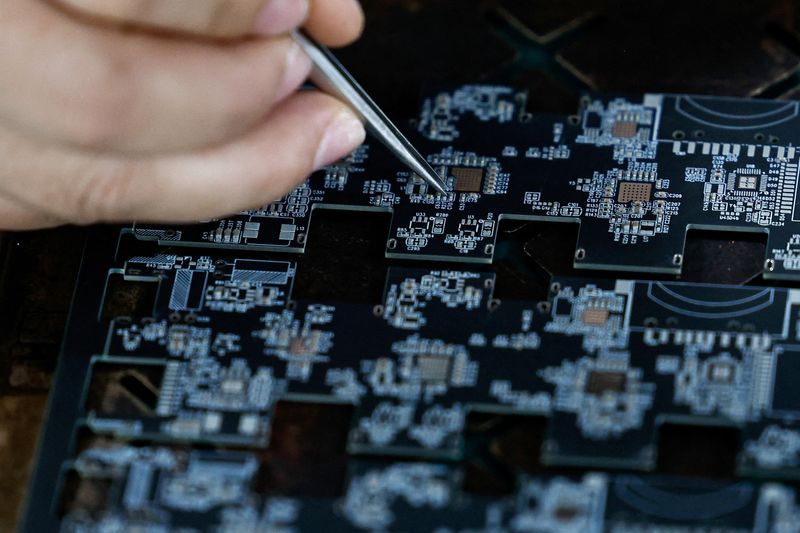
POLICY WIRE — Washington D.C., USA — Remember that shiny new phone in your pocket, or the smart thermostat humming quietly on your wall? Ever pause to consider the impossibly tiny, interconnected paths—the circuit boards—that make it all go? Probably not. But folks in boardrooms from Cupertino to Chennai are thinking about little else these days, because the latest geopolitical tremor from the Persian Gulf isn’t just about oil fields or shipping lanes. This one’s gutting the very arteries of modern technology.
It turns out that Iran, long a player in the energy game, now casts an unexpectedly long shadow over the fabrication of Printed Circuit Boards (PCBs) and their myriad components. Nobody predicted that. Well, maybe a few paranoid supply chain managers saw it coming, but they’re always seeing doomsday, aren’t they?
The situation’s straightforward enough: escalating tensions in and around Iran — heightened shipping risks, flight diversions, and a general air of regional instability — are making the already complex movement of raw materials and finished components a genuine nightmare. It’s not just the stuff going to Iran, it’s everything passing through an increasingly volatile region. The delays are piling up like traffic on a clogged highway, — and that’s just the beginning. Prices, naturally, are climbing right alongside them.
Anahita Sharma, CEO of InnovateCorp Solutions, a major consumer electronics manufacturer, wasn’t pulling any punches when we spoke last week. “We’re facing double-digit increases on critical substrates — and specialized resins,” she vented, rubbing her temples. “Our customers won’t absorb that hit. We can’t. Somebody’s got to take the fall, — and it’s usually the little guys, or the innovation budget.” She’s not wrong. Every percentage point eats into margins, turning product launches into economic tightropes. And nobody enjoys walking those, believe me.
Because of this mess, every gadget, every server, every car with smart features now carries a silent surcharge. Industry analysts like IDC had already warned of a potential 7-12% increase in consumer electronics prices for Q3, a prediction now looking suspiciously optimistic. The conflict might feel distant to some, but its fiscal tentacles are wrapping around everyone’s wallet. It’s a cruel trick, isn’t it? Geopolitical drama playing out in your living room via your smart TV’s increased sticker price.
But the consequences extend far beyond just consumer gadgets. Think about the infrastructure. Telecom networks, data centers, even military hardware — all depend on these circuit boards. Any disruption here isn’t just an inconvenience; it’s a security concern. It affects national readiness. This isn’t just about smartphones getting pricier, it’s about the very backbone of modern life getting wobblier.
And let’s consider the wider Muslim world. Nations like Pakistan, with its burgeoning tech sector — boasting nearly 1.5 million IT professionals, according to the Pakistan Software Export Board in 2023 — are heavily reliant on imported components for local assembly and software solutions. An uptick in material costs means local manufacturers face a competitive disadvantage, stifling growth and pushing innovation budgets tighter. It’s like pulling the plug just as they’re powering up. This ripple effect could decelerate their progress, forcing difficult decisions about pricing and market viability for indigenous tech.
Dr. Hamid Reza, Iran’s Deputy Minister of Commerce, remained defiant during a recent press conference broadcast by state media. “Our nation won’t bend to economic pressure,” he declared, though his exact words were often drowned out by technical difficulties in the transmission. “Any attempt to isolate us only strengthens our resolve. Global markets must adapt to the new realities.” He probably meant their new realities, which, let’s be frank, are often everyone else’s headaches. The markets, predictably, are doing their best to adapt, by which he means, jacking up prices and exploring less than ideal alternatives.
What This Means
The immediate political implication is clear: a fragile global supply chain can — and does — transmit regional instabilities into widespread economic discomfort. For nations that pride themselves on manufacturing independence, this situation offers a chilling reminder of interdependence. Governments might increasingly view semiconductor and PCB manufacturing as national security concerns, much like energy resources or even geopolitical red lines. We’re likely to see intensified efforts — or at least talk of intensified efforts — to reshore production or diversify sourcing, potentially creating a more Balkanized, less efficient global economy in the short term. Economically, this spells inflation and potentially stalled innovation as research and development budgets are squeezed to offset rising manufacturing costs. For consumers, it simply means less bang for your buck — and slower refresh cycles for new tech. Don’t be surprised when those anticipated innovations get quietly pushed back or arrive with an unexpectedly hefty price tag. It’s all connected, after all. From a nation’s stability to the integrity of a supply chain, — and finally, to your pocket. Just another day in the wonderfully interconnected, utterly bewildering global economy, where the flick of a switch in Tehran can impact the bottom line of businesses halfway around the world.